Making dog shampoo for sensitive skin is easy and beneficial for your furry friend. Start with 1 cup of unscented liquid Castile soap and mix it with 1 cup of distilled water. Add 1 tablespoon of coconut or olive oil for hydration and 1 tablespoon of aloe vera gel to soothe irritation. If desired, include a few drops of lavender oil for a gentle scent. Mix the ingredients and store the shampoo in a clean bottle. This homemade solution avoids harsh chemicals and allergens, ensuring comfort during bath time. You'll discover more tips for safe and effective dog grooming.
Key Takeaways
- Combine 1 cup of unscented liquid Castile soap with 1 cup of distilled water for a gentle base.
- Add 1 tablespoon of coconut oil for moisture and 1 tablespoon of aloe vera gel to soothe irritation.
- Optional: Include 3 to 5 drops of lavender essential oil for calming scent, ensuring it's safe for dogs.
- Adjust pH to between 6 and 7 using apple cider vinegar or baking soda if needed.
- Store in a cool, dark place and use within weeks to maintain freshness.
Understanding Sensitive Skin
Sensitive skin in dogs can often lead to discomfort and irritation, making it essential for pet owners to recognize the signs. You might notice your furry friend scratching more than usual, or perhaps they're licking certain areas excessively. Redness, bumps, or flakiness can also indicate sensitivity, and it's crucial to pay attention to these cues.
Understanding sensitive skin involves knowing that it can stem from various factors, including allergies, environmental irritants, or even genetics. When you serve your pet with care, you'll want to monitor their environment closely. Consider potential allergens like pollen, dust, or certain fabrics that could be affecting your dog.
You should also be aware that some shampoos contain harsh chemicals or fragrances that can exacerbate sensitivity. Choosing the right bath products is vital. Your dog's comfort and well-being should always come first, so prioritizing gentle, natural ingredients is key.
As you learn to identify and respond to your dog's skin sensitivities, you'll be better equipped to provide them with the care and relief they deserve. After all, a happy, comfortable dog is a joy to serve!
Ingredients to Avoid
When making dog shampoo for sensitive skin, you need to be aware of ingredients that can cause irritation.
Avoid harsh chemicals, fragrances, and dyes, as they can exacerbate skin issues.
Additionally, steer clear of common allergens that might trigger a reaction in your furry friend.
Harsh Chemicals to Avoid
Your furry friend's skin deserves the best, so it's crucial to steer clear of harsh chemicals that can cause irritation or allergic reactions.
Many commercial dog shampoos contain sulfates, which can strip natural oils from the skin, leading to dryness and discomfort. You'll also want to avoid parabens, commonly used as preservatives; they can disrupt hormonal balance and may lead to skin issues.
Another ingredient to watch out for is synthetic fragrances. These can cause allergic reactions and mask potential irritants.
Similarly, you should skip any shampoos with alcohol, as it can be extremely drying and irritating for sensitive skin.
Also, stay away from artificial colorants and dyes; they serve no purpose for your dog and can lead to skin sensitivities.
Fragrance and Dyes Risks
Many dog owners overlook the risks associated with fragrances and dyes in shampoos. While they might make your pup smell delightful, these additives can cause irritation and allergic reactions.
They're often synthetic, containing harsh chemicals that can aggravate sensitive skin, leading to discomfort for your furry friend.
When you're choosing or making dog shampoo, it's crucial to steer clear of any products that list artificial fragrances or dyes. Instead, opt for natural alternatives that provide a gentle scent without compromising your dog's skin health.
Essential oils, like lavender or chamomile, can be safe options when used properly and in moderation.
Dyes, too, pose unnecessary risks. They can cause skin sensitivities and even staining on your dog's fur, which mightn't be easily removed.
Common Allergens in Shampoo
Choosing the right ingredients is essential for creating a dog shampoo that won't trigger allergies. When you're making shampoo for sensitive skin, avoid common allergens that can irritate your furry friend.
First, steer clear of sulfates, often found in commercial shampoos. These harsh detergents can strip natural oils and lead to dryness.
Next, be cautious with preservatives, like parabens and formaldehyde, which can cause reactions in sensitive dogs.
Fragrances are another culprit. Even natural scents can provoke allergies, so consider using unscented or naturally derived alternatives.
Additionally, some essential oils, while popular, may be too strong for dogs, especially those with skin issues.
Also, watch out for gluten and wheat derivatives if your dog has food sensitivities.
Lastly, avoid heavy oils, like coconut or olive oil, which may not suit all skin types and can lead to buildup.
Benefits of Homemade Shampoo
Homemade dog shampoo offers a variety of benefits, especially for pets with sensitive skin. When you create your own shampoo, you have full control over the ingredients, ensuring they're gentle and free from harsh chemicals. This means you can avoid common allergens and irritating substances often found in commercial products, which can be a relief for dogs prone to allergies.
Making your own shampoo can also be cost-effective. You can use simple ingredients that you might already have at home, saving you money in the long run. Plus, it's a fun activity that allows you to bond with your pet, knowing you're using a product tailored specifically for their needs.
Another advantage is that homemade shampoo can be customized to suit your dog's unique skin condition. Whether your furry friend has dryness, itchiness, or other sensitivities, you can adjust the recipe to provide the best care.
Lastly, by using eco-friendly ingredients, you contribute to a healthier planet, aligning your pet care routine with your values. Overall, making dog shampoo at home is a thoughtful way to ensure your pet's comfort and well-being.
Essential Ingredients for Sensitive Skin
Making your own dog shampoo allows you to select ingredients tailored for sensitive skin, ensuring a gentle wash that keeps your pup comfortable.
When crafting a shampoo for your furry friend, focus on using natural and soothing components that nurture their delicate skin. Here are some essential ingredients you should consider:
- Oatmeal: Known for its anti-inflammatory properties, oatmeal soothes irritation and provides moisture.
- Coconut oil: This nourishing oil hydrates the skin and helps reduce dryness, leaving your dog's coat soft and shiny.
- Aloe vera: With its calming effects, aloe vera helps alleviate redness and promotes healing, making it perfect for sensitive skin.
Simple Recipe for Dog Shampoo
Crafting a gentle dog shampoo for sensitive skin is easier than you might think, especially when you use simple, natural ingredients.
Start with a cup of unscented liquid Castile soap, which is gentle and effective. Then, add a cup of distilled water to create a softer mix. Next, incorporate a tablespoon of olive oil or coconut oil; these oils moisturize your dog's skin and coat, leaving them shiny and healthy.
To enhance the soothing properties of your shampoo, include a tablespoon of aloe vera gel. This natural ingredient helps to calm irritated skin and promotes healing. If you'd like, you can add a few drops of lavender essential oil for a calming scent, but make sure it's safe for pets.
Mix all these ingredients in a bowl until well combined, then pour the mixture into a clean bottle for easy use.
When bath time arrives, simply wet your dog's coat, apply the shampoo, and gently massage it into their skin. Rinse thoroughly to ensure no residue remains.
This simple recipe not only keeps your furry friend clean but also shows your love and care for their sensitive skin.
Customizing Your Shampoo Recipe
When customizing your dog shampoo, you'll want to start by choosing gentle ingredients that are safe for sensitive skin.
You can also enhance your recipe by adding essential oils that offer soothing benefits.
Choose Gentle Ingredients
Choosing gentle ingredients is essential for creating a dog shampoo that soothes sensitive skin. You want to ensure that each component you select is nurturing and safe. By opting for mild, natural ingredients, you can help avoid any irritation and keep your furry friend comfortable.
Here are some excellent options to consider:
- Oatmeal: Known for its soothing properties, oatmeal can help relieve itching and inflammation.
- Aloe Vera: This natural ingredient hydrates and calms the skin, providing relief from dryness and irritation.
- Coconut Oil: With its moisturizing qualities, coconut oil nourishes the skin and helps maintain a healthy coat.
When you choose these gentle ingredients, you're not just making shampoo; you're crafting a caring experience for your dog.
Remember to avoid harsh chemicals, fragrances, or artificial dyes that could disrupt your pet's skin balance. Your thoughtful choices will reflect your desire to provide the best for your companion.
Add Essential Oils
A few drops of essential oils can elevate your homemade dog shampoo, adding both a pleasant scent and additional benefits for your dog's sensitive skin.
When choosing essential oils, it's crucial to select ones that are safe and beneficial for dogs. Lavender oil, for example, is known for its calming properties and can help soothe irritated skin. Chamomile oil can also provide a gentle, anti-inflammatory effect.
To incorporate essential oils into your shampoo, start with just a few drops—usually between 3 to 5 drops per cup of shampoo is sufficient. This way, you can avoid overwhelming your dog's sensitive skin. Mix the oils thoroughly into your shampoo base, ensuring they're evenly distributed.
Always remember to perform a patch test on a small area of your dog's skin before using the shampoo more widely. This helps to confirm that your chosen oils won't irritate their skin.
Adjust Ph Balance
Adjusting the pH balance of your homemade dog shampoo is essential for ensuring it's gentle on your dog's sensitive skin. A balanced pH helps maintain the natural barrier of your dog's skin, preventing irritation and dryness. You want to aim for a pH level between 6 and 7, which is ideal for dogs.
To achieve this, you can use simple ingredients that can help you adjust the pH as needed:
- Apple cider vinegar: This natural acid can lower the pH if your mixture is too alkaline.
- Baking soda: If your shampoo is too acidic, a small amount can raise the pH.
- Distilled water: Using distilled water can help provide a neutral base for your shampoo.
After mixing your ingredients, test the pH with pH strips or a meter. Adjust as necessary by adding small amounts of apple cider vinegar or baking soda.
How to Properly Mix Ingredients
Start by gathering all your ingredients and tools to ensure a smooth mixing process. You'll need a mixing bowl, a whisk or spoon, and a measuring cup for accurate measurements.
Once you've got everything in place, begin by measuring out each ingredient carefully. It's crucial to stick to the recommended amounts to maintain the effectiveness and safety of the shampoo.
Add the liquid ingredients first, like distilled water or aloe vera gel, to the mixing bowl. Then, slowly incorporate the solid ingredients, such as oatmeal or baking soda. Stir continuously as you add each ingredient, ensuring everything blends seamlessly. This helps prevent clumps and guarantees an even consistency.
If you're using essential oils for their soothing properties, add them last. A few drops can make a big difference, so start with a small amount and adjust according to your preference.
Once everything's mixed thoroughly, take a moment to check the texture. It should be smooth and creamy, perfect for your dog's sensitive skin.
Storage Tips for Homemade Shampoo
Since homemade dog shampoo lacks preservatives, it's essential to store it properly to maintain its freshness and effectiveness. To ensure your shampoo remains safe and beneficial for your furry friend, follow these storage tips.
- Glass or BPA-free plastic bottles: These materials help prevent chemical reactions that could spoil your shampoo.
- Cool, dark places: Store your shampoo in a cabinet or pantry away from sunlight and heat, which can degrade its quality.
- Labeling: Clearly label each bottle with the date you made it, so you can track its freshness.
For best results, make smaller batches that you can use within a few weeks. This way, you won't risk having any product go to waste.
If you notice any changes in color, smell, or texture, it's best to err on the side of caution and discard it.
Bathing Techniques for Sensitive Dogs
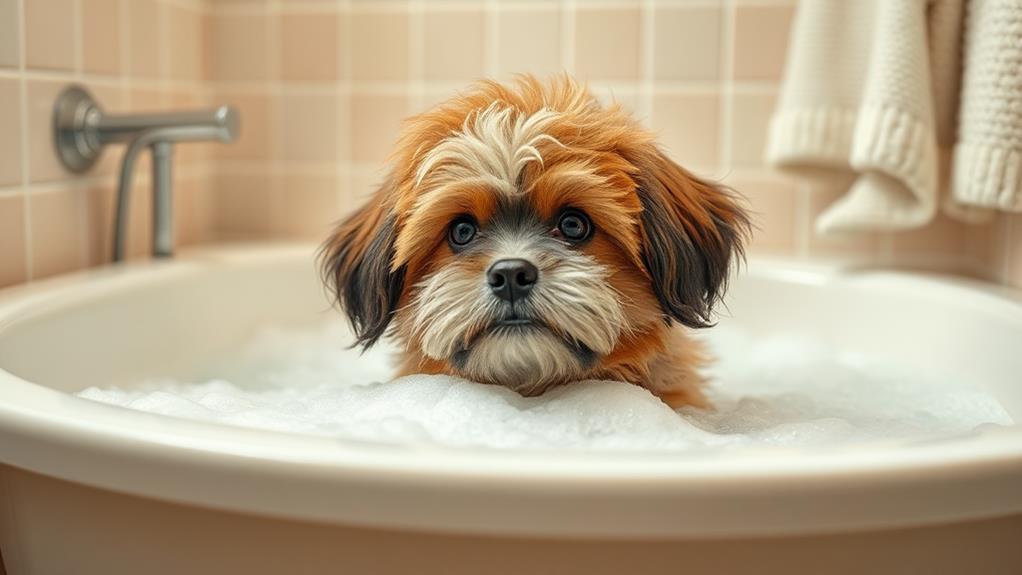
When bathing a sensitive dog, it's crucial to use gentle techniques that minimize stress.
You'll want to ensure the water temperature is just right, avoiding extremes that could irritate their skin.
Lastly, soft toweling methods can help dry your pup without causing discomfort.
Gentle Bathing Techniques
Bathing a dog with sensitive skin requires a gentle approach to ensure a positive experience for both you and your furry friend.
Start by preparing a calm environment, as this will help your dog feel secure. Use a non-slip mat to prevent any slipping, and speak softly to reassure your pup throughout the process.
Here are some gentle bathing techniques to keep in mind:
- Slowly wet your dog's coat: Use a cup or a gentle spray to avoid startling them, ensuring you start from the back and move toward the front.
- Apply shampoo carefully: Use your homemade dog shampoo, applying it in small amounts and massaging it gently into their coat. Avoid areas around the eyes and ears.
- Rinse thoroughly: Ensure you rinse all the shampoo out with lukewarm water, as residue can irritate sensitive skin.
Always keep your dog's comfort in mind, rewarding them with praise or treats throughout the bath.
Ideal Water Temperature
Finding the right water temperature plays a significant role in ensuring a comfortable bathing experience for dogs with sensitive skin. You want to aim for lukewarm water, which feels comfortable to your touch. If the water's too hot, it can irritate their skin and make them anxious. Conversely, cold water can be uncomfortable and might even cause stress during the bath.
Before you start bathing your dog, test the water with your elbow or wrist. This area is sensitive, and it'll give you a good indication of how your dog will feel. Ideally, the temperature should be around 100°F (38°C), which is warm enough to be soothing but not so hot that it causes discomfort.
As you bathe your dog, be mindful of any signs of distress. If you notice your dog fidgeting or attempting to escape, it could be a sign that the water's too warm or too cold. Adjust the temperature as needed to create a positive experience.
Soft Toweling Methods
Using soft towels can make a world of difference when you're drying your dog with sensitive skin. Your goal is to provide a gentle experience that minimizes discomfort and promotes relaxation. Opting for the right materials is crucial; choose towels that are plush, absorbent, and kind to your pet's delicate coat.
- Microfiber towels: They absorb moisture quickly while being lightweight and soft, reducing the risk of irritation.
- Cotton bath sheets: Their natural fibers are breathable and hypoallergenic, perfect for sensitive skin.
- Fleece blankets: These provide warmth and comfort, ensuring your dog feels secure during the drying process.
When you start drying your dog, gently wrap them in the towel, allowing it to absorb moisture without rubbing too hard. Pat them down instead of rubbing, and focus on one area at a time. This way, you can monitor their comfort level.
Frequency of Bathing
Determining the right frequency for bathing your dog is crucial, especially for those with sensitive skin. Over-bathing can strip natural oils, leading to dryness and irritation.
Generally, bathing your dog every four to six weeks is a good starting point. However, consider your dog's lifestyle and coat type. If your pup loves playing outdoors or has a long, thick coat, they might need a bath more often.
Pay attention to your dog's individual needs. If they start to smell or develop visible dirt or debris, it's time for a bath.
Conversely, if their skin appears dry or flaky after a bath, you might want to extend the time between washings.
Signs Your Dog Needs a Different Shampoo
Your dog's comfort and health are paramount, so it's essential to recognize when they need a different shampoo. Observing your pup closely can help you identify signs that their current shampoo isn't working for them anymore. Here are a few indicators to watch for:
- Persistent itching or scratching: If your furry friend can't seem to stop scratching, it might indicate irritation from their shampoo.
- Red or inflamed skin: Look for any signs of redness or inflammation; this could be a reaction to harsh ingredients.
- Unpleasant odor: If your dog continues to smell bad even after a bath, their shampoo may not be effectively cleaning their coat.
If you notice any of these signs, it might be time to switch to a gentle, hypoallergenic shampoo designed for sensitive skin.
Always remember to introduce new products gradually and consult your vet if you're unsure.
By making the right choice in shampoo, you're not only ensuring your dog's comfort but also promoting their overall well-being.
After all, a happy pup is a healthy pup!
Additional Skin Care Tips
After you've identified the right shampoo for your dog's sensitive skin, it's important to incorporate additional skin care practices to keep their coat healthy and vibrant.
Regular brushing is key; it helps remove loose fur and dander while distributing natural oils throughout their coat. Use a soft-bristle brush to avoid irritating their skin.
Next, ensure your dog stays hydrated. Fresh water is vital for maintaining skin elasticity and coat sheen.
Additionally, consider adding omega fatty acids to their diet. These supplements can help reduce inflammation and promote a shiny coat.
Monitor their environment too. Dust, pollen, and harsh chemicals can trigger skin sensitivities.
Regularly clean your home and avoid using strong cleaners around your pet. When you take your dog outdoors, check for ticks or fleas, as these pests can cause skin irritation.
Frequently Asked Questions
Can Homemade Dog Shampoo Cause Allergic Reactions?
Homemade dog shampoo can cause allergic reactions if you use ingredients your dog's sensitive skin can't tolerate. Always test a small amount first, and consult your vet if you notice any irritation or discomfort.
How Long Does Homemade Dog Shampoo Last?
Homemade dog shampoo typically lasts about one to three months when stored in a cool, dry place. Always check for any changes in smell or texture before using it on your furry friend.
Can I Use Human Shampoo on My Dog?
Sure, you wouldn't use your grandma's favorite shampoo on your dog! Human shampoos can irritate their skin and disrupt natural oils. Stick to products designed for dogs to keep their coat healthy and happy.
Is It Safe to Use Essential Oils in Dog Shampoo?
Using essential oils in dog shampoo can be safe, but you need to choose pet-friendly oils and dilute them properly. Always consult your vet first to ensure it suits your dog's specific needs and sensitivities.
What Are the Signs of an Allergic Reaction to Shampoo?
If your dog experiences redness, itching, swelling, or hives after using shampoo, it might indicate an allergic reaction. You should stop using the product immediately and consult your vet for further advice.
Conclusion
By creating your own dog shampoo, you're ensuring a gentle solution tailored to your pup's needs. You're avoiding harsh chemicals, you're nurturing their sensitive skin, and you're fostering a healthier coat. With the right ingredients and techniques, you can keep your furry friend comfortable and clean. Remember, it's not just about washing; it's about caring. So, embrace the process, enjoy the bonding time, and let your dog feel the love with every bath!

Carlos Rodriguez is the Senior Product Reviewer at DogShampooReviews.com. With over 15 years of experience in canine grooming and skincare, Carlos brings a wealth of knowledge and passion to our team. His journey began at a young age, growing up on a family farm where he was surrounded by dogs of all breeds and sizes. This early exposure ignited his lifelong dedication to animal care and well-being.
Professional Background
- Certified Dog Groomer: Carlos is a certified professional groomer who has worked in some of the top grooming salons across the country. His expertise spans various grooming techniques suitable for different breeds and coat types.
- Canine Skincare Specialist: Recognizing the importance of skin health in dogs, Carlos pursued additional certifications in dermatological care for canines, specializing in treating skin conditions and allergies.
- Product Testing Expert: With a meticulous eye for detail, Carlos rigorously tests dog shampoos and grooming products, evaluating them on ingredients, efficacy, safety, and overall quality.
Passion for Dogs
Carlos’s love for dogs goes beyond his professional life. He is an active volunteer at local animal shelters, providing grooming services to help adoptable dogs look and feel their best. His own rescued dogs, Bella and Rocky, are often the first to try out new products, ensuring his reviews come from genuine experiences.
Why Trust Carlos
- Unbiased Reviews: Committed to integrity, Carlos ensures all his reviews are honest and based on thorough testing.
- Expert Insight: His extensive knowledge allows him to break down complex information into understandable advice for dog owners.
- Community Engagement: Carlos actively engages with our readers, answering questions and providing personalized recommendations.