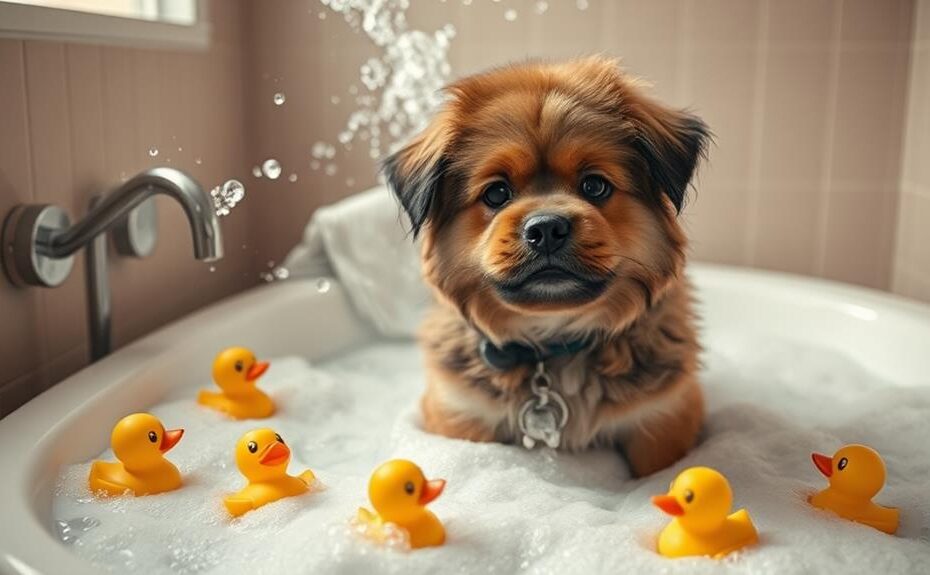
If your dog hates baths, start by understanding the root causes of their anxiety. Choose a cozy location, like the bathroom, to help them feel secure. Use positive reinforcement by rewarding calm behavior with treats and praise. Gradually introduce them to the bathing environment to desensitize them to water. Invest in gentle, pH-balanced dog shampoo and a non-slip mat for comfort. Make bath time fun by adding waterproof toys or creating a playful atmosphere. If their fear persists, consider enlisting a professional groomer who can work with anxious dogs. There’s plenty more to explore that can help make bath time easier!
Key Takeaways
- Create a comfortable bathing environment by using familiar locations and non-slip mats to enhance stability and reduce anxiety.
- Introduce positive reinforcement with treats and praise to build positive associations with bath time.
- Gradually desensitize your dog to water by allowing them to explore the bathing area and slowly increasing water exposure.
- Use engaging toys or gentle play during baths to make the experience enjoyable and less stressful for your dog.
- Consider professional grooming services if your dog remains anxious, as experienced groomers can provide a calming and safe environment.
Understand the Root Causes
Understanding the root causes of your dog’s aversion to baths is crucial for addressing the issue effectively.
Start by observing your dog’s behavior around water and bath-related activities. You might notice signs of anxiety, like whining or trying to escape. This could indicate a previous negative experience, such as slipping in the tub or being scolded during a bath.
Consider your dog’s sensory sensitivities, too. Some dogs are more sensitive to loud noises, strong smells, or even the feel of water. If your dog dislikes the sound of running water or the scent of shampoo, these factors can contribute significantly to their fear.
Another aspect to explore is your dog’s early experiences. Did they’ve regular baths as a puppy, or were they introduced to bathing later in life? Early, positive experiences can lead to a more relaxed attitude towards baths.
Lastly, your own demeanor plays a role. If you’re anxious about bathing your dog, they can pick up on that energy.
Choose the Right Bath Location
When it comes to bathing your dog, choosing the right location can make all the difference.
You might find that an indoor setting feels cozier and less intimidating, or an outdoor space could provide a fun, open environment.
Consider your dog’s preferences; a familiar and comfortable space can help ease their anxiety during bath time.
Indoor vs. Outdoor Bathing
Choosing the right location for your dog’s bath can make a significant difference in the experience for both of you. When deciding between indoor and outdoor bathing, consider your dog’s personality and comfort level.
Indoor bathing offers a controlled environment, which can help reduce anxiety for dogs that feel overwhelmed by the outdoors. You can use a bathtub or a shower, ensuring a warm and soothing experience.
Plus, you have easy access to towels, shampoo, and other necessary supplies.
On the other hand, outdoor bathing can be more fun for some dogs. If your furry friend enjoys the freedom of the outdoors, a garden hose or kiddie pool can create a playful atmosphere.
The fresh air and open space may help ease any stress, making bath time feel more like a game than a chore.
Ultimately, the best choice depends on your dog’s individual preferences and behavior. Observe how they react in different environments and choose the one that keeps them calm and happy.
Your goal is to create a positive experience, so don’t hesitate to experiment with both indoor and outdoor options.
Familiar and Comfortable Space
Creating a familiar and comfortable space for bath time can greatly enhance your dog’s experience. Choosing the right location is key. If your pup enjoys spending time in a particular room, like the bathroom or laundry area, consider bathing them there. This sense of familiarity can help reduce anxiety.
Next, make the space inviting. Lay down a non-slip mat to prevent any slipping, which can make your dog feel more secure. Ensure the area is free from distractions, so your dog can focus on you and the task at hand.
If you typically use a bathtub, try filling it with just a few inches of water at first. This allows them to get used to the sensation without feeling overwhelmed. You can also add their favorite toys or treats nearby. This encourages positive associations with bath time.
If your dog has a preferred towel or blanket, have that handy too. The goal is to create an environment that feels safe and comforting. With a little thought, you can turn bath time from a dreaded chore into a more enjoyable experience for both you and your furry friend.
Use Positive Reinforcement
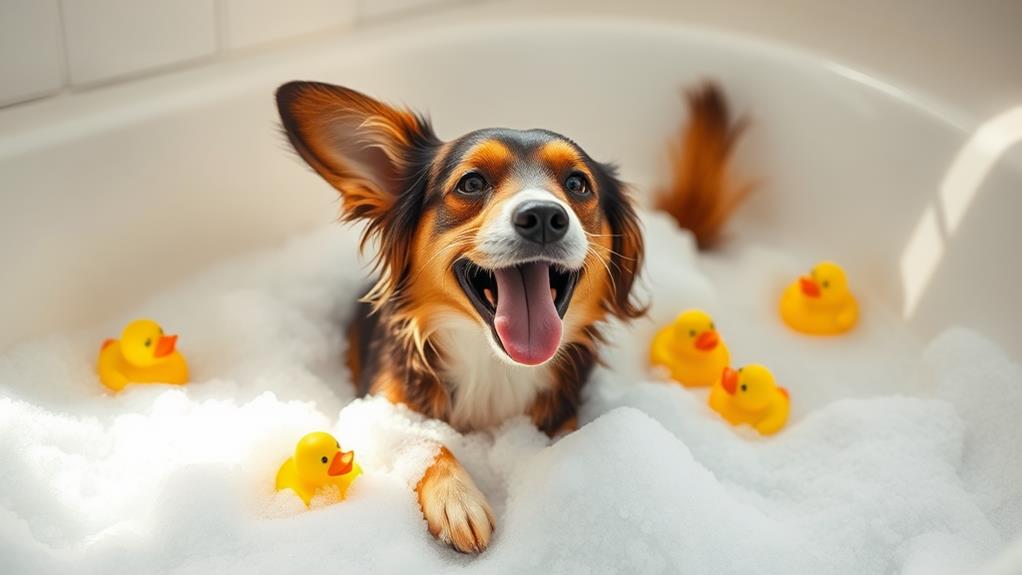
Often, dogs respond much better to positive reinforcement than to negative experiences. When it comes to bath time, you can transform what seems like a chore into a rewarding activity.
Start by introducing your dog to the bath area without water. Use treats or their favorite toys to create a positive association with the space. Praise them enthusiastically when they enter the area willingly.
During the bath, reward them with treats and gentle praise for calm behavior. If they show signs of anxiety, take a step back and give them a moment. Always celebrate small victories, like standing still or allowing you to wet them. This encourages your dog to associate bath time with good feelings rather than stress.
After the bath, continue to shower them with affection and maybe a special treat. This reinforces the idea that baths lead to enjoyable experiences.
Keep the atmosphere relaxed and upbeat, and your dog will start looking forward to bath time instead of dreading it. With patience and consistency, you’ll help your furry friend embrace bath time as a bonding experience rather than a battle.
Gradual Desensitization Techniques
Building on the positive reinforcement techniques you’ve already implemented, gradual desensitization can further ease your dog’s anxiety around baths. This method involves slowly exposing your dog to the bath environment without overwhelming them.
Start by letting your dog explore the bathroom while you provide treats and praise. This creates a positive association with the space.
Next, introduce your dog to the bathtub. Allow them to sniff it and hop in or out at their own pace. Reward any brave attempts with treats and affection.
Once your dog is comfortable with the tub, turn on the water briefly while they’re nearby. Gradually increase the time the water runs, always rewarding calm behavior.
When your dog seems relaxed, you can begin to gently wet them with a cup or spray, ensuring you keep the experience positive. Always watch for signs of stress, like panting or attempting to escape, and take a step back if needed.
This slow, patient approach will help your dog associate baths with positive experiences, making bath time less of a chore and more of a bonding opportunity.
With time, your furry friend will likely learn to enjoy their baths!
Select the Best Bathing Tools
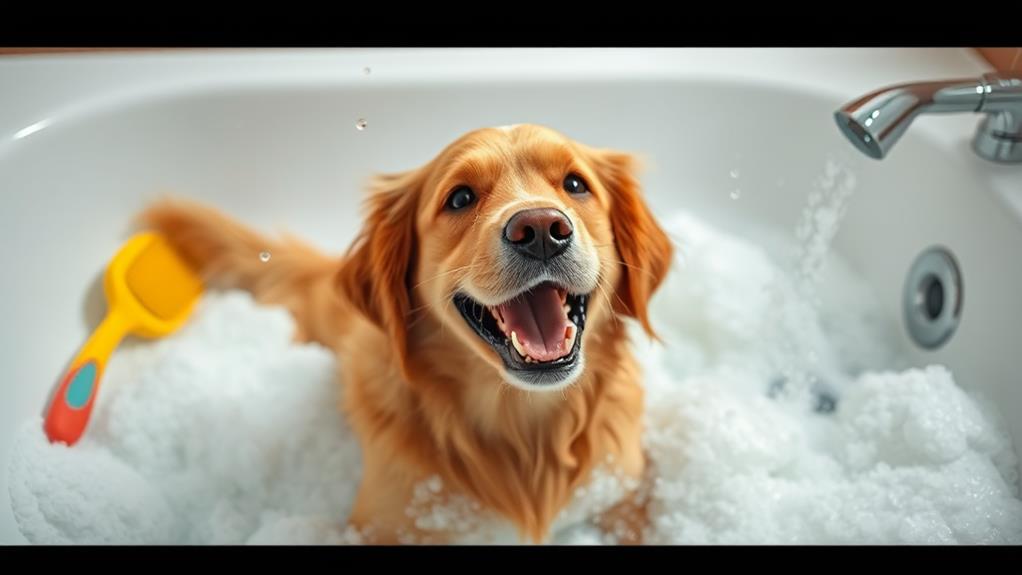
Choosing the right bathing tools can make a significant difference in how your dog perceives bath time. Start by selecting a gentle dog shampoo specifically designed for their skin type. Look for pH-balanced formulas that won’t irritate their skin or fur. A good shampoo can help create a positive bathing experience.
Next, invest in a quality brush. Regular brushing before bath time helps prevent mats and tangles, making washing easier. Opt for a brush that suits your dog’s coat type—slicker brushes work well for long-haired dogs, while bristle brushes are better for short-haired breeds.
Don’t forget a non-slip mat for the tub or shower. This provides stability and comfort for your dog, reducing the chances of slips and falls.
A handheld showerhead or sprayer can make rinsing quicker and easier, allowing you to control the water flow and temperature more effectively.
Make It a Fun Experience
Making bath time enjoyable for your dog can transform it from a dreaded chore into a fun bonding experience. To achieve this, consider these tips that won’t only help your dog feel more at ease but also make you both look forward to bath time.
- Create a Relaxing Environment: Play soft music or use calming scents like lavender to help soothe their nerves.
- Use Treats and Praise: Reward your dog with treats and affectionate words during the bath. This positive reinforcement helps them associate baths with good things.
- Introduce Toys: Bring in waterproof toys or favorite items to keep your dog entertained while you wash them. This distraction can make the experience more enjoyable.
- Make It a Game: Turn the bath into a playful event by splashing a little water or gently massaging them with your hands. Playful interactions can ease their anxiety.
Consider Professional Help
If your dog still struggles with baths, it might be time to seek professional help.
Finding a skilled groomer can make bath time easier and more enjoyable for your pup.
You can also look into training sessions that focus on desensitizing your dog to baths and grooming.
Finding a Groomer
Considering the challenges of bathing your dog, enlisting the help of a professional groomer can be a worthwhile investment. A skilled groomer not only knows how to handle dogs that dislike baths but also provides a safe and stress-free environment.
Here are some tips for finding the right groomer for your furry friend:
- Ask for Recommendations: Talk to friends, family, or your veterinarian for trusted groomer suggestions.
- Check Reviews: Look online for reviews and ratings. This can give you insights into other pet owners’ experiences.
- Visit the Salon: Before making an appointment, visit the groomer’s facility. Ensure it’s clean, safe, and welcoming.
- Inquire About Services: Ask about their experience with anxious dogs and what techniques they use to make the bathing process easier.
Choosing a groomer who understands your dog’s needs can make a huge difference in their comfort level.
This investment in a professional won’t only keep your pup clean but also help build a more positive association with grooming. Your dog deserves the best care, so take the time to find a groomer that fits both of your needs.
Training Sessions Available
Training sessions can be a game-changer for dogs that dread baths. By seeking professional help, you can provide your furry friend with a positive experience and build their confidence. Trainers skilled in desensitization techniques can help your dog associate baths with enjoyable moments rather than stress.
During these sessions, you’ll learn how to create a calm environment. You can start with gradual exposure to water, using treats and toys to reinforce positive behaviors.
Trainers often recommend breaking the process down into smaller steps, making it less overwhelming for your pup.
Additionally, these sessions offer valuable insights into dog behavior, allowing you to understand your pet’s fears better. You’ll gain tools to help your dog feel more at ease during bath time, fostering a trusting relationship.
Frequently Asked Questions
Can Certain Dog Breeds Dislike Baths More Than Others?
Certain dog breeds, like terriers or hounds, might dislike baths more due to their grooming habits or past experiences. Understanding your dog’s personality helps you create a more positive bathing experience for them.
How Often Should I Bathe My Dog?
You might think bathing your dog’s a weekly spa day, but most dogs only need a bath every month or so. Overdoing it can strip their skin of essential oils, making them uncomfortable.
Are There Specific Products for Sensitive Skin?
Yes, there are specific products designed for sensitive skin. Look for hypoallergenic shampoos and conditioners that soothe irritation. Always read labels, and consider consulting your vet to find the best options for your dog’s needs.
Is It Safe to Bathe My Dog Outside?
Bathing your dog outside can be like a refreshing summer rain. It’s safe, as long as you choose a warm day, avoid harsh winds, and make sure your pup’s comfortable. Just keep an eye on them!
How Can I Tell if My Dog Is Anxious During a Bath?
You can tell your dog’s anxious during a bath by observing signs like trembling, whining, trying to escape, or excessive panting. If you notice these behaviors, it’s important to reassure and comfort them.
Conclusion
If your dog hates baths, it’s time to flip the script. Picture a warm, sunny day where your pup splashes joyfully in a kiddie pool, water glistening like diamonds around them. By understanding their fears and using positive reinforcement, you can transform bath time into a playful adventure. With patience and the right tools, you’ll create a bond that turns anxiety into excitement. So, grab those treats, and let’s make bath time something your dog actually looks forward to!

Carlos Rodriguez is the Senior Product Reviewer at DogShampooReviews.com. With over 15 years of experience in canine grooming and skincare, Carlos brings a wealth of knowledge and passion to our team. His journey began at a young age, growing up on a family farm where he was surrounded by dogs of all breeds and sizes. This early exposure ignited his lifelong dedication to animal care and well-being.
Professional Background
- Certified Dog Groomer: Carlos is a certified professional groomer who has worked in some of the top grooming salons across the country. His expertise spans various grooming techniques suitable for different breeds and coat types.
- Canine Skincare Specialist: Recognizing the importance of skin health in dogs, Carlos pursued additional certifications in dermatological care for canines, specializing in treating skin conditions and allergies.
- Product Testing Expert: With a meticulous eye for detail, Carlos rigorously tests dog shampoos and grooming products, evaluating them on ingredients, efficacy, safety, and overall quality.
Passion for Dogs
Carlos’s love for dogs goes beyond his professional life. He is an active volunteer at local animal shelters, providing grooming services to help adoptable dogs look and feel their best. His own rescued dogs, Bella and Rocky, are often the first to try out new products, ensuring his reviews come from genuine experiences.
Why Trust Carlos
- Unbiased Reviews: Committed to integrity, Carlos ensures all his reviews are honest and based on thorough testing.
- Expert Insight: His extensive knowledge allows him to break down complex information into understandable advice for dog owners.
- Community Engagement: Carlos actively engages with our readers, answering questions and providing personalized recommendations.