Bathing your dog too much can indeed cause dry skin by stripping away essential natural oils that protect and moisturize their skin. Without these oils, your dog may experience dullness, rough patches, and irritation. Signs of dry skin include excessive scratching or visible redness. It’s important to find a balance between keeping your pup clean and maintaining their skin’s health. Rather than frequent baths, consider alternative cleaning methods like spot cleaning or using pet wipes. If you want to explore the best bathing frequencies and product choices, there’s more information waiting for you just ahead.
Key Takeaways
- Excessive bathing strips essential natural oils from a dog’s skin, leading to dryness and skin issues.
- Dry skin can result in a dull coat and rough patches, indicating a need for less frequent baths.
- Regularly bathing dogs can disrupt their skin’s protective barrier, making them more susceptible to irritation and infections.
- Maintaining a balance between cleanliness and preserving natural oils is crucial for healthy skin and coat.
- Alternative cleaning methods, like spot cleaning or using dog wipes, can help maintain hygiene without over-bathing.
Importance of Natural Oils
Your dog’s skin is home to natural oils that play a crucial role in maintaining its health. These oils serve as a protective barrier, keeping moisture in and harmful elements out. When you bathe your dog too often, you risk stripping away these essential oils, leading to potential skin issues.
Natural oils not only keep your dog’s skin hydrated but also help in regulating body temperature and providing a protective layer against bacteria and parasites. When you prioritize your dog’s bathing schedule, consider the impact of excessive bathing on these vital oils.
It’s important to strike a balance between cleanliness and preserving your dog’s natural defenses. If your dog enjoys outdoor adventures or has a tendency to get dirty, it might be tempting to wash them frequently. However, you can opt for spot cleaning or using dog wipes to keep them fresh without overdoing it.
Signs of Dry Skin
After a few weeks without proper grooming, signs of dry skin can become apparent on your dog. You might notice that your dog’s coat looks dull and lacks its usual shine. When you pet them, you may feel rough patches or flakes where the skin appears dry and irritated. This can signal that your dog needs some extra care.
Another sign to watch for is excessive scratching or biting. If your dog seems restless and is constantly trying to soothe their itchy skin, it’s a clear indication that something’s off. You might also spot redness or inflammation, which can indicate irritation from dryness.
In some cases, your dog may develop scabs or sores due to scratching, which can lead to infections if left untreated.
Pay close attention to their behavior during grooming sessions; if they flinch or pull away when you touch certain areas, it could mean they’re experiencing discomfort.
Recommended Bathing Frequency
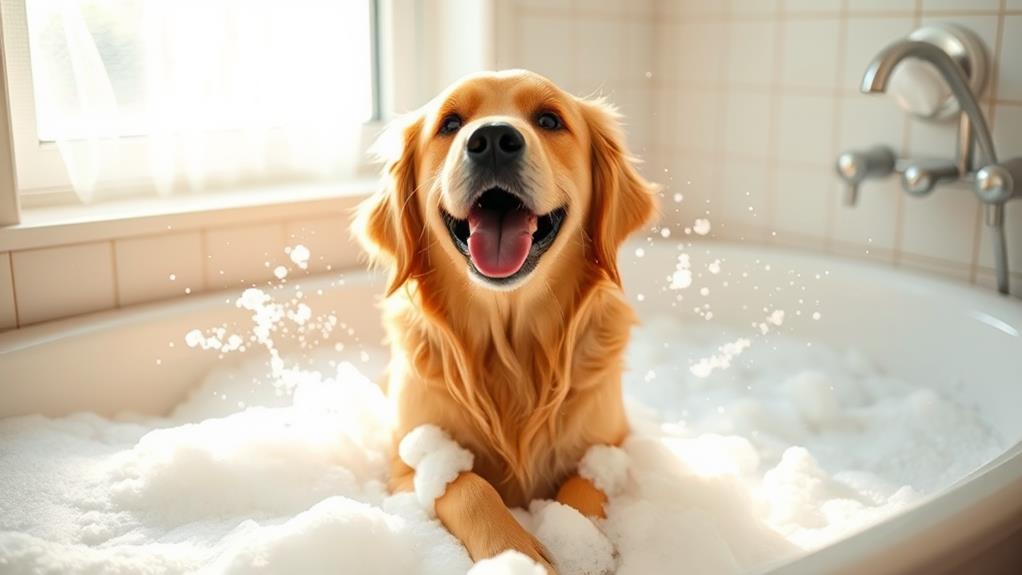
When it comes to bathing your dog, the recommended frequency often depends on factors like breed, coat type, and lifestyle.
For instance, dogs with thick, double coats, such as Golden Retrievers, typically need baths less often—about once every two to three months. On the other hand, dogs with shorter coats or those that spend more time outdoors might require baths every month or even every few weeks.
If your dog has skin issues, you may need to adjust the frequency based on your veterinarian’s advice. Active dogs who love to roll in mud or swim might get dirty faster, so you should consider bathing them sooner.
In contrast, if your dog is primarily indoors and has minimal exposure to dirt, you might find that bathing every six to eight weeks is sufficient.
Ultimately, pay attention to your dog’s specific needs. Regular brushing can also help maintain their coat and skin health, reducing the need for frequent baths.
Choosing the Right Shampoo
Selecting the right shampoo for your dog’s coat can make a significant difference in their overall health and cleanliness. When you choose a shampoo, consider your dog’s specific needs. For instance, if your pup has sensitive skin, look for hypoallergenic formulas that are free from harsh chemicals and fragrances. These gentle options can help prevent irritation and dryness.
If your dog has a thick or long coat, you might want a shampoo designed for detangling and conditioning. Such products can make grooming easier and keep their fur looking shiny and healthy.
On the other hand, if your dog tends to get dirty often, a deep-cleaning shampoo can help remove dirt and odors effectively without stripping their natural oils.
Always read the labels before purchasing. Ingredients like oatmeal or aloe vera can soothe and hydrate the skin. Additionally, avoid human shampoos, as they can disrupt your dog’s skin pH balance.
Your goal is to enhance their wellbeing, so take the time to find a shampoo that fits their unique coat type and skin condition. With the right choice, you can help your furry friend feel fresh and comfortable!
Alternative Cleaning Methods
While finding the right shampoo is important, there are alternative cleaning methods that can keep your dog fresh without frequent baths.
One effective method is to use waterless dog shampoos or dry shampoos. These products can simply be sprayed or rubbed onto your dog’s coat, then brushed out, making it easy to remove dirt and odors without the hassle of a full bath.
Another option is to use a damp cloth or pet wipes to wipe down your dog’s fur. This method helps eliminate dirt and dander from their coat, especially in hard-to-reach areas.
Regular brushing not only helps keep your dog’s coat clean but also distributes natural oils, promoting a healthy shine.
Consider using a pet-safe spray to freshen up your dog’s coat between baths. These sprays can help neutralize odors and provide a pleasant scent.
Remember that grooming tools, like de-shedding brushes, can also contribute to a cleaner coat by removing loose hair and debris.
Frequently Asked Questions
Can Certain Dog Breeds Tolerate More Baths Than Others?
Certain dog breeds do tolerate more baths than others. For instance, water-loving breeds like Labradors enjoy frequent bathing, while those with sensitive skin, like Bulldogs, need less. Always consider your dog’s unique needs and preferences!
What Are the Long-Term Effects of Over-Bathing on a Dog’s Skin?
Imagine washing your favorite sweater too often; it fades and frays. Over-bathing your dog can strip natural oils, leading to irritation, dryness, and potential infections. Balance is key to keeping your pup’s skin healthy and vibrant.
How Can I Tell if My Dog Is Allergic to Shampoo?
To tell if your dog’s allergic to shampoo, watch for excessive scratching, redness, or irritation after bathing. If you notice these signs, consult your vet to find a suitable alternative that won’t irritate your dog’s skin.
Are There Specific Seasons When Bathing Should Be Increased or Decreased?
During summer, when your dog’s more active outdoors, you might want to bathe them more often. In winter, reduce baths to avoid dry skin. Always adjust based on your dog’s lifestyle and coat type.
Can Dry Skin Lead to More Serious Health Issues in Dogs?
Yes, dry skin can lead to serious health issues in dogs. It may cause irritation, infections, or allergies. Keeping your dog’s skin healthy with proper care and hydration can prevent these complications and keep them comfortable.
Conclusion
In conclusion, while bathing your dog is important for hygiene, doing it too often can strip natural oils, leading to dry skin. It’s recommended to bathe your dog every 4 to 6 weeks, depending on their coat type and lifestyle. Interestingly, a study found that 50% of pet owners don’t realize the impact of over-bathing on their dog’s skin health. By choosing the right products and maintaining a balanced routine, you can keep your pup’s skin healthy and vibrant.

Carlos Rodriguez is the Senior Product Reviewer at DogShampooReviews.com. With over 15 years of experience in canine grooming and skincare, Carlos brings a wealth of knowledge and passion to our team. His journey began at a young age, growing up on a family farm where he was surrounded by dogs of all breeds and sizes. This early exposure ignited his lifelong dedication to animal care and well-being.
Professional Background
- Certified Dog Groomer: Carlos is a certified professional groomer who has worked in some of the top grooming salons across the country. His expertise spans various grooming techniques suitable for different breeds and coat types.
- Canine Skincare Specialist: Recognizing the importance of skin health in dogs, Carlos pursued additional certifications in dermatological care for canines, specializing in treating skin conditions and allergies.
- Product Testing Expert: With a meticulous eye for detail, Carlos rigorously tests dog shampoos and grooming products, evaluating them on ingredients, efficacy, safety, and overall quality.
Passion for Dogs
Carlos’s love for dogs goes beyond his professional life. He is an active volunteer at local animal shelters, providing grooming services to help adoptable dogs look and feel their best. His own rescued dogs, Bella and Rocky, are often the first to try out new products, ensuring his reviews come from genuine experiences.
Why Trust Carlos
- Unbiased Reviews: Committed to integrity, Carlos ensures all his reviews are honest and based on thorough testing.
- Expert Insight: His extensive knowledge allows him to break down complex information into understandable advice for dog owners.
- Community Engagement: Carlos actively engages with our readers, answering questions and providing personalized recommendations.