To bathe a dog with fleas, start by identifying the flea problem through careful inspection. Gather your supplies, including a non-slip mat, lukewarm water, and a flea-specific shampoo. Thoroughly wet your dog and apply the shampoo, lathering well to ensure coverage. Rinse your dog completely until the water runs clear, focusing on areas where fleas can hide. After drying with a soft towel, apply a vet-recommended flea treatment. Regularly maintain flea prevention by cleaning your dog's bedding and applying necessary medications. There's plenty more you can do to keep those pesky fleas at bay!
Key Takeaways
- Identify the flea problem by checking for excessive scratching and flea dirt on your dog's skin and coat.
- Gather necessary supplies, including a non-slip mat, flea shampoo, towels, and a brush for effective bathing.
- Select a suitable flea shampoo with natural ingredients or flea-specific formulations recommended by a veterinarian.
- Wet your dog thoroughly with lukewarm water, apply shampoo evenly, and rinse until the water runs clear.
- After bathing, apply flea treatments and maintain regular prevention steps like vacuuming and washing bedding.
Identify the Flea Problem
When you suspect your dog has fleas, it's important to confirm the problem quickly. Start by examining your dog's skin and coat. Look for signs like excessive scratching, biting, or licking, which can indicate discomfort.
Fleas often leave small, dark specks of feces, known as flea dirt, that resemble pepper. You can check for this by parting your dog's fur and using a fine-toothed comb. If you see small black dots that turn red when wet, that's a clear sign of flea activity.
Next, consider your dog's environment. Fleas thrive in warm, humid areas, so check your home, particularly in spots where your dog spends time, such as their bed or favorite resting places.
You might also notice fleas jumping on your clothes or even biting you, which confirms their presence.
If you've identified fleas, don't panic. You're taking the right steps by being proactive. Acting quickly not only alleviates your dog's discomfort but also protects your home and other pets.
Gather Necessary Supplies
Before you start bathing your dog, it's essential to gather all the necessary supplies to make the process smooth and effective.
First, you'll need a non-slip mat or towel to provide stability for your dog during the bath. This will help prevent any slips and make your furry friend feel more secure.
Next, grab a bucket or a detachable showerhead for rinsing. These tools allow you to control the water flow and ensure you thoroughly rinse out any shampoo later.
Don't forget a brush or comb to help remove any remaining fleas before you begin.
You'll also want to have towels handy for drying your dog afterward. A soft, absorbent towel won't only help keep your dog warm but also reduce the chances of a slippery floor.
Choose the Right Shampoo
When choosing a shampoo for your dog, it's crucial to look for natural ingredients that won't irritate their skin.
Opt for flea-specific formulations designed to tackle infestations effectively, and always check for pH-balanced options to maintain your dog's skin health.
With the right shampoo, you can make bath time a more pleasant experience for both of you.
Natural Ingredients Matter
Choosing the right shampoo is crucial for effectively battling fleas while keeping your dog's skin healthy. When selecting a shampoo, look for natural ingredients that are gentle yet effective. Ingredients like oatmeal, aloe vera, and coconut oil not only help soothe irritated skin but also provide hydration, making your dog feel more comfortable during and after the bath.
Avoid chemical-laden products that can strip your dog's skin of its natural oils. Instead, opt for shampoos with essential oils such as lavender or cedarwood, known for their natural flea-repelling properties. These natural alternatives are safer for your pet and the environment, allowing you to serve both effectively.
Moreover, always check for any potential allergens. Just because it's natural doesn't mean it's suitable for every dog. A patch test can help ensure your furry friend won't have an adverse reaction.
Flea-Specific Formulations
Picking the right flea-specific shampoo can make a significant difference in your dog's battle against these pesky parasites. Start by looking for shampoos specifically formulated to target fleas. These products often contain ingredients like pyrethrins, which are derived from chrysanthemum flowers and work effectively to kill fleas on contact.
When choosing a shampoo, consider your dog's age, size, and any known sensitivities. Some formulations are designed for puppies or sensitive skin, so always read the label carefully.
Avoid shampoos with harsh chemicals or artificial fragrances, as these can irritate your pet's skin and overall health. Reading reviews and seeking recommendations from veterinarians can also help you find the best option.
Ph Balanced Options
For your dog's health and comfort, opting for a pH-balanced shampoo is essential. A pH-balanced formula helps maintain your dog's skin barrier, preventing irritation while effectively combating fleas. Regular shampoos can disrupt this balance, leading to dryness and discomfort. So, choosing the right product can make a world of difference.
When selecting a pH-balanced shampoo, look for labels that specify a pH level between 6.5 and 7.5, as this range is most compatible with your dog's skin. Always read the ingredients carefully; natural ingredients like oatmeal and aloe vera soothe the skin and enhance moisture retention. Avoid harsh chemicals or artificial fragrances, which can exacerbate skin issues.
You might also consider consulting your veterinarian before making a choice. They can recommend specific brands or formulations tailored to your dog's unique needs. After all, your furry friend deserves the best care possible.
Once you've selected the right shampoo, follow the bathing instructions closely to maximize its benefits. A gentle massage during the wash can help alleviate any discomfort and make the experience enjoyable for your dog.
With the right pH-balanced shampoo, you're taking a significant step toward ensuring your dog's comfort and well-being.
Prepare the Bathing Area
Creating a comfortable bathing area is essential for successfully washing your dog with fleas. Start by choosing a location that's easy to clean, such as a bathroom or laundry room. You'll want to ensure the floor can handle water spills and potential messes.
Lay down towels or a non-slip mat to provide traction and comfort for your dog.
Gather all your supplies ahead of time. You'll need dog shampoo specifically formulated for fleas, a cup or handheld sprayer, and plenty of towels. If your dog is small enough, a sink or tub works well, while larger dogs might need a spacious tub or even a kiddie pool outdoors.
Make sure the water temperature is lukewarm, as extreme temperatures can distress your dog. Keep treats nearby to reward your dog for good behavior during the bath.
Also, consider using a leash or a gentle harness to help keep your dog in place without causing stress.
Wet Your Dog Thoroughly
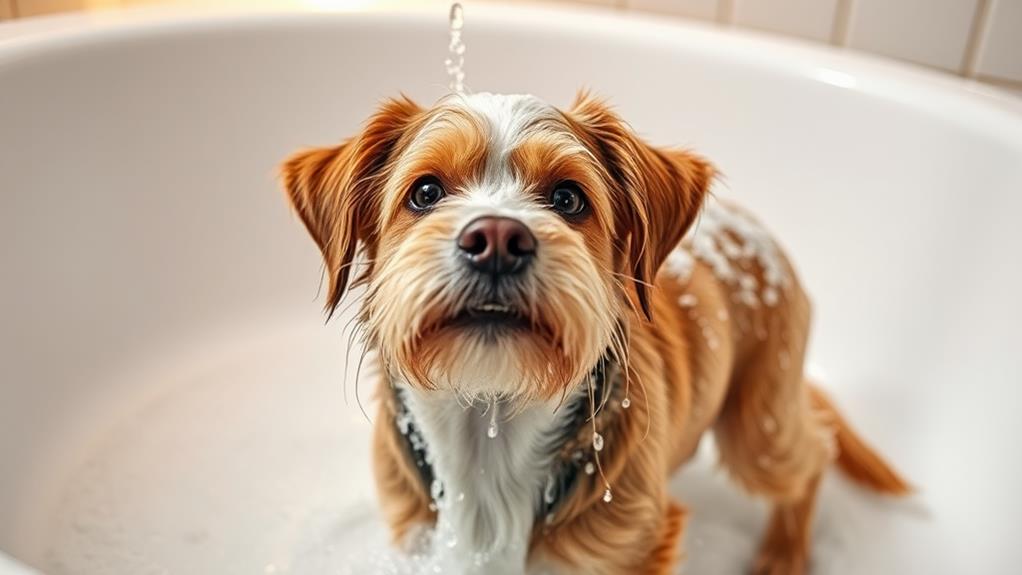
Before applying the flea shampoo, you need to wet your dog thoroughly to ensure the product works effectively. Start by using lukewarm water, as it's comfortable for your dog and won't shock their system.
If you're bathing your dog in a tub, gently guide them in and use a handheld sprayer or a cup to wet their coat. For those bathing outdoors, ensure you have a gentle flow of water, so your dog feels relaxed.
Make sure to wet your dog from head to tail, paying special attention to areas where fleas like to hide, such as behind the ears, under the belly, and around the legs. Avoid getting water directly in their ears and eyes, as this can cause discomfort.
If your dog has long or thick fur, you might need to spend extra time working the water through their coat. Ensure the skin beneath their fur is wet too, as this will help the flea shampoo penetrate effectively.
Once your dog is thoroughly soaked, you're ready to move on to the next step of the bathing process. Your care and attention make this a more pleasant experience for them!
Apply Shampoo Effectively
Now that your dog is wet, it's time to apply the shampoo effectively.
Choose a flea-specific shampoo that suits your dog's skin type, and make sure to apply it evenly across their fur.
After lathering, rinse thoroughly to ensure no residue is left behind, as that can irritate your pet's skin.
Choose the Right Shampoo
When it comes to choosing the right shampoo for your dog, it's essential to select one specifically designed to tackle fleas. Not all shampoos are created equal, and the right one can make a significant difference in your dog's comfort and health.
Look for products that contain effective ingredients and are safe for your pet.
Here are some key features to consider when selecting a flea shampoo:
- Flea-killing ingredients: Look for shampoos containing pyrethrins or permethrin, known for their effectiveness against fleas.
- Gentle formulation: Choose a shampoo that's gentle on your dog's skin to avoid irritation, especially if they've sensitive skin.
- Natural options: Consider shampoos with natural ingredients like neem oil or cedar oil, which can repel fleas without harsh chemicals.
- Veterinarian recommended: Opt for products endorsed by veterinarians to ensure safety and effectiveness.
Apply Evenly on Fur
Once you've chosen the right flea shampoo, it's time to apply it effectively to your dog's fur. Start by wetting your dog's coat thoroughly with warm water, which helps the shampoo spread more easily.
Take a generous amount of the shampoo and place it in your hands. You want to work it into your dog's fur, starting at the neck and moving towards the tail.
Make sure to apply the shampoo evenly across your dog's body, focusing on areas where fleas tend to hide, like behind the ears, under the legs, and around the belly. Use your fingers to massage the shampoo deep into the fur and down to the skin, ensuring you cover all areas. This not only helps in killing the fleas but also nourishes your dog's skin.
Don't rush; take your time to make sure every part of your dog's coat is treated. If your dog has longer fur, consider using a comb to help distribute the shampoo evenly.
Rinse Thoroughly Afterwards
Rinsing thoroughly after applying the flea shampoo is crucial for your dog's comfort and health. If you don't rinse well, leftover shampoo can irritate their skin and may even cause allergic reactions.
To ensure you're rinsing effectively, follow these key steps:
- Start with lukewarm water to keep your dog comfortable.
- Use your hands to gently work through their fur, ensuring all areas are rinsed.
- Pay special attention to areas behind the ears, under the belly, and between the toes, where residue can hide.
- Rinse until the water runs clear, indicating that all shampoo is gone.
After you've rinsed, consider giving your dog a final rinse with clean water to ensure no remnants of the shampoo remain. This extra step can boost their comfort and help their coat feel soft and fresh.
Always follow the instructions on the shampoo label, as different products may have specific rinsing recommendations.
Rinse Completely
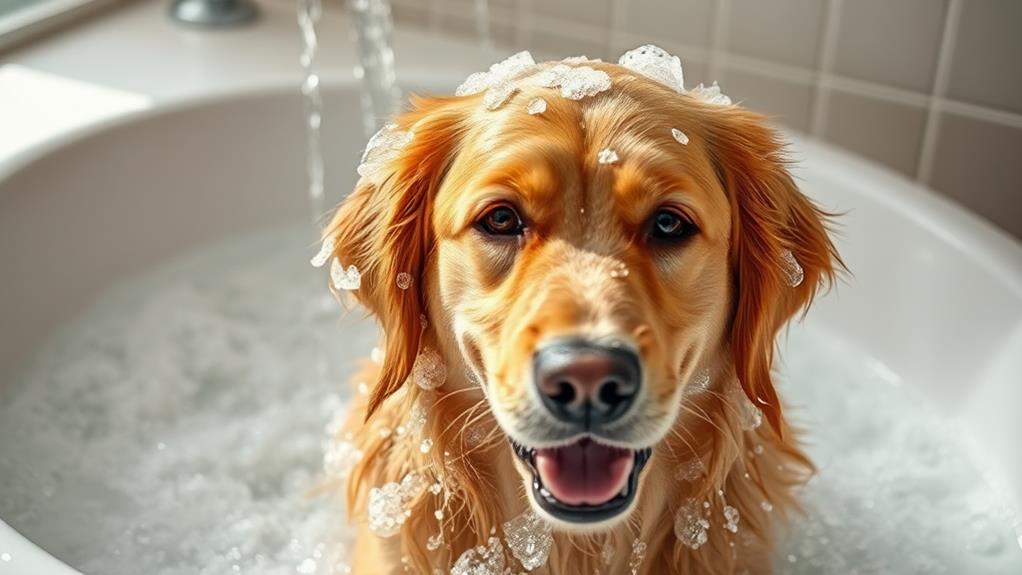
Thoroughly rinsing your dog is crucial to ensure all soap and flea treatment are washed away. After applying the shampoo, use lukewarm water to begin rinsing. Start at your dog's neck and work your way down, allowing the water to flow through the fur and reach the skin. This method helps remove any remaining product effectively.
Be attentive, as leftover soap can irritate your dog's skin. Rinse until the water runs clear, which indicates that you've successfully removed all residues. You might need to take your time, especially if your dog has thick or long fur.
Don't forget to check under the belly, around the ears, and between the toes, where soap can easily hide.
While rinsing, keep your dog calm and reassured. Speak to them soothingly, and offer gentle pats to make the experience more enjoyable. If your dog seems anxious, consider taking breaks during the rinsing process to help ease their stress.
Ensuring a thorough rinse not only contributes to your dog's comfort but also enhances the effectiveness of any flea treatments you've applied, paving the way for a happier, flea-free companion.
Dry Your Dog Properly
After you've rinsed your dog, it's time to dry them off properly to keep them comfortable and healthy.
A thorough drying process not only prevents your pup from getting cold but also helps maintain their skin's health.
Here's how to do it effectively:
- Use a soft, absorbent towel to pat your dog dry gently.
- Focus on areas that trap moisture, like under the belly, between the paws, and around the ears.
- If your dog tolerates it, consider using a hairdryer on a low, cool setting to speed up the drying process.
- Always keep the dryer a safe distance away to avoid overheating or startling your pet.
Treat for Fleas After Bath
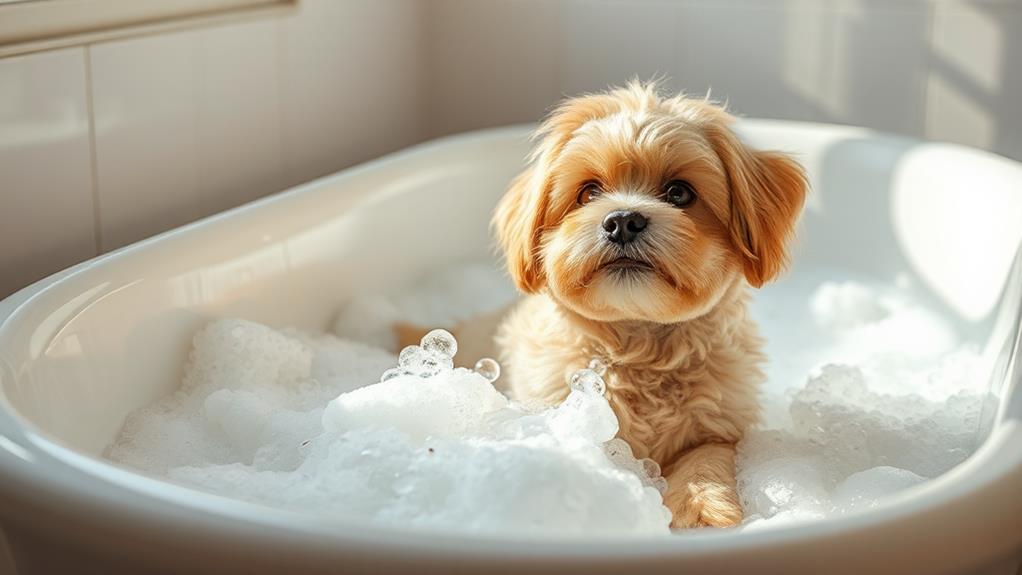
Once your dog is dry and comfortable, it's crucial to treat them for fleas to prevent any lingering infestation. Start by choosing an effective flea treatment that suits your dog's age, weight, and health status. Consult your veterinarian if you're unsure which product is best.
Apply the treatment according to the instructions on the package. Many options are available, such as topical treatments, oral medications, or flea collars.
If you're using a topical treatment, part your dog's fur at the base of the neck and apply the product directly to the skin. Make sure to avoid the eyes and mouth.
If you've chosen an oral medication, administer it during mealtime to ensure your dog ingests it properly. Always monitor your dog for any adverse reactions after applying the treatment. If you notice anything unusual, contact your vet immediately.
After treating for fleas, remember to wash your dog's bedding and vacuum your home to eliminate any remaining fleas or eggs. This extra step helps ensure your dog remains happy and flea-free.
Your efforts in this process truly show how much you care for their well-being.
Maintain Regular Flea Prevention
To keep fleas at bay, maintaining a regular flea prevention routine is essential. Being proactive can save you and your furry friend from the discomfort and health risks associated with flea infestations.
Here are some effective strategies to incorporate into your routine:
- Use Vet-Recommended Flea Medications: Choose topical treatments, oral medications, or flea collars that are suitable for your dog's size and age.
- Regularly Vacuum Your Home: Fleas love to hide in carpets and upholstery. Frequent vacuuming helps eliminate eggs and larvae, reducing the risk of reinfestation.
- Wash Bedding and Toys: Clean your dog's bedding and any toys regularly in hot water to kill any fleas and their eggs.
- Treat Your Yard: If your dog spends time outside, consider treating your yard with pet-safe flea control products to create a protective barrier.
Frequently Asked Questions
Can I Use Human Shampoo to Bathe My Dog With Fleas?
You shouldn't use human shampoo on your dog. It can irritate their skin and disrupt natural oils. Instead, opt for a gentle dog shampoo specifically designed for treating fleas to ensure their comfort and safety.
How Often Should I Bathe My Dog to Control Fleas?
Think of bathing your dog like watering a garden; regular care keeps it thriving. You should bathe your dog every 4-6 weeks to help control fleas, but adjust based on your dog's activities and environment.
What if My Dog Is Allergic to Flea Shampoo?
If your dog's allergic to flea shampoo, consult your vet immediately. They might suggest alternative treatments, like natural remedies or prescription options, ensuring your furry friend stays comfortable while effectively managing those pesky fleas.
Are There Natural Remedies for Fleas While Bathing?
You're searching for natural remedies to combat fleas, hoping to ease your dog's discomfort. Try using a mixture of apple cider vinegar and water during the bath—it's a simple, effective alternative that soothes and repels.
Can Fleas Survive the Bath? What Should I Do?
Fleas can survive a bath, but you can make it harder for them. Use a flea shampoo, scrub thoroughly, and follow up with a flea treatment. Regular baths help keep your dog flea-free and healthy.
Conclusion
Bathing your dog with fleas can be a crucial step in tackling the infestation. Did you know that a single female flea can lay up to 50 eggs a day? That's why it's essential to act quickly and follow up with flea treatments after the bath. By staying consistent with your flea prevention methods, you'll not only keep your pup comfortable but also help break the flea cycle. Your furry friend will thank you for it!

Carlos Rodriguez is the Senior Product Reviewer at DogShampooReviews.com. With over 15 years of experience in canine grooming and skincare, Carlos brings a wealth of knowledge and passion to our team. His journey began at a young age, growing up on a family farm where he was surrounded by dogs of all breeds and sizes. This early exposure ignited his lifelong dedication to animal care and well-being.
Professional Background
- Certified Dog Groomer: Carlos is a certified professional groomer who has worked in some of the top grooming salons across the country. His expertise spans various grooming techniques suitable for different breeds and coat types.
- Canine Skincare Specialist: Recognizing the importance of skin health in dogs, Carlos pursued additional certifications in dermatological care for canines, specializing in treating skin conditions and allergies.
- Product Testing Expert: With a meticulous eye for detail, Carlos rigorously tests dog shampoos and grooming products, evaluating them on ingredients, efficacy, safety, and overall quality.
Passion for Dogs
Carlos’s love for dogs goes beyond his professional life. He is an active volunteer at local animal shelters, providing grooming services to help adoptable dogs look and feel their best. His own rescued dogs, Bella and Rocky, are often the first to try out new products, ensuring his reviews come from genuine experiences.
Why Trust Carlos
- Unbiased Reviews: Committed to integrity, Carlos ensures all his reviews are honest and based on thorough testing.
- Expert Insight: His extensive knowledge allows him to break down complex information into understandable advice for dog owners.
- Community Engagement: Carlos actively engages with our readers, answering questions and providing personalized recommendations.