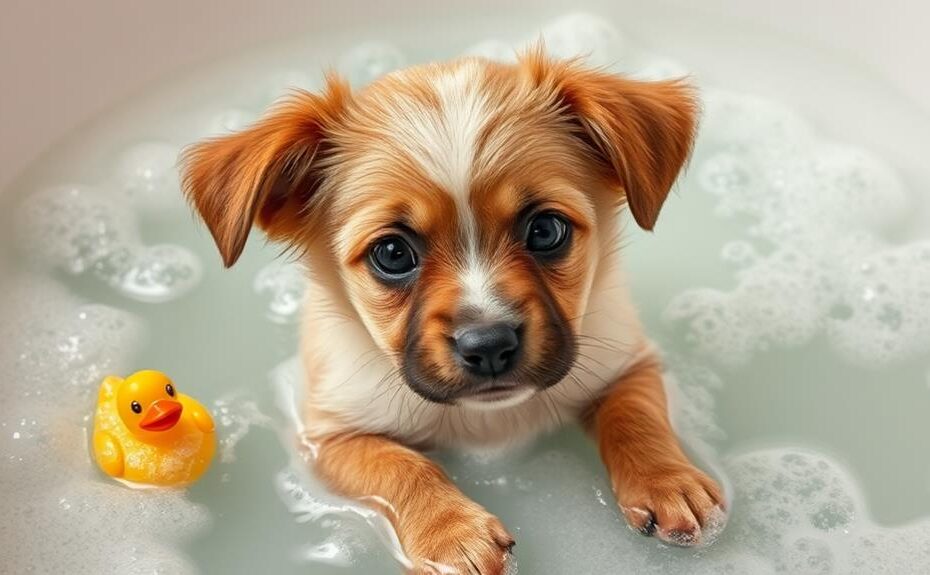
When bathing your puppy, avoid using human shampoo as it can irritate their skin. Make sure the water temperature is comfortable, ideally between 68°F and 72°F, and use gentle water pressure to prevent overwhelming them. Don’t skip pre-bath brushing to remove tangles and dirt, and ensure you’re in a safe, spacious area. Limit baths to once a month to protect natural oils, and never neglect ear and eye protection. Rushing through the process can stress your puppy. There’s plenty more to explore to ensure a safe and enjoyable bath experience for your furry friend!
Key Takeaways
- Avoid using human shampoo, as it can disrupt a puppy’s pH balance and cause skin irritations.
- Ensure water temperature is between 68°F to 72°F to keep puppies comfortable during baths.
- Always brush your puppy before bathing to remove knots and dirt, promoting comfort and effective cleaning.
- Rinse thoroughly to prevent skin irritation, ensuring all shampoo residue is completely removed.
- Don’t rush the bathing process; take time to reassure and comfort your puppy for a positive experience.
Using Human Shampoo
When you’re ready to bathe your puppy, it’s crucial to remember that using human shampoo can be a big mistake. Human shampoos are formulated for our skin, which is different from your puppy’s delicate skin. These products can disrupt their natural pH balance, leading to skin irritation, dryness, or even allergic reactions. You wouldn’t want to cause your furry friend discomfort, would you?
Instead, opt for a shampoo specifically designed for dogs. These shampoos contain ingredients that cater to a puppy’s unique needs, ensuring a gentle cleanse without stripping away essential oils. They often include soothing elements like oatmeal or aloe, which can help maintain healthy skin and fur.
When you choose the right shampoo, you’re not just protecting your puppy’s skin; you’re also promoting their overall well-being. Bath time can be a joyful bonding experience for both of you, and using the appropriate products enhances that connection.
Ignoring Water Temperature
When bathing your puppy, the water temperature matters more than you might think.
Ideally, it should be warm but not too hot, as extreme temperatures can cause discomfort or even harm.
Pay attention to signs of distress, like shivering or whining, to ensure your pup stays happy and relaxed during bath time.
Optimal Temperature Range
The optimal temperature range for bathing a puppy typically falls between 68°F to 72°F (20°C to 22°C). Staying within this range ensures your puppy feels comfortable and relaxed during bath time, making the experience enjoyable for both of you.
Consider these points to maintain the ideal environment:
- Room Temperature: Ensure the bathing area is warm enough to prevent your puppy from getting chilled.
- Draft Protection: Close windows or doors to avoid any drafts, which can disturb your puppy’s comfort.
- Surface Temperature: Use a non-slip mat in the tub or sink, ensuring it doesn’t become too cold for tiny paws.
- Duration of Bath: Keep baths relatively short; prolonged exposure to cooler air can make your puppy uncomfortable.
Signs of Discomfort
Recognizing signs of discomfort in your puppy during bath time is crucial for ensuring a positive experience. If your puppy whines, barks, or tries to escape, these behaviors often signal that they’re feeling uneasy. Pay close attention to their body language; a tucked tail, flattened ears, or tense posture can indicate stress.
Ignoring water temperature can exacerbate discomfort, so always check if it’s too hot or too cold. If your puppy shivers or seems reluctant to step into the water, it may be too chilly for them. Conversely, if they’re panting excessively or trying to jump out, the water might be too warm.
Also, watch for excessive licking or shaking, as these can be signs that your puppy is trying to cope with their discomfort. If you notice any of these signs, it’s essential to stop the bath and assess the situation.
Maybe you need to adjust the temperature or take a break. Remember, your goal is to create a calm and enjoyable environment, so listen to your puppy’s needs and respond accordingly. Their comfort should always be your top priority during bath time.
Overusing Water Pressure
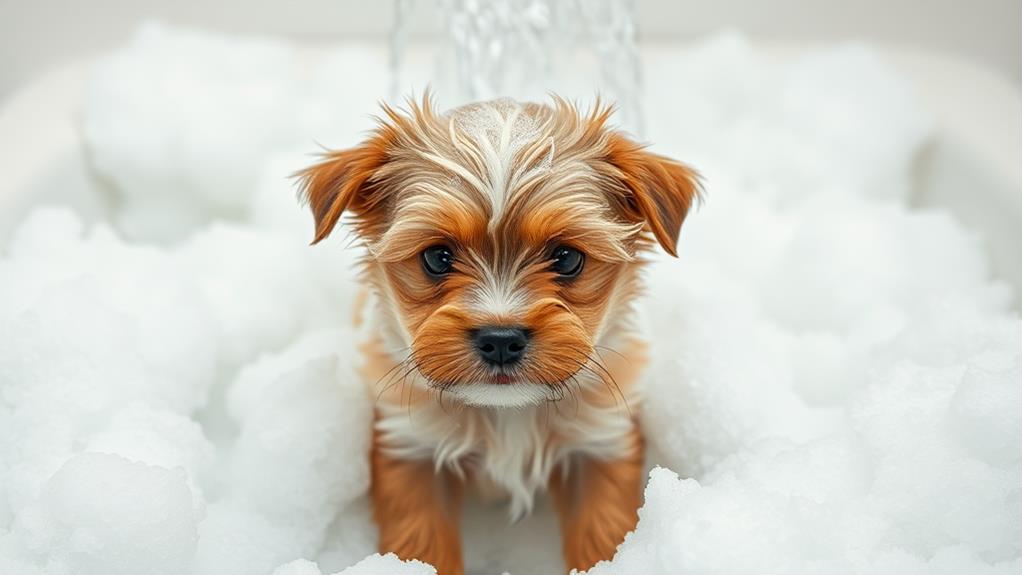
With too much water pressure, bath time can quickly turn into a stressful experience for your puppy.
It’s essential to create a calming atmosphere, and excessive water force can make your furry friend feel overwhelmed. Here are some things to keep in mind to ensure a positive bathing experience:
- Use a gentle spray nozzle: Opt for a nozzle that allows you to control the water flow. A gentle spray will keep your puppy comfortable.
- Keep the distance: Maintain a reasonable distance between the nozzle and your puppy. This way, you can avoid blasting them with water.
- Watch for signs of distress: Pay attention to your puppy’s body language. If they seem anxious or try to escape, reduce the water pressure immediately.
- Be patient: Take your time during the bath. Rushing can lead to higher pressure, which can frighten your pet.
Skipping Pre-Bath Brushing
Your puppy’s coat deserves a little TLC before bath time, and skipping pre-bath brushing can lead to a tangled mess. Brushing your puppy’s fur helps remove knots, dirt, and loose hair, making the bathing process smoother and more enjoyable for both of you. When you take the time to brush, you’re not just caring for their coat; you’re also bonding with your puppy.
Tangled fur can trap moisture and shampoo, making it harder to clean and rinse effectively. Plus, the tugging from matting can cause discomfort, turning bath time into a stressful experience. Gently brushing will loosen any knots and ensure that the shampoo reaches their skin, promoting a thorough clean.
Choose a brush that’s appropriate for your puppy’s coat type. Whether they’ve long, short, curly, or wiry fur, using the right tool will make the task easier and more effective.
As you brush, keep an eye out for any skin irritations or parasites, and address those promptly. By investing a few extra minutes in pre-bath brushing, you’ll create a positive environment for your puppy, transforming bath time into a joyful experience.
Bathing in a Small Space
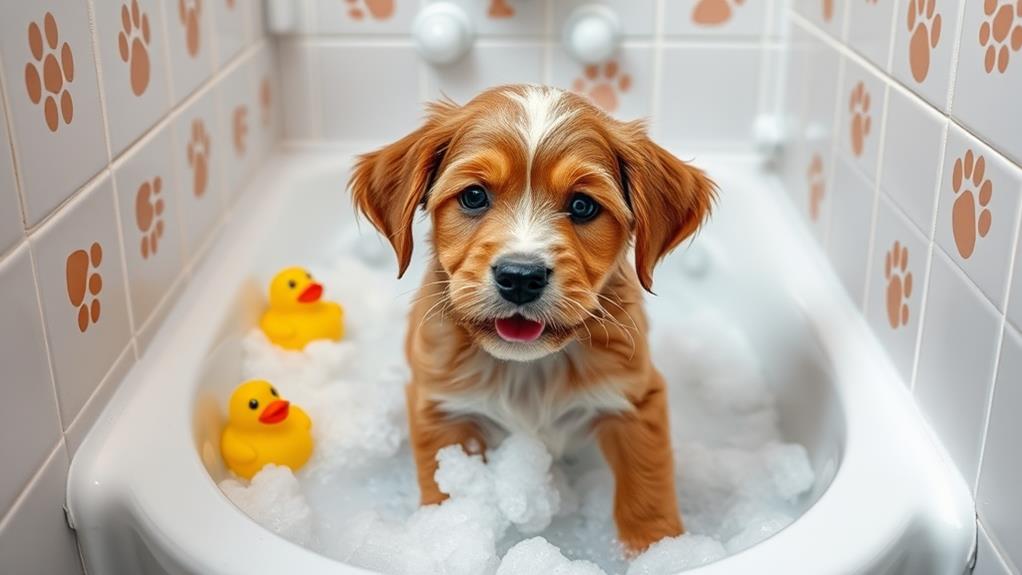
Bathing your puppy in a small space can be tricky, so you need to think about how much room you really have.
Make sure to prioritize safety by securing your puppy and having all your supplies within reach.
With a little planning, you can make the experience smooth and enjoyable for both of you.
Space Constraints Considerations
When space is tight, bathing a puppy can feel daunting, but it doesn’t have to be. With a little creativity and preparation, you can turn a cramped area into a functional bathing zone. Here are some tips to help you make the most of your limited space:
- Choose the right tub: If you don’t have a bathtub, consider using a large plastic container or a sink. Just ensure it’s comfortable for both you and your puppy.
- Gather your supplies: Have shampoo, towels, and brushes within reach to minimize movement and keep things efficient.
- Use a non-slip mat: This helps your puppy feel secure and prevents slipping, making the experience safer and more enjoyable.
- Work in small sections: If your puppy is anxious or fidgety, focus on one area at a time. This keeps the bathing process manageable and less overwhelming for both of you.
Safety Precautions Essential
Ensuring safety during puppy baths in tight spaces is crucial to prevent accidents and keep both you and your puppy calm.
Start by securing your puppy before you begin. Consider using a non-slip mat to prevent slipping, which can lead to injuries for both of you.
Always have everything you need within arm’s reach, so you don’t have to leave your puppy unattended. This includes shampoo, towels, and a cup for rinsing.
If you’re using a small tub or sink, make sure it’s stable and won’t tip over.
Keep the water temperature lukewarm, as puppies can be sensitive to extreme temperatures. Avoid getting water in their ears or eyes to prevent discomfort.
If your puppy gets anxious, consider using a gentle voice to soothe them, helping them feel secure. You might also want to have treats on hand to reward good behavior during the bath.
Lastly, after bathing, dry your puppy thoroughly in the same confined space to avoid slipping on wet surfaces.
Forgetting to Rinse Thoroughly
Many new puppy owners overlook the importance of rinsing thoroughly after a wash.
It’s easy to get caught up in the excitement of cleaning your furry friend, but skipping this step can lead to skin irritations and discomfort. Your puppy deserves the best care, and that includes ensuring all soap and shampoo are completely washed away.
To make rinsing more effective, keep these tips in mind:
- Use lukewarm water to keep your puppy comfortable.
- Start at the neck and work your way down to ensure even rinsing.
- Pay special attention to areas where shampoo may linger, like behind the ears and under the belly.
- Rinse until the water runs clear, confirming that all product is removed.
Not Using a Non-Slip Surface
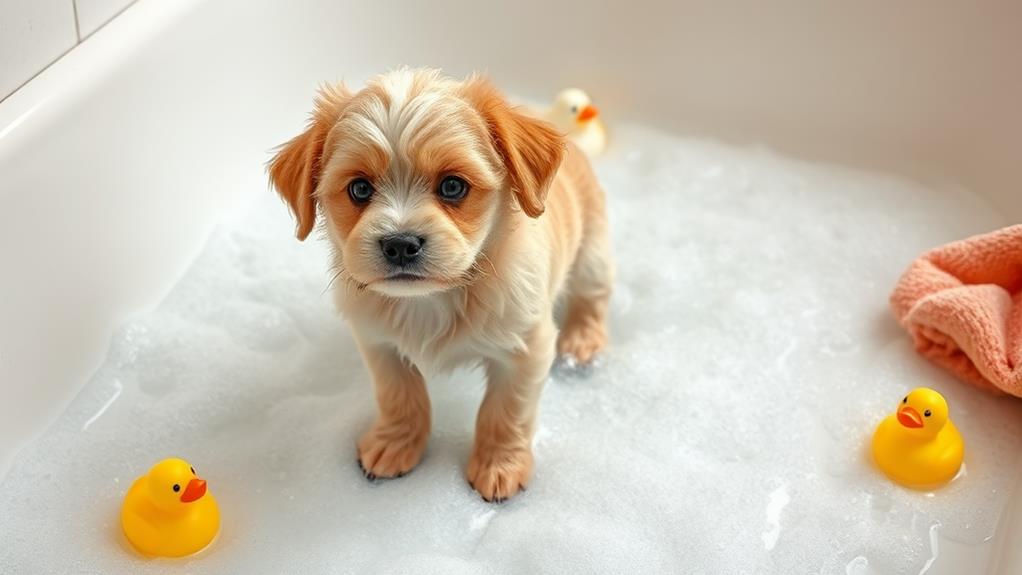
Bathing your puppy can be a slippery situation, especially if you don’t use a non-slip surface. Without that extra grip, your pup might feel insecure and anxious, making bath time stressful for both of you. A non-slip mat or pad can provide stability, allowing your puppy to stand comfortably while you wash them.
Imagine the peace of mind you’ll have when your furry friend isn’t slipping around, trying to escape the tub. It’s important to create a safe environment where your puppy can relax and enjoy the experience.
You could also consider using a rubber bath mat or even a textured towel to achieve that non-slip effect. These surfaces can help prevent any accidents or injuries during bath time.
Additionally, having a non-slip surface keeps you focused on the task at hand instead of worrying about your puppy’s safety.
Bathing Too Frequently
Overbathing your puppy can lead to dry skin and irritation, which is the last thing you want for your furry friend. Puppies have natural oils that keep their skin healthy, and frequent baths can strip these oils away.
You might think regular baths are necessary, but it’s essential to find a balance. Here are some things to consider:
- Frequency: Aim for a bath once every month or as needed, depending on your puppy’s activity level.
- Conditioning: Use a gentle puppy shampoo that won’t irritate their skin and helps maintain moisture.
- Signs: Watch for signs of dryness, like flakiness or excessive scratching, which may indicate too many baths.
- Alternatives: Consider brushing your puppy regularly to remove dirt and loose fur without the need for frequent baths.
Neglecting Ear Protection
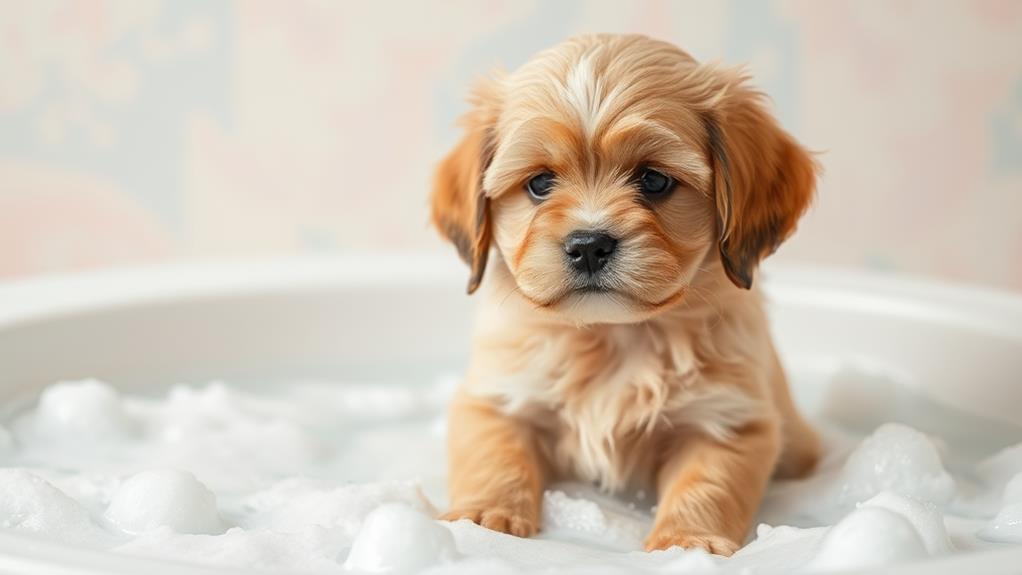
When giving your puppy a bath, don’t forget about ear protection. Water can easily get trapped in your pup’s ears, leading to discomfort or even infections. Taking a few simple precautions ensures your furry friend stays safe and happy during bath time.
Consider using cotton balls to gently plug your puppy’s ears. This helps prevent water from entering while still allowing for air circulation. Just be sure to remove the cotton balls immediately after the bath to avoid any potential issues.
If you’re uncomfortable using cotton balls, look for soft ear covers specifically designed for dogs. They can be an effective alternative that keeps water out while keeping your pup stylish!
Pay attention to how your puppy reacts during the bath. If they seem anxious or uncomfortable, it might be a sign that the water is bothering their ears. You can reassure them with gentle words and a calm demeanor.
Keeping bath time positive reinforces their trust in you and makes future baths easier.
Allowing Water in Eyes
How can you keep your puppy’s eyes safe during bath time?
It’s crucial to protect those little peepers while ensuring your pup stays clean and happy. Water can irritate their eyes or even cause infections, so take some simple precautions to keep bath time safe and enjoyable.
- Use a gentle, low-pressure spray nozzle to minimize splashing.
- Position your puppy’s head slightly upward while bathing to keep water away from the eyes.
- Opt for tear-free puppy shampoo to reduce irritation if any water does get in.
- Dry your puppy’s face gently with a soft towel right after the bath.
Rushing the Bathing Process
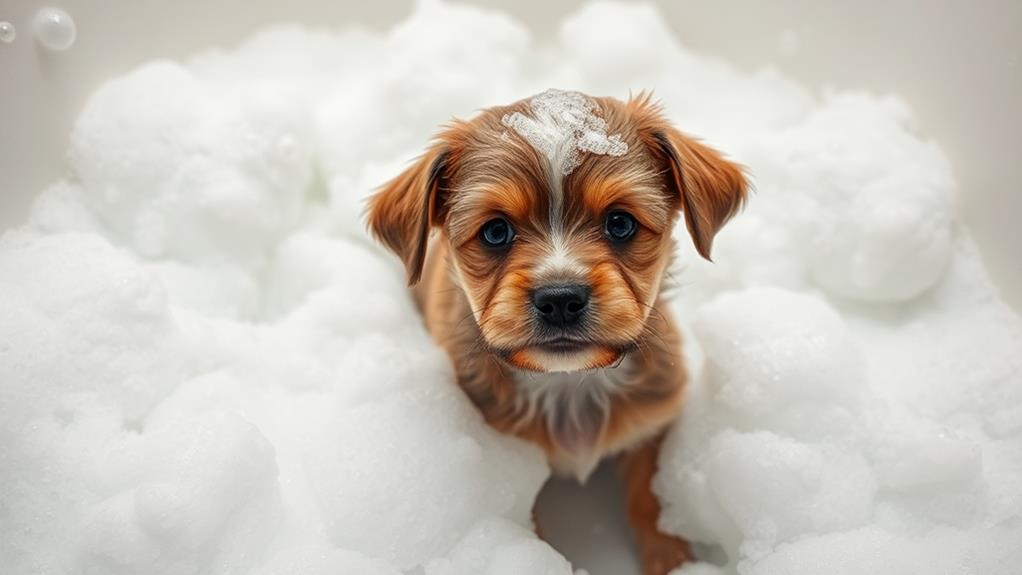
While ensuring your puppy’s eyes are safe is important, rushing through the bathing process can lead to other issues, too. When you hurry, you might overlook crucial steps that ensure your puppy’s comfort and cleanliness. A rushed bath can turn into a stressful experience for both you and your furry friend, making it harder to bond during this essential grooming routine.
Take your time, and approach bathing with patience. Start by gathering all your supplies beforehand—shampoo, towels, and a non-slip mat. This preparation helps you focus on your puppy instead of scrambling for items mid-bath.
While bathing, speak softly to reassure your puppy. A calm demeanor can make a world of difference in how they respond. Pay attention to your puppy’s body language. If they seem anxious, slow down and give them a moment to relax.
A thorough wash not only keeps your puppy clean but also lets you check for any skin issues or parasites. Remember, quality matters more than speed. By taking your time, you create a positive experience that fosters trust and strengthens your relationship with your puppy.
Frequently Asked Questions
How Often Should I Bathe My Puppy?
You should bathe your puppy every month or as needed, depending on their breed and activity level. Regular brushing helps minimize dirt and odors, so keep an eye on their coat’s condition for guidance.
Can I Use Baby Shampoo for My Puppy?
Imagine a gentle stream, soothing and safe. You can use baby shampoo for your puppy, but it’s best to choose a formula designed for dogs. Their skin needs special care, just like your love for them.
What Type of Towel Is Best for Drying a Puppy?
When drying your puppy, use a soft, absorbent microfiber towel. It’s gentle on their skin and fur, quickly soaking up moisture. Avoid rough materials to ensure your pup stays comfortable during the drying process.
Should I Use Conditioner After Shampooing My Puppy?
Ever wondered if your puppy deserves a little extra pampering? Using conditioner can help keep their coat soft and manageable. Just ensure it’s specifically made for dogs, so it’s safe and effective for them!
Is It Safe to Bathe My Puppy During Winter?
Yes, it’s safe to bathe your puppy during winter, but you’ll want to use warm water and ensure they dry quickly. Keep them indoors until they’re completely dry to prevent any chill or discomfort.
Conclusion
When bathing your puppy, remember to avoid using human shampoo, ignoring water temperature, and overusing water pressure. Skip the pre-bath brushing, don’t bathe in a cramped space, and refrain from bathing too frequently. Protect those sensitive ears, keep water out of their eyes, and don’t rush the process. By steering clear of these common pitfalls, you’ll create a positive bathing experience that keeps your puppy happy and healthy, while also strengthening your bond together.

Carlos Rodriguez is the Senior Product Reviewer at DogShampooReviews.com. With over 15 years of experience in canine grooming and skincare, Carlos brings a wealth of knowledge and passion to our team. His journey began at a young age, growing up on a family farm where he was surrounded by dogs of all breeds and sizes. This early exposure ignited his lifelong dedication to animal care and well-being.
Professional Background
- Certified Dog Groomer: Carlos is a certified professional groomer who has worked in some of the top grooming salons across the country. His expertise spans various grooming techniques suitable for different breeds and coat types.
- Canine Skincare Specialist: Recognizing the importance of skin health in dogs, Carlos pursued additional certifications in dermatological care for canines, specializing in treating skin conditions and allergies.
- Product Testing Expert: With a meticulous eye for detail, Carlos rigorously tests dog shampoos and grooming products, evaluating them on ingredients, efficacy, safety, and overall quality.
Passion for Dogs
Carlos’s love for dogs goes beyond his professional life. He is an active volunteer at local animal shelters, providing grooming services to help adoptable dogs look and feel their best. His own rescued dogs, Bella and Rocky, are often the first to try out new products, ensuring his reviews come from genuine experiences.
Why Trust Carlos
- Unbiased Reviews: Committed to integrity, Carlos ensures all his reviews are honest and based on thorough testing.
- Expert Insight: His extensive knowledge allows him to break down complex information into understandable advice for dog owners.
- Community Engagement: Carlos actively engages with our readers, answering questions and providing personalized recommendations.