How often you should bathe your dog depends on their breed, coat type, and lifestyle. Short-haired dogs may need a wash every 2-3 months, while long-coats benefit from monthly baths. Active pups often require baths every couple of weeks due to dirt accumulation, while couch potatoes might go a month or longer. Watch for signs like noticeable smells or dirt in their fur to know when it's time. Regular grooming can help reduce bathing frequency, too. Understanding these factors will help you determine the best bathing routine for your furry friend. You'll find even more helpful tips ahead!
Key Takeaways
- Bath frequency varies by breed; short-haired dogs may need baths every 2-3 months, while long-haired breeds benefit from monthly washes.
- Active dogs typically require more frequent baths, while low-energy dogs may only need them once a month or longer.
- Seasonal changes can affect bathing needs; warmer months may necessitate more regular baths due to increased outdoor activity and allergens.
- Signs your dog needs a bath include noticeable smells, dirt in fur, excessive scratching, or greasy fur texture.
- Regular grooming can reduce the need for baths by removing dirt and loose hair and promoting overall skin health.
Understanding Your Dog's Coat
When considering how often to bathe your dog, understanding their coat is crucial. Different breeds have varying coat types that influence how often they need a bath. For instance, dogs with thick, double coats, like Siberian Huskies, may require less frequent bathing since their fur helps repel dirt and moisture.
On the other hand, short-haired breeds, such as Beagles, might need more regular baths to keep their skin healthy and free from odors.
You also need to consider the condition of your dog's coat. If it's oily, matted, or filled with debris, a bath might be necessary, regardless of the breed. Regular grooming helps maintain their coat, making baths less frequent and more effective.
Pay attention to how your dog smells and feels. If they're starting to smell or their coat feels greasy, it's time for a bath.
Always choose a shampoo formulated for dogs, as human products can irritate their skin. By understanding your dog's specific coat type, you can better serve their grooming needs, ensuring they stay clean, healthy, and comfortable.
Factors Influencing Bath Frequency
When deciding how often to bathe your dog, consider their coat type and activity level.
A dog with a thick, long coat might need baths less frequently than a short-haired, active pup who loves to roll in the mud.
Dog's Coat Type
The type of coat your dog has plays a significant role in determining how often you should bathe them. For instance, dogs with short coats, like Beagles or Boxers, typically require fewer baths, as their fur doesn't trap dirt and oils as much. Bathing them every 2-3 months is often sufficient.
On the other hand, dogs with long or double coats, such as Golden Retrievers or Huskies, may benefit from more frequent baths—about once a month—to keep their fur clean and manageable.
If your dog has a curly or wavy coat, like a Poodle, you might need to bathe them more often to prevent matting. Regular grooming can help, but baths every 4-6 weeks can keep their coat in top condition.
Lastly, dogs that shed heavily, like Labrador Retrievers, might need more frequent baths during shedding seasons to help control the fur around your home.
In any case, be mindful of your dog's skin sensitivity. Overbathing can strip natural oils, leading to dryness or irritation. Adjust your bathing routine to suit your dog's specific coat type, ensuring their comfort and well-being.
Activity Level
Your dog's activity level can significantly influence how often they need a bath. If your pup loves running around outside, rolling in the grass, or splashing through puddles, they'll likely accumulate dirt and odors more quickly. In this case, you might find yourself bathing them every couple of weeks to keep them fresh and clean.
On the other hand, if your dog is more of a couch potato, lounging indoors most of the time, you might stretch bath time to once a month or even longer.
However, don't forget that even low-energy dogs can get dirty, especially if they shed or have a tendency to attract smells.
Consider your dog's activities and adjust the bathing schedule accordingly. Regular grooming can also help reduce the frequency of baths. Brushing your dog can remove loose hair and dirt, allowing you to maintain their coat's cleanliness without frequent baths.
Ultimately, keeping your dog clean and comfortable should be your priority. By being attentive to their activity level, you can ensure that they stay healthy and happy while also minimizing any skin or coat issues.
Breed-Specific Bathing Needs
When it comes to your dog's bathing routine, you'll need to consider their breed-specific needs.
The type of coat your dog has can greatly impact how often they should be bathed, while their activity level might mean more frequent washes.
Understanding these factors will help you keep your pup clean and comfortable.
Coat Type Considerations
Different dog breeds have unique coat types that significantly influence their bathing needs. For instance, long-haired breeds like the Afghan Hound require more frequent baths to prevent matting, while short-haired breeds, such as Beagles, might only need a bath every few months.
You'll want to consider the texture and thickness of your dog's coat when determining a bathing schedule. If your dog has a wiry coat, like a Border Terrier, it might benefit from less frequent baths to maintain its natural oils and texture.
Conversely, dogs with dense undercoats, such as Huskies, can trap dirt and odors, so you'll likely need to bathe them more often. Pay attention to breed-specific grooming needs, as some coats require additional care, like brushing or conditioning, to stay healthy.
If you're unsure, consult your veterinarian or a professional groomer who can guide you on the best practices for your dog's coat type. By understanding your dog's unique coat requirements, you'll ensure they not only look their best but also feel comfortable and clean.
Your commitment to their grooming will enhance their overall well-being and happiness.
Activity Level Impact
Activity level plays a significant role in how often dogs need baths. If your dog's a high-energy breed, like a Labrador or Border Collie, you'll likely find they get dirty more often. Their adventures in mud or water mean you'll need to bathe them regularly to keep their coat clean and healthy.
On the other hand, if you have a low-energy breed, like a Bulldog or Basset Hound, you might find they don't require baths as frequently. Their less active lifestyle often leads to a cleaner coat.
It's essential to observe your dog's behavior and adjust their bathing schedule accordingly. After a day of play at the park or a muddy romp in the backyard, you may want to give them a bath, regardless of their breed.
Regular grooming can also help manage odor and dirt accumulation, making it easier for you to decide when a bath is needed.
Ultimately, understanding your dog's activity level will guide your bathing routine. By keeping their needs in mind, you're ensuring they stay clean, comfortable, and happy.
Seasonal Considerations
Seasonal changes can significantly impact how often you should bathe your dog. In warmer months, increased outdoor activity often leads to more dirt, sweat, and odors. You might find that your dog needs a bath more frequently during spring and summer, especially if they love to play in the mud or swim.
Regular baths will help keep their coat clean and free of allergens, which is particularly important during pollen-heavy seasons.
As temperatures drop in fall and winter, your dog may spend more time indoors. This can reduce the need for frequent baths, but it's essential to consider their coat type. Dogs with heavier coats may require less bathing, while those with shorter coats might need an occasional wash to keep them fresh.
Additionally, if your dog tends to get dry skin in winter, bathing less frequently, combined with moisturizing products, can help maintain their skin health.
Always monitor your dog's coat and skin condition throughout the year. When in doubt, consult your veterinarian for tailored advice that suits your dog's needs.
Prioritizing your dog's comfort and hygiene will ensure they stay happy and healthy all year round.
Activity Level and Lifestyle
Your dog's activity level and lifestyle play a significant role in determining how often they should be bathed. If your furry friend leads an active life, running around at the park or exploring muddy trails, you'll likely need to bathe them more frequently. This helps remove dirt, sweat, and odor that can accumulate after those fun adventures.
On the other hand, if your pup enjoys a more relaxed lifestyle, lounging at home or taking leisurely strolls, you mightn't need to bathe them as often. In these cases, a bath every few weeks could suffice, as they may not accumulate as much dirt or debris.
Consider your dog's breed as well; some breeds have coats that trap dirt more easily and require more regular grooming and bathing. Additionally, if you engage in activities like swimming or hiking that expose your dog to different environments, that could also influence your bathing schedule.
Ultimately, pay attention to your dog's unique needs. Regular grooming and monitoring their coat and skin condition will help you determine the right bathing frequency.
You'll ensure your dog stays clean, comfortable, and healthy with a thoughtful approach.
Skin Conditions and Allergies
While some dogs may have resilient skin, others can be prone to skin conditions and allergies that affect their bathing frequency. If you notice your dog scratching more than usual or developing red, inflamed patches on their skin, it's essential to consult your veterinarian. They can help identify the specific allergies or conditions affecting your dog and recommend the best course of action.
In many cases, dogs with skin sensitivities benefit from less frequent baths, as frequent washing can strip essential oils and worsen their condition. When you do bathe your dog, choose a gentle, hypoallergenic shampoo specifically designed for sensitive skin. This will help maintain their skin's natural barrier while providing relief from irritation.
Additionally, consider incorporating regular grooming into your routine. Brushing your dog not only helps remove loose fur and dander but also promotes healthy skin by distributing natural oils.
Pay attention to any changes in their skin or coat, and always be ready to adapt your bathing schedule based on your dog's unique needs. By being attentive, you'll keep your dog comfortable and happy, ensuring they receive the care they deserve.
Odor and Dirt Accumulation
Even with careful attention to skin conditions and allergies, dogs can still develop odors and dirt accumulation, especially if they enjoy outdoor activities or have a thick coat.
You might notice that your furry friend smells less than fresh after a romp in the park or a muddy adventure. It's essential to monitor their cleanliness to keep them comfortable and happy.
Here are some signs that your dog might need a bath:
- A noticeable odor that lingers even after a good rubdown
- Dirt, mud, or debris stuck in their fur
- Greasy or oily-looking coat
- Excessive scratching or itching, which might indicate dirt build-up
- Visible dandruff or flaky skin
Regular baths not only help maintain your dog's hygiene but also strengthen your bond with them.
It's a chance for you to care for them and ensure their comfort. By paying attention to their odor and dirt levels, you can decide when it's time for a cleaning session, promoting better health and happiness for your beloved pet.
Importance of Proper Products
When bathing your dog, choosing the right products is crucial for their health and comfort.
Not all shampoos are created equal; you need to consider safe ingredients, breed-specific needs, and potential skin irritations.
Using proper products can make a significant difference in keeping your dog's coat clean and healthy.
Choosing Safe Ingredients
Choosing the right products for your dog's bath is crucial for their health and well-being. Using safe ingredients ensures that your furry friend feels comfortable and stays free from harmful reactions.
When selecting bath products, keep an eye out for these essential qualities:
- Natural Ingredients: Look for shampoos made from plant-based elements that nourish your dog's skin.
- Hypoallergenic Formulas: Choose products specifically designed for sensitive skin to minimize irritation.
- No Harsh Chemicals: Avoid sulfates, parabens, and artificial fragrances that can strip your dog's skin of its natural oils.
- pH-Balanced: Ensure the shampoo is pH-balanced to match your dog's skin, maintaining its protective barrier.
- Cruelty-Free: Opt for brands that don't test on animals, supporting ethical practices.
Breed-Specific Product Needs
Different dog breeds have unique coats, skin types, and sensitivities, which means their bathing products should match those specific needs. When you choose products for your furry friend, consider their breed characteristics.
For instance, long-haired breeds may benefit from moisturizing shampoos and conditioners that help detangle and prevent matting. Short-haired breeds, on the other hand, might need a gentle cleanser that focuses on removing dirt without stripping natural oils.
Additionally, some breeds are prone to skin allergies or sensitivities. If you have a dog with such issues, look for hypoallergenic or oatmeal-based shampoos that can soothe their skin.
It's also important to consider the pH balance of the products you use; dogs have a different skin pH than humans, so using human shampoo can lead to irritation.
Avoiding Skin Irritation
Selecting the right bathing products is crucial for keeping your dog's skin healthy and irritation-free.
Using the wrong products can lead to dryness, rashes, or allergic reactions, which can be uncomfortable for your furry friend.
To ensure you're choosing wisely, consider these essential factors:
- pH Balance: Dogs have a different skin pH than humans, so choose shampoos specifically formulated for dogs.
- Natural Ingredients: Look for products with natural ingredients to minimize the risk of skin irritation.
- Hypoallergenic Options: If your dog has sensitive skin, opt for hypoallergenic shampoos to avoid adverse reactions.
- Fragrance-Free: Products that are free from artificial fragrances can help prevent allergic reactions and skin sensitivities.
- Moisturizing Properties: Choose shampoos that contain moisturizing agents to keep your dog's skin hydrated.
Signs Your Dog Needs a Bath
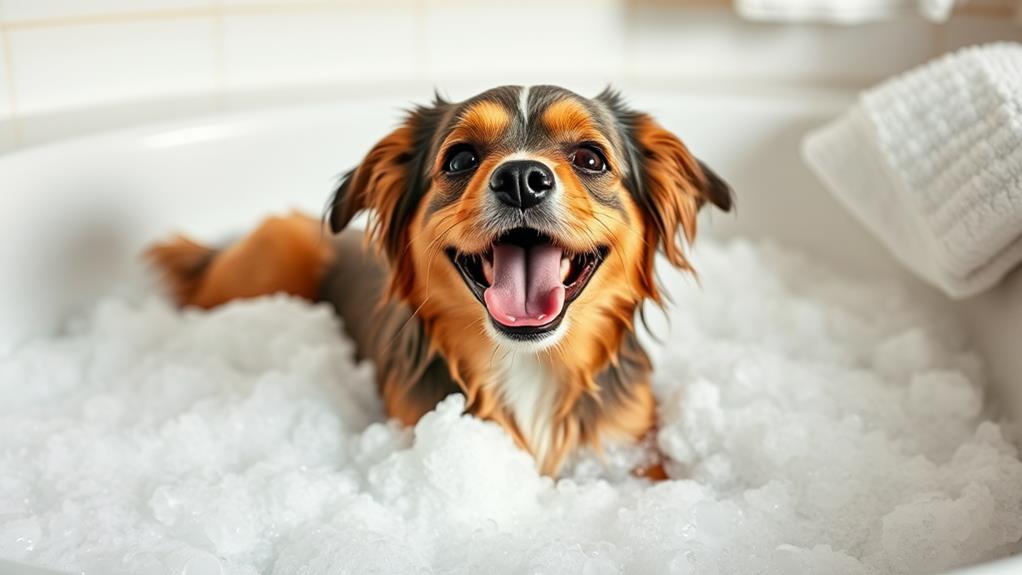
Knowing when your dog needs a bath can save you from unwanted odors and keep your furry friend comfortable. One of the first signs is a noticeable smell. If your dog starts to smell less like a fresh pup and more like a wet sock, it's time for a bath. You might also notice dirt, mud, or debris in their fur, especially after outdoor play.
Another indicator is excessive scratching or licking. If your dog is itching more than usual, it could be due to dirt buildup on their skin, which can lead to irritation. Additionally, check their paws; if they're dirty or have a foul odor, they're likely in need of a wash.
Pay attention to their fur's texture. If it feels greasy or sticky, that's a clear sign they need a bath.
Lastly, observe their overall behavior. If your dog seems uncomfortable or is avoiding petting, they might be telling you they need some grooming attention.
Alternatives to Regular Baths
When it comes to keeping your dog clean, regular baths aren't the only option available. You can explore several alternatives that can help maintain your furry friend's hygiene without the hassle of frequent bathing.
Here are a few effective methods:
- Dry shampoo: Use a pet-safe dry shampoo to absorb excess oils and dirt without water.
- Wipes: Invest in pet grooming wipes for quick clean-ups, especially after walks or playtime.
- Brushing: Regular brushing not only removes dirt and loose fur but also distributes natural oils for a healthy coat.
- Waterless shampoo: This type of shampoo can be sprayed on and wiped off, perfect for in-between baths.
- Spot cleaning: If your dog has specific dirty areas, spot cleaning with a damp cloth or pet-safe cleaner can be effective.
These alternatives can keep your dog looking and smelling fresh while minimizing the stress of regular baths.
Remember, each dog is different, so find what works best for your pet's needs and lifestyle.
Establishing a Bathing Routine
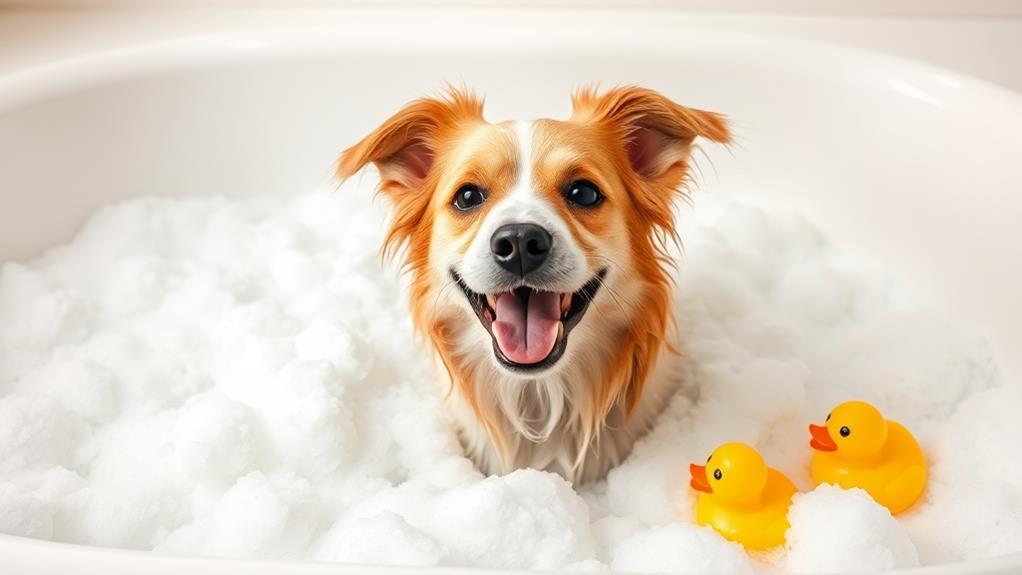
Creating a consistent bathing routine for your dog can make the process smoother and less stressful for both of you. Start by determining how often your dog needs a bath based on their breed, activity level, and coat type.
Once you have a schedule, stick to it as closely as possible. This predictability helps your dog feel more comfortable and reduces anxiety.
Choose a specific day and time for bath time, and make it a positive experience. Use treats and praise to reward your dog before, during, and after the bath. This will create positive associations with the routine, making future baths easier.
Prepare the bathing area in advance. Gather all necessary supplies like shampoo, towels, and brushes, so you're not scrambling mid-bath.
Make sure the water temperature is just right—comfortably warm but not too hot.
Frequently Asked Questions
Can I Use Human Shampoo on My Dog?
Using human shampoo on your dog's fur is like dressing a cat in a dog's coat—it just doesn't fit! Stick to dog-specific shampoos, as they're better for your pup's skin and coat health.
How Can I Make Bath Time Enjoyable for My Dog?
To make bath time enjoyable for your dog, use warm water, gentle soap, and plenty of praise. Bring toys, play soothing music, and keep the experience short. You'll both love the bonding time!
What Are the Signs of Over-Bathing My Dog?
If your dog's coat feels dry like a desert, or you notice excessive itching and flaking, you might be over-bathing. Pay attention to these signs—your furry friend deserves the best care possible!
Is It Safe to Bathe My Dog During Winter?
Bathing your dog in winter can be safe if you keep them warm and dry afterward. Just make sure to use lukewarm water and avoid drafts, so your pup stays comfortable during the process.
Should I Bathe My Puppy Differently Than an Adult Dog?
Yes, you should bathe your puppy differently than an adult dog. Puppies have sensitive skin, so use gentle, puppy-specific shampoos and limit baths to avoid drying out their skin. Keep it a positive experience for them!
Conclusion
In the grand adventure of dog ownership, finding the perfect bath routine can feel like solving a riddle wrapped in a mystery! You don't want your pup smelling like a forgotten gym sock, but you also don't want to turn bath time into a weekly wrestling match. By tuning into your dog's needs, you can create a bathing schedule that keeps them fresh and happy. So grab those suds, and let the bathing bonanza begin—your dog will thank you with tail wags galore!

Carlos Rodriguez is the Senior Product Reviewer at DogShampooReviews.com. With over 15 years of experience in canine grooming and skincare, Carlos brings a wealth of knowledge and passion to our team. His journey began at a young age, growing up on a family farm where he was surrounded by dogs of all breeds and sizes. This early exposure ignited his lifelong dedication to animal care and well-being.
Professional Background
- Certified Dog Groomer: Carlos is a certified professional groomer who has worked in some of the top grooming salons across the country. His expertise spans various grooming techniques suitable for different breeds and coat types.
- Canine Skincare Specialist: Recognizing the importance of skin health in dogs, Carlos pursued additional certifications in dermatological care for canines, specializing in treating skin conditions and allergies.
- Product Testing Expert: With a meticulous eye for detail, Carlos rigorously tests dog shampoos and grooming products, evaluating them on ingredients, efficacy, safety, and overall quality.
Passion for Dogs
Carlos’s love for dogs goes beyond his professional life. He is an active volunteer at local animal shelters, providing grooming services to help adoptable dogs look and feel their best. His own rescued dogs, Bella and Rocky, are often the first to try out new products, ensuring his reviews come from genuine experiences.
Why Trust Carlos
- Unbiased Reviews: Committed to integrity, Carlos ensures all his reviews are honest and based on thorough testing.
- Expert Insight: His extensive knowledge allows him to break down complex information into understandable advice for dog owners.
- Community Engagement: Carlos actively engages with our readers, answering questions and providing personalized recommendations.