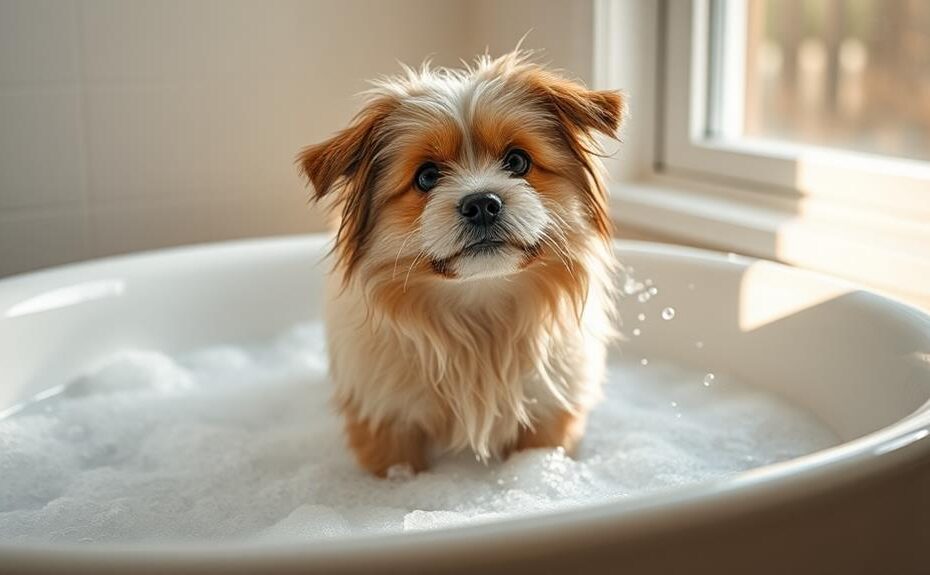
To bathe a dog with dandruff, start by gathering a gentle, dandruff-specific shampoo, ideally with oatmeal or aloe vera. Wet your dog with lukewarm water, ensuring you cover all areas, especially where dandruff is visible. Apply the shampoo evenly, massaging it into the coat and letting it sit for a few minutes. Rinse thoroughly until the water runs clear. Towel-dry your dog gently and consider using a leave-in conditioner for extra moisture. Keep an eye on their skin for any irritation. Maintaining a routine will help keep their coat healthy and reduce dandruff, and there’s always more to explore on this topic.
Key Takeaways
- Use a gentle, dandruff-specific shampoo with natural ingredients like oatmeal or aloe vera to soothe your dog’s skin.
- Wet your dog with lukewarm water, starting from the neck to avoid discomfort, ensuring all areas are covered.
- Apply shampoo evenly, massaging gently into the coat and focusing on areas with visible flakes; let it sit for a few minutes.
- Rinse thoroughly with lukewarm water until the water runs clear, then gently blot the coat dry with a soft towel.
- Monitor your dog’s skin for irritation post-bath and maintain a regular grooming routine to prevent future dandruff issues.
Understanding Dog Dandruff
Understanding dog dandruff starts with recognizing its causes and symptoms. This pesky condition can stem from various factors, including dry skin, allergies, or even a poor diet. It’s essential to note that just like humans, dogs can experience changes in their skin health based on their environment and lifestyle.
If your dog’s skin is dry or flaky, it might hint at an underlying issue that needs addressing.
You might also consider the role of grooming in managing dandruff. Regular brushing helps distribute natural oils throughout your dog’s coat, promoting hydration and reducing flakiness. Additionally, using the right shampoo is crucial; opt for a gentle, moisturizing formula designed for dogs to avoid further irritation.
Pay attention to your dog’s overall health, as conditions like stress, hormonal imbalances, or parasites can also contribute to dandruff. By ensuring your furry friend gets nutritious food, plenty of water, and regular vet check-ups, you’re taking proactive steps to help them thrive.
Signs Your Dog Has Dandruff
If you notice your dog has flaky skin, it might be a sign of dandruff.
You may also see them scratching more than usual or notice their coat feels greasy or dry.
Recognizing these signs early can help you address the issue effectively.
Flaky Skin Appearance
You might notice your dog has flaky skin if you see white specks or flakes scattered throughout their fur or on your furniture. This flaky appearance is a common sign that your furry friend may be dealing with dandruff.
It’s essential to recognize these signs early on, as they could lead to more significant skin issues if left untreated.
Here are a few things to look for:
- Visible Flakes: Check for white or yellowish flakes in your dog’s coat, especially around the back and tail.
- Dry Patches: Look for areas where the skin appears dry and rough, which can indicate underlying issues.
- Dull Coat: A shiny, vibrant coat is a sign of good health. If your dog’s fur looks lackluster, it could signal dandruff.
- Skin Redness: In some cases, flaky skin may also be accompanied by redness or irritation, indicating a need for immediate attention.
Excessive Scratching Behavior
Excessive scratching can be a telltale sign that your dog is dealing with dandruff. If you notice your furry friend constantly scratching, it’s essential to pay attention. This behavior often indicates discomfort or irritation caused by dry, flaky skin.
When your dog scratches excessively, it not only makes them uncomfortable but can also lead to more serious skin issues, such as infections or hot spots.
Look for patterns in your dog’s scratching. Is it happening more frequently after they’ve been outside, or does it seem to occur at certain times of the year? These observations can help you identify triggers that may be worsening their dandruff.
You might also notice them biting or licking certain areas, which can exacerbate the problem.
To best serve your dog, consider consulting your veterinarian if scratching persists. They can help you determine if the dandruff is caused by allergies, skin conditions, or other underlying issues.
Addressing excessive scratching promptly can lead to better overall skin health and a happier pup. Keeping an eye on their scratching behavior is the first step in ensuring your dog receives the care they need.
Greasy or Dry Coat
Noticing a greasy or dry coat on your dog can signal the presence of dandruff. This condition often affects your dog’s skin health and overall comfort. Recognizing the signs early can help you provide the best care for your furry friend.
Here are some indicators to watch for:
- Texture Changes: If your dog’s coat feels greasy or excessively dry, it may indicate a dandruff issue.
- Flaky Skin: Observe for visible flakes on your dog’s skin or fur; these can vary in size and color.
- Itching and Irritation: Even if your dog isn’t scratching excessively, a dry or greasy coat can still lead to discomfort.
- Odor: An unpleasant smell from your dog’s coat may signal an underlying skin problem, including dandruff.
Choosing the Right Shampoo
Finding the right shampoo for your dog with dandruff can make a significant difference in their skin health and comfort. Start by looking for a shampoo specifically formulated to address dandruff issues.
Ingredients like oatmeal, aloe vera, and tea tree oil can soothe your dog’s skin while also providing moisture. These components help alleviate dryness and inflammation, which are often the culprits behind dandruff.
Avoid shampoos with harsh chemicals or artificial fragrances, as these can irritate your dog’s skin further. Instead, opt for gentle, natural formulas that are free from sulfates and parabens.
If your dog has more severe dandruff or skin issues, consider consulting your vet for recommendations on medicated shampoos that can effectively target their specific needs.
Preparing for Bath Time
Before you start bathing your dog, it’s crucial to gather everything you’ll need to make the process smooth and stress-free.
Being prepared not only helps you stay organized but also ensures your furry friend feels comfortable throughout the bath.
Here’s a quick list of essential items you’ll want to have on hand:
- Dog shampoo – Choose a gentle, moisturizing shampoo specifically designed for dogs with dandruff.
- Towels – Have a couple of absorbent towels ready for drying your dog after the bath.
- Non-slip mat – Place this in the bath area to help your dog feel secure and prevent slipping.
- Brush – A brush can help detangle fur and remove loose hair before the bath begins.
Setting Up the Bath Area
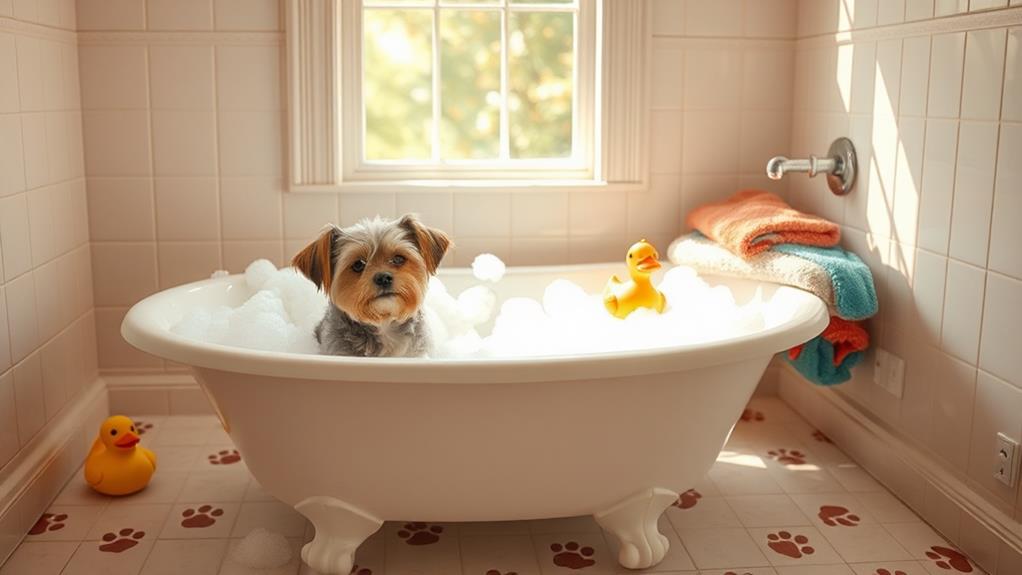
Creating a comfortable and safe environment for your dog during bath time is essential for a positive experience. Start by selecting a quiet space where your dog feels secure. If possible, use a non-slip mat in the bathtub or sink to prevent slips and provide stability.
Make sure the area is well-lit so you can easily see what you’re doing and keep an eye on your furry friend.
Gather all necessary supplies beforehand, including dog shampoo, towels, a brush, and any other grooming tools you plan to use. Having everything within reach will help you keep your dog calm and comfortable, as you won’t need to leave them unattended.
Consider using a handheld showerhead or a cup for rinsing, as this allows for more control and gentler water flow. If your dog is anxious, you might want to play soft music or talk to them soothingly to create a more relaxed atmosphere.
Wetting Your Dog Properly
Once you’ve gathered your supplies and set the stage for bath time, the next step is to wet your dog properly. This crucial step helps prepare their skin and coat for the treatment ahead. Here’s how to do it effectively:
- Use Lukewarm Water: Make sure the water isn’t too hot or cold. Lukewarm water is comfortable for your dog and helps relax them.
- Start from the Neck: Begin wetting your dog’s coat at the neck and work your way down. This technique prevents water from running into their ears and face, which can be uncomfortable.
- Avoid the Face: Keep the water away from your dog’s eyes and ears initially. You can use a damp cloth later to clean their face gently.
- Thorough Coverage: Ensure you wet your dog’s entire body. Pay special attention to areas prone to dandruff, like the back and tail, ensuring you’re saturating the coat properly.
Applying Shampoo Effectively
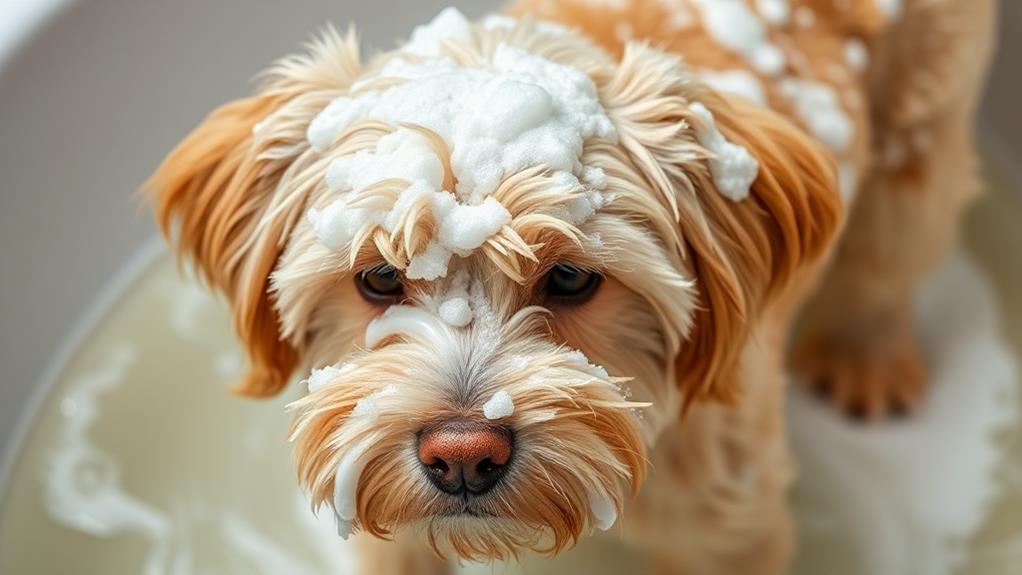
When it comes to applying shampoo, choosing the right product is key to tackling your dog’s dandruff.
Once you have the right shampoo, make sure to apply it evenly and thoroughly for the best results.
After shampooing, don’t forget to rinse and dry your dog properly to keep their coat healthy and shiny.
Choose the Right Shampoo
Choosing the right shampoo is crucial for effectively addressing your dog’s dandruff. The right product not only helps to alleviate flaking but also nurtures your dog’s skin and coat.
Here are four key factors to consider when selecting a shampoo:
- Medicated Formulas: Look for shampoos specifically designed to combat dandruff. Ingredients like salicylic acid or coal tar can be beneficial.
- Natural Ingredients: Opt for shampoos with natural ingredients, such as oatmeal or aloe vera. These soothe the skin and provide moisture without harsh chemicals.
- pH Balance: Ensure the shampoo is pH balanced for dogs. Human shampoos can be too acidic or alkaline, leading to irritation.
- Hypoallergenic Options: If your dog has sensitive skin, consider hypoallergenic shampoos. They’re formulated to minimize allergic reactions while still addressing dandruff.
Apply Evenly and Thoroughly
To achieve the best results, applying the shampoo evenly and thoroughly is essential. Start by wetting your dog’s coat completely. This helps the shampoo spread more easily and penetrate the skin and fur.
Once your dog is wet, pour a generous amount of shampoo into your hands and rub them together to create a lather.
Begin applying the shampoo from your dog’s neck, working your way down the back and sides. Use your fingers to gently massage the shampoo into the coat, ensuring it reaches the skin.
Don’t forget to treat the areas behind the ears, under the belly, and between the toes, as dandruff can accumulate in these spots too.
As you work, keep an eye on your dog’s comfort level. If they seem anxious, take a break and reassure them. You want this process to be enjoyable for both of you.
Once you’ve lathered the entire coat, let the shampoo sit for a few minutes, allowing its soothing properties to do their job.
Rinse and Dry Properly
After letting the shampoo sit for a few minutes, it’s crucial to rinse your dog thoroughly. Any leftover shampoo can irritate their skin, especially if they’ve dandruff. Make sure to use lukewarm water and rinse until the water runs clear.
Here are some tips to ensure you rinse and dry your dog properly:
- Use a Spray Nozzle: If possible, use a spray nozzle on your hose or showerhead. This lets you control the water flow and target specific areas.
- Check for Residue: Run your hands through your dog’s fur while rinsing. If you feel any slippery residue, keep rinsing until it’s gone.
- Dry Gently: After rinsing, use a soft towel to gently blot your dog’s coat. Avoid rubbing, as this can irritate their skin.
- Consider a Blow Dryer: If your dog tolerates it, you can use a blow dryer on a low, cool setting to help dry them off. Keep it at a safe distance to avoid burns.
Following these steps will help your furry friend feel comfortable and free from dandruff!
Rinsing Thoroughly
Once you’ve lathered your dog’s coat with the appropriate shampoo, it’s crucial to rinse thoroughly. Start by using lukewarm water to ensure your dog stays comfortable.
Begin at the dog’s neck and work your way down to the tail, allowing the water to flow through the coat. This method helps wash away all the shampoo and any loosened dandruff.
Pay special attention to areas where soap can easily accumulate, like under the legs, around the ears, and near the tail. If you notice any remaining flakes or residue, you might need to apply a little more water and gently massage the coat to ensure all the product is gone.
Rinsing well is vital because leftover shampoo can irritate your dog’s skin and exacerbate dandruff. It’s also essential for preventing any unwanted skin reactions.
Take your time during this step, as a thorough rinse can contribute to your dog’s overall comfort and health.
Once you’re confident that all the shampoo is washed out, you can proceed to the next steps in the bathing process, knowing you’ve done your best to care for your furry friend.
Drying Your Dog Safely
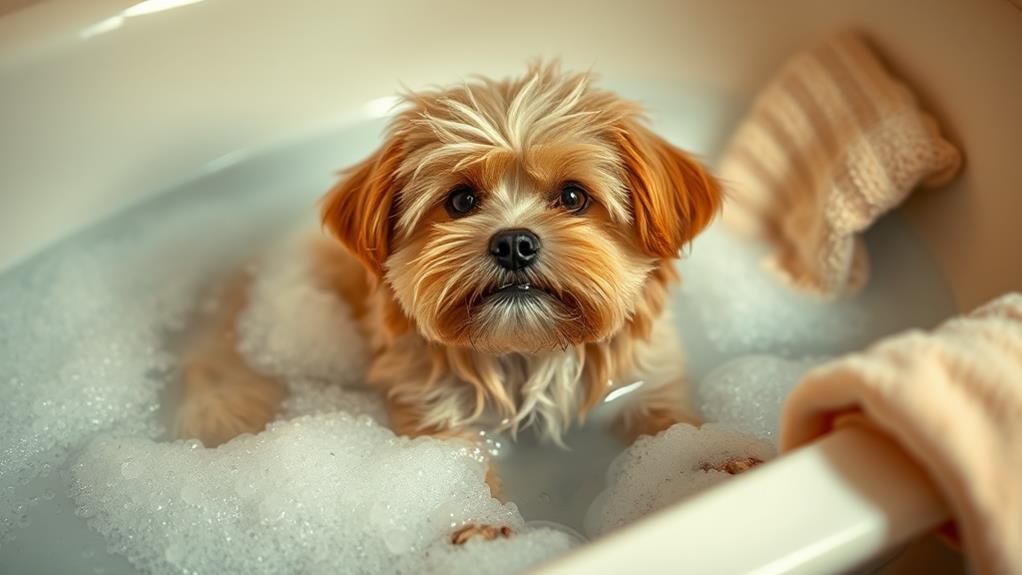
After rinsing your dog, it’s crucial to dry them safely to prevent skin issues.
You’ll want to choose appropriate towels, use controlled heat sources, and monitor the drying time carefully.
This way, you ensure your pup stays comfortable and healthy post-bath.
Choose Appropriate Towels
Choosing the right towels can make a significant difference in the drying process and your dog’s comfort.
Using the appropriate towels not only helps absorb moisture effectively but also ensures your dog feels cozy after the bath.
Here are four types of towels to consider for an optimal drying experience:
- Microfiber Towels: These are super absorbent and dry quickly, making them perfect for soaking up excess water without rubbing your dog’s skin too harshly.
- Cotton Towels: Soft and gentle, cotton towels provide a comforting touch. Choose thicker ones for maximum absorption and warmth.
- Dog-Specific Towels: Designed specifically for pets, these towels often have special features like anti-slip surfaces or additional absorbency, perfect for a post-bath routine.
- Old Bath Towels: If you’ve got some retired towels lying around, they can work well too. Just ensure they’re clean and free of any harsh detergents that might irritate your dog’s skin.
Use Controlled Heat
While drying your dog, it’s crucial to use controlled heat to prevent overheating and discomfort. Using a high-velocity dryer can be beneficial, but make sure to set it to a low or medium heat setting. Keep the nozzle at least a few inches away from your dog’s skin to avoid burns. You want to create a gentle warmth that helps your dog dry without causing distress.
Always move the dryer continuously, avoiding any concentrated areas. This not only ensures even drying but also helps your dog feel more comfortable. Pay attention to your dog’s body language; if they seem anxious or restless, switch to a towel or let them air dry for a bit.
You can also use a handheld dryer with a cool setting, which can be very effective. This option is especially good for sensitive areas like the belly and paws.
If your dog enjoys it, you might consider wrapping them in a warm blanket afterward to keep them cozy.
Monitor Drying Time
Monitoring drying time is essential to ensure your dog stays comfortable and safe during the grooming process. Over-drying can lead to skin irritation, especially for dogs with dandruff.
To keep your furry friend happy while drying, follow these guidelines:
- Check the Temperature: Always ensure the drying area is warm but not hot. Too much heat can overwhelm your dog and irritate their skin.
- Use a Timer: Set a timer for drying sessions. This way, you can avoid leaving your dog under the dryer for too long, which could cause discomfort.
- Observe Your Dog’s Behavior: Keep an eye on your dog’s body language. If they seem restless or anxious, it might be time to take a break from drying.
- Air Dry if Necessary: If your dog seems uncomfortable with the dryer, consider letting them air dry in a warm, draft-free space. This method may take longer but can be gentler on their skin.
Post-Bath Skin Care
Caring for your dog’s skin after a bath is crucial for maintaining its health and comfort. Start by gently towel-drying your dog to absorb excess moisture, focusing on areas prone to irritation. Avoid vigorous rubbing, as it can exacerbate any existing skin issues.
Once your dog is mostly dry, consider using a dog-friendly leave-in conditioner or moisturizer designed to combat dandruff. Apply it evenly, paying extra attention to dry patches.
After moisturizing, keep your dog in a warm, draft-free area until it’s completely dry. This helps prevent chill and supports skin recovery. If your dog seems restless or uncomfortable, distract them with a favorite toy or treat to ease any anxiety.
Observe your dog’s skin for any signs of irritation or redness over the next few days. If you notice anything unusual, consult your veterinarian.
Regularly brushing your dog’s coat can also help distribute natural oils, boosting skin health. Remember, addressing skin care post-bath is essential for promoting your dog’s overall well-being and comfort.
Maintaining a Healthy Coat
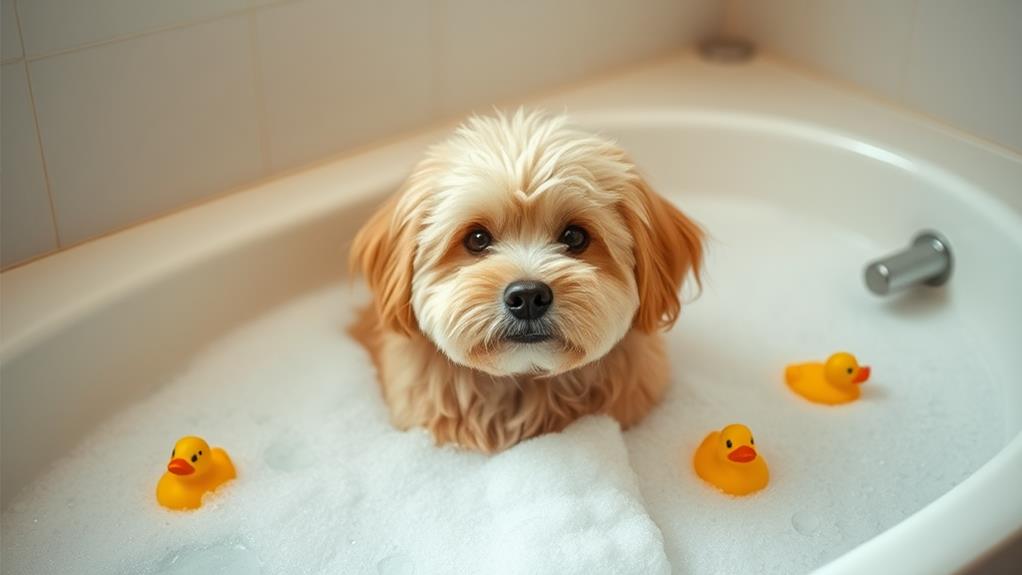
To maintain a healthy coat, regular grooming is essential. Consistent grooming not only helps to remove loose hair and dirt but also distributes natural oils, keeping your dog’s coat shiny and healthy.
Here are four key practices to follow:
- Brush Regularly: Depending on your dog’s coat type, brush at least once a week. This prevents mats and tangles while encouraging healthy skin and fur.
- Choose the Right Tools: Use grooming tools suited for your dog’s coat type. Slicker brushes work well for long-haired breeds, while bristle brushes are great for short-haired dogs.
- Bathe Appropriately: Bathe your dog every 4-6 weeks using a gentle, moisturizing shampoo designed for dogs. This helps remove dandruff without stripping essential oils.
- Feed a Balanced Diet: Ensure your dog’s diet includes high-quality protein and fatty acids. Nutritional health contributes significantly to the condition of their coat.
When to Consult a Veterinarian
Sometimes, detecting when your dog’s dandruff might signal a more serious issue can be challenging. You should keep an eye out for additional symptoms that may indicate underlying health problems.
If your dog has persistent dandruff despite regular grooming and baths, it’s time to consult a veterinarian.
Look for signs like itching, redness, swelling, or hair loss. These symptoms can suggest allergies, infections, or even parasites. If your dog starts scratching excessively or seems uncomfortable, don’t wait to seek professional help.
A sudden change in your dog’s skin or coat condition is another critical indicator. If you notice a change in behavior, such as lethargy or loss of appetite, that’s a red flag that requires immediate attention.
Also, consider your dog’s age, breed, and overall health. Some breeds are predisposed to skin issues, so discussing these factors with your vet can provide valuable insights.
Frequently Asked Questions
Can I Use Human Shampoo on My Dog With Dandruff?
You shouldn’t use human shampoo on your dog. It can irritate their skin and worsen dandruff. Instead, choose a gentle, dog-specific shampoo designed to address their unique skin needs and keep them healthy.
How Often Should I Bathe a Dog With Dandruff?
You’ll want to bathe your dog with dandruff every two to four weeks. Coincidentally, regular baths help keep their skin healthy and can improve their comfort, making your furry friend happier and more content.
Are There Home Remedies for Dog Dandruff?
Yes, there are several home remedies for dog dandruff. You can try oatmeal baths, coconut oil massages, and adding omega fatty acids to their diet. These methods can help soothe their skin and reduce flakiness effectively.
What Breed Is Most Prone to Dandruff?
Have you ever wondered which dog breeds struggle with dandruff the most? Breeds like Bulldogs, Dachshunds, and Retrievers often face this issue. Regular grooming and a balanced diet can help keep their skin healthy and flake-free.
Can Diet Affect My Dog’s Dandruff Condition?
Yes, your dog’s diet can significantly impact their dandruff condition. Providing a balanced diet rich in essential fatty acids and nutrients helps maintain skin health, reducing flakiness and promoting overall well-being for your furry friend.
Conclusion
Bathing your dog with dandruff can be a rewarding experience for both of you. Remember, about 80% of dogs experience some form of skin issue in their lifetime, so you’re not alone in this. By following the right steps and using appropriate products, you can help alleviate your dog’s dandruff and keep their coat healthy. Don’t forget, consistent care and attention can make a big difference in their skin health. Happy bathing!

Carlos Rodriguez is the Senior Product Reviewer at DogShampooReviews.com. With over 15 years of experience in canine grooming and skincare, Carlos brings a wealth of knowledge and passion to our team. His journey began at a young age, growing up on a family farm where he was surrounded by dogs of all breeds and sizes. This early exposure ignited his lifelong dedication to animal care and well-being.
Professional Background
- Certified Dog Groomer: Carlos is a certified professional groomer who has worked in some of the top grooming salons across the country. His expertise spans various grooming techniques suitable for different breeds and coat types.
- Canine Skincare Specialist: Recognizing the importance of skin health in dogs, Carlos pursued additional certifications in dermatological care for canines, specializing in treating skin conditions and allergies.
- Product Testing Expert: With a meticulous eye for detail, Carlos rigorously tests dog shampoos and grooming products, evaluating them on ingredients, efficacy, safety, and overall quality.
Passion for Dogs
Carlos’s love for dogs goes beyond his professional life. He is an active volunteer at local animal shelters, providing grooming services to help adoptable dogs look and feel their best. His own rescued dogs, Bella and Rocky, are often the first to try out new products, ensuring his reviews come from genuine experiences.
Why Trust Carlos
- Unbiased Reviews: Committed to integrity, Carlos ensures all his reviews are honest and based on thorough testing.
- Expert Insight: His extensive knowledge allows him to break down complex information into understandable advice for dog owners.
- Community Engagement: Carlos actively engages with our readers, answering questions and providing personalized recommendations.