In humid climates, you should bathe your dog every two to four weeks. This helps keep their coat healthy and reduces the risk of skin irritations. The need for bathing can vary based on your dog's activity level and coat type. For instance, long-haired breeds might require more frequent baths compared to short-haired ones. Always check for unpleasant odors, dirty fur, or skin issues, as these are signs that a bath is necessary. Understanding your dog's specific needs is crucial for their health. If you want to know more about maintaining your dog's hygiene, there are plenty of tips available.
Key Takeaways
- Active dogs in humid climates may need baths every 2-4 weeks due to increased dirt and sweat accumulation.
- Long-haired breeds typically require baths every 2-3 weeks to prevent matting and skin issues in humid conditions.
- Short-haired breeds usually need baths every 4-6 weeks, but more frequent cleaning may be necessary if they get dirty.
- Regular grooming helps maintain coat health and can reduce the frequency of baths in humid weather.
- Signs of odor, dirt, or skin irritation indicate an immediate need for a bath, regardless of the regular schedule.
Understanding Humid Climates
Understanding humid climates is essential for dog owners, as these environments can significantly affect your pet's health and hygiene. High humidity levels can lead to a variety of issues for dogs, including skin irritation and fungal infections.
You'll want to pay close attention to your dog's coat and skin condition, as the moisture in the air can make it difficult for their fur to dry completely after baths or playtime.
In such climates, regular grooming is crucial. Brushing your dog helps remove excess dirt and dander, and it also allows you to check for any signs of skin problems.
Keep an eye out for any unusual odors, as they can indicate an underlying issue that needs addressing.
You should also consider how your dog's breed and coat type respond to humidity. Some breeds with thick fur may struggle more in humid conditions, while others may fare better.
Factors Affecting Bath Frequency
Bathing your dog isn't a one-size-fits-all approach, especially in humid climates where various factors come into play.
First, consider your dog's lifestyle. If your furry friend loves outdoor activities, they may get dirtier and sweatier, requiring more frequent baths. On the other hand, if they're mostly a couch potato, you can stretch out the time between baths.
Next, think about your dog's coat type. Dogs with longer, thicker fur can trap moisture and dirt, making them more prone to odors and skin issues. In contrast, dogs with short, smooth coats might only need occasional baths, depending on their activity level.
Additionally, keep an eye on your dog's skin condition. If you notice excessive itching, redness, or odors, it might be time for a bath.
Lastly, your own schedule matters. If you're busy or stressed, you might prefer to bathe your dog less frequently, but don't let their hygiene slide.
Breed-Specific Bathing Needs
How do different dog breeds influence your bathing routine? Each breed has unique characteristics that can affect how often you should bathe your dog. For instance, dogs with dense, water-resistant coats, like Labrador Retrievers, might require less frequent baths compared to breeds with thinner coats, like Greyhounds, which can get dirty faster due to their short hair.
Some breeds, such as Bulldogs, are prone to skin issues and may need more regular baths to maintain skin health. On the other hand, breeds like Poodles have hair that's more prone to matting, which means you'll need to keep a close eye on their grooming needs, even if you don't bathe them often.
Additionally, consider if your dog enjoys water. Breeds like Golden Retrievers often love splashing around, which might lead to dirtier fur and increase the necessity for baths.
Understanding your dog's breed-specific needs will help you tailor your bathing routine effectively, ensuring your furry friend remains clean and happy. By paying attention to these nuances, you're not just bathing your dog; you're enhancing their overall well-being.
Coat Types and Maintenance
Different coat types require varying levels of maintenance, which directly affects your dog's bathing schedule. For example, short-haired breeds typically need less frequent baths, usually every few weeks, since their coats don't trap dirt and oils as much.
However, you should still brush them regularly to remove loose hair and keep their skin healthy.
On the other hand, long-haired breeds demand more attention. Their coats can mat and trap moisture, especially in humid climates, so you might need to bathe them every two to three weeks.
Regular brushing is crucial here too, as it helps prevent tangles and allows you to check for any signs of skin issues.
Curly and wiry coats also require specialized care. These types may need bathing every few weeks, but don't forget to schedule regular grooming sessions to keep their coats in top shape.
Ultimately, understanding your dog's specific coat type and maintenance needs will help you establish a bathing routine that promotes their overall health and comfort.
Signs Your Dog Needs a Bath
Knowing when your dog needs a bath can save you from unpleasant surprises, especially in humid climates.
First, pay attention to your dog's smell. If they start to emit an odor that's less than pleasant, it's a clear sign they need a wash.
Next, check their coat. If it feels greasy or looks dirty, it's time for a bath.
You should also observe their skin. If it appears flaky or irritated, bathing can help soothe discomfort and remove allergens.
Additionally, keep an eye on the area around their ears and paws. A buildup of dirt or wax can indicate a need for a cleaning session.
Another telltale sign is excessive scratching or licking. If your dog is constantly grooming themselves, they might be trying to relieve irritation caused by dirt or parasites.
Lastly, after a fun day outdoors, especially in muddy or wet conditions, your dog will likely need a bath to keep their coat healthy and clean.
Best Bathing Products for Dogs
When choosing the best bathing products for your dog, consider their specific needs and skin type. Selecting the right shampoo and conditioner can make a significant difference in your dog's coat and skin health.
Here are four essential bathing products to keep in mind:
- Hypoallergenic Shampoo: If your dog has sensitive skin or allergies, opt for a hypoallergenic formula. It'll help prevent irritation while cleaning effectively.
- Moisturizing Conditioner: For dogs with dry or brittle coats, a moisturizing conditioner can help restore hydration and shine, making it easier to manage their fur.
- Deodorizing Spray: In humid climates, a deodorizing spray can be a quick fix between baths. Look for natural options that neutralize odors without harsh chemicals.
- Dog-Safe Wipes: These are perfect for spot cleaning and can help keep your dog fresh in between baths, especially after outdoor adventures.
Frequency Guidelines for Different Breeds
Finding the right bathing products lays the foundation for maintaining your dog's hygiene, but understanding how often to bathe them is just as important, especially in humid climates.
Different breeds have unique grooming needs, and knowing these can help you serve your furry friend better.
For short-haired breeds like Beagles and Boxers, a bath every 4 to 6 weeks typically suffices. Their coats are lower maintenance and can handle humidity without too much fuss.
However, if your dog loves to roll in mud or gets particularly dirty, you might need to bathe them more often.
On the other hand, long-haired breeds like Golden Retrievers and Shih Tzus require more frequent bathing—every 3 to 4 weeks is ideal. Their fur can trap moisture and dirt, leading to discomfort if not cleaned regularly.
If you have a hypoallergenic breed, such as a Poodle, bathing every 4 to 6 weeks is usually enough.
Importance of Skin Health
Keeping your dog's skin healthy is crucial, especially in humid climates.
Regular bathing can help prevent skin irritation, manage allergies, and maintain a shiny coat.
Skin Irritation Prevention
To maintain your dog's skin health, regular bathing in humid climates is essential, as moisture can lead to irritation and infections.
Keeping your dog's skin clean and dry is crucial for preventing discomfort and ensuring a healthy coat. Here are four key practices to consider:
- Choose the Right Shampoo: Use a gentle, dog-specific shampoo to avoid stripping natural oils. Look for formulas designed to maintain skin health.
- Rinse Thoroughly: Ensure you rinse all shampoo from your dog's coat. Residual product can irritate the skin and lead to infections.
- Dry Properly: After bathing, dry your dog thoroughly, especially in areas prone to moisture, like under the belly and between the toes. Use a towel or a pet-safe dryer.
- Monitor for Changes: Regularly check your dog's skin for signs of irritation, such as redness or excessive scratching. Early detection can prevent more serious issues.
Allergies and Sensitivities
Often, dogs can develop allergies and sensitivities that exacerbate skin issues, especially in humid climates. As a caring pet owner, it's essential to stay vigilant about your dog's skin health. Allergies can result from various factors, including pollen, dust mites, or certain foods. If you notice excessive scratching, redness, or rashes, it's crucial to investigate further.
Identifying the source of your dog's allergies can significantly improve their comfort. You might want to consult your veterinarian for allergy testing or dietary changes that can help alleviate symptoms.
Regular baths can also be beneficial, but remember that over-bathing can strip away essential oils, leading to further irritation. Aim for a bathing schedule that balances cleanliness and skin health.
Additionally, consider hypoallergenic shampoos to minimize potential reactions. Keeping your dog's environment clean and free from allergens is equally important. Regularly vacuuming and washing their bedding can help reduce exposure to irritants.
Coat Condition Maintenance
Maintaining your dog's coat condition is vital for their overall skin health, especially in humid climates.
Humidity can lead to excess moisture on your dog's skin, which can promote bacterial growth and skin irritations.
Here's how you can keep your furry friend's coat healthy:
- Regular Grooming: Brush your dog's coat at least a few times a week. This helps remove dead hair, dirt, and debris while distributing natural oils.
- Choose the Right Shampoo: Use a mild, dog-specific shampoo that hydrates and nourishes the skin. Avoid human shampoos, which can strip essential oils.
- Monitor Bathing Frequency: In humid conditions, bathing your dog every 3-4 weeks can help maintain cleanliness without over-drying their skin.
- Hydration and Nutrition: Ensure your dog gets plenty of fresh water and a balanced diet rich in omega fatty acids. This supports healthy skin and a shiny coat.
Alternatives to Regular Baths
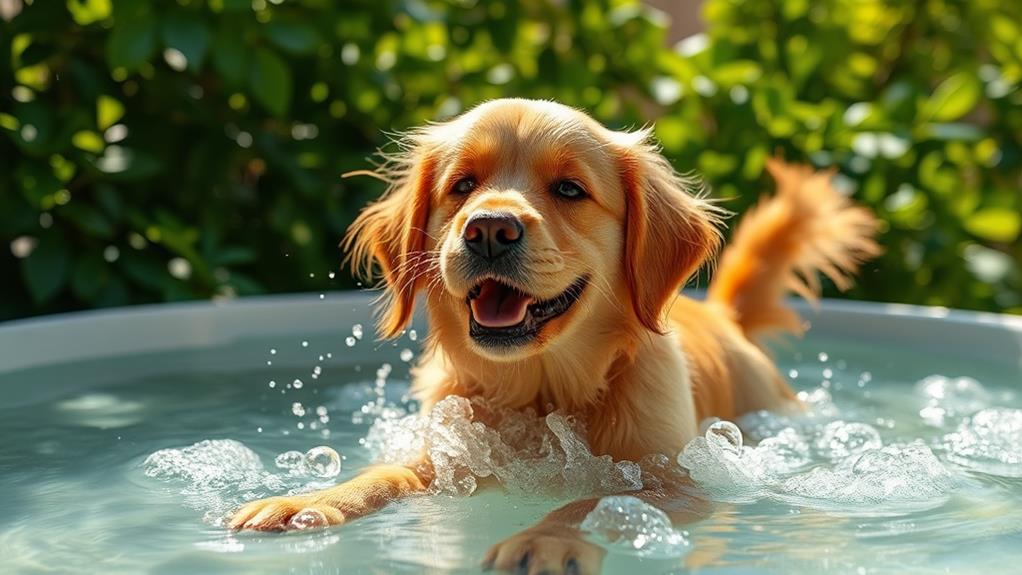
When regular baths aren't feasible due to humidity, there are several effective alternatives to keep your dog clean and comfortable.
One great option is to use waterless dog shampoos. These products allow you to freshen up your pup without the need for a full bath. Simply apply the shampoo, massage it into their coat, and wipe it away with a towel.
Another alternative is to use grooming wipes designed specifically for dogs. These wipes are handy for quick clean-ups, especially after outdoor adventures. They help remove dirt, debris, and odors from your dog's coat, leaving them feeling fresh.
You might also consider brushing your dog more frequently. Regular brushing not only removes loose fur and dirt but also helps distribute natural oils, promoting a healthier coat.
Plus, it gives you a chance to bond with your furry friend.
Tips for Bathing Your Dog
When it comes to bathing your dog, knowing how often to do it's key, especially in humid climates.
You'll also want to pick the right products and master effective drying techniques to keep your pup comfortable.
Let's explore these important tips to ensure a smooth bathing experience for both you and your dog.
Ideal Bathing Frequency
Bathing your dog in humid climates usually requires a bit more attention than in drier areas.
The moisture in the air can lead to skin irritations and an increase in odors, so establishing an ideal bathing frequency is essential for your furry friend's comfort and well-being.
Here are some tips to help you determine how often to bathe your dog:
- Assess Activity Level: If your dog loves to play outside, you might need to bathe them more often, perhaps every 2-4 weeks.
- Monitor Coat Condition: For dogs with longer or thicker coats, consider bathing them every 3-6 weeks to prevent matting and tangles.
- Watch for Odors or Dirt: If your dog starts to smell or gets dirty, it's time for a bath, regardless of the schedule.
- Consult with a Vet: Your veterinarian can provide personalized advice based on your dog's breed, skin type, and health needs.
Choosing the Right Products
Choosing the right products for your dog's bath can make a significant difference in their comfort and cleanliness. Start with a gentle, hypoallergenic dog shampoo that won't irritate their skin. Look for products specifically designed for dogs, as human shampoos can disrupt their natural pH balance.
If your dog has a specific skin condition, consult your vet for recommended medicated shampoos tailored to their needs.
Don't forget to have a quality conditioner on hand, which can help keep their coat soft and manageable, especially in humid climates.
Consider using a natural, organic shampoo to minimize chemical exposure. You'll find that many brands offer soothing ingredients like oatmeal or aloe vera, which can help calm any irritation.
For extra comfort, have a non-slip mat in your bathing area to prevent slips and make your dog feel secure.
Always keep a towel nearby for quick drying, and be ready to reward your pup with treats to create a positive association with bath time.
Drying Techniques for Humidity
After selecting the right products for your dog's bath, focus on effective drying techniques, especially in humid climates where moisture can linger on their coat.
Proper drying not only keeps your pup comfortable but also helps prevent skin issues that can arise from trapped moisture. Here are some techniques to consider:
- Towel Drying: Use absorbent, microfiber towels to gently pat your dog dry. This method is great for removing excess water without causing stress.
- Air Drying: If the weather allows, let your dog air dry in a well-ventilated area. Ensure they're supervised and comfortable, as some dogs may become anxious.
- Blower or Dryer: Invest in a pet-specific dryer that blows warm air. These are designed to be safe and effective, reducing drying time significantly.
- Brush While Drying: As you dry your dog, use a slicker brush to help separate the fur. This technique can speed up the drying process and reduce tangles.
Frequently Asked Questions
Can I Use Human Shampoo on My Dog?
You shouldn't use human shampoo on your dog. It can irritate their skin and disrupt their natural oils. Opt for a dog-specific shampoo designed to keep their coat healthy and clean without causing harm.
How Can I Tell if My Dog Is Allergic to Shampoo?
To tell if your dog's allergic to shampoo, watch for itching, redness, or unusual behavior after use. If you notice any signs, stop using the product and consult your vet for guidance.
Should I Dry My Dog After a Bath?
After a bath, you should definitely dry your dog. Imagine stepping out of a shower and staying soaked—uncomfortable, right? Use a towel or a pet dryer to keep your furry friend cozy and healthy.
Is It Okay to Bathe My Dog Outside in Humid Weather?
Yes, you can bathe your dog outside in humid weather. Just ensure they're comfortable and cool. Keep an eye on them to prevent overheating, and rinse thoroughly to avoid skin irritation from soap residue.
Can Bathing Too Often Harm My Dog's Skin?
Bathing your dog too often can strip natural oils, leaving their skin dry and irritated—like a plant without water. You'll want to balance cleanliness with skin health for your furry friend's comfort and happiness.
Conclusion
In humid habitats, finding the right bathing balance is key. By considering your dog's breed, coat, and skin health, you can create a customized cleaning cadence. Remember, it's not just about scrubbing away dirt; it's about nurturing your pup's natural shine. So, stay savvy, stay sensitive to your dog's needs, and savor those special moments during bath time. With a little love and care, your furry friend will flourish in any climate!

Carlos Rodriguez is the Senior Product Reviewer at DogShampooReviews.com. With over 15 years of experience in canine grooming and skincare, Carlos brings a wealth of knowledge and passion to our team. His journey began at a young age, growing up on a family farm where he was surrounded by dogs of all breeds and sizes. This early exposure ignited his lifelong dedication to animal care and well-being.
Professional Background
- Certified Dog Groomer: Carlos is a certified professional groomer who has worked in some of the top grooming salons across the country. His expertise spans various grooming techniques suitable for different breeds and coat types.
- Canine Skincare Specialist: Recognizing the importance of skin health in dogs, Carlos pursued additional certifications in dermatological care for canines, specializing in treating skin conditions and allergies.
- Product Testing Expert: With a meticulous eye for detail, Carlos rigorously tests dog shampoos and grooming products, evaluating them on ingredients, efficacy, safety, and overall quality.
Passion for Dogs
Carlos’s love for dogs goes beyond his professional life. He is an active volunteer at local animal shelters, providing grooming services to help adoptable dogs look and feel their best. His own rescued dogs, Bella and Rocky, are often the first to try out new products, ensuring his reviews come from genuine experiences.
Why Trust Carlos
- Unbiased Reviews: Committed to integrity, Carlos ensures all his reviews are honest and based on thorough testing.
- Expert Insight: His extensive knowledge allows him to break down complex information into understandable advice for dog owners.
- Community Engagement: Carlos actively engages with our readers, answering questions and providing personalized recommendations.