To safely bathe your dog with sensitive skin, start by choosing a gentle, hypoallergenic shampoo. Brush your dog first to remove loose fur and check for irritations. Set up a calming bathing area, using lukewarm water to rinse. Wet your dog gradually, applying shampoo from neck down and massaging gently. Rinse thoroughly to avoid irritation. After the bath, carefully dry your dog with a soft towel, avoiding any harsh rubbing. Monitor for any signs of allergic reactions post-bath. If you're curious about additional tips and best practices, keep going to discover more effective strategies for bathing your dog.
Key Takeaways
- Use a hypoallergenic shampoo with soothing ingredients like oatmeal or aloe vera to minimize skin irritation during the bath.
- Gradually wet your dog, starting at the paws, to help them acclimate to the water and reduce anxiety.
- Rinse thoroughly to remove all shampoo, as any residue can cause irritation and discomfort for sensitive skin.
- Dry your dog with a soft towel, using a patting technique to avoid scratching and irritation.
- Monitor for any signs of allergic reactions, such as excessive scratching or redness, and consult a vet if needed.
Understand Your Dog's Skin Sensitivity
Many dog owners may not realize that their pets can have varying degrees of skin sensitivity. It's crucial to pay attention to your dog's skin, as it can impact their overall comfort and well-being. You might notice signs such as excessive scratching, redness, or flaky skin. These symptoms can indicate that your furry friend has sensitive skin, which requires special care.
You should take time to observe your dog's behavior and skin condition. Factors like breed, age, and environment can all contribute to skin sensitivity. For example, certain breeds are genetically predisposed to skin issues, while environmental allergens like pollen or dust can exacerbate sensitivity.
When you understand your dog's specific needs, you can better serve them. It's helpful to consult with your veterinarian to rule out any underlying medical issues. They can provide insights into your dog's skin type and recommend appropriate treatments.
Knowing your dog's skin sensitivity level empowers you to make informed decisions about their grooming routine and care, ensuring they feel comfortable and happy every day. By being proactive, you're taking a significant step toward enhancing your pet's quality of life.
Choose the Right Shampoo
When choosing a shampoo for your dog with sensitive skin, you should always look for hypoallergenic options.
These formulas are designed to minimize irritation and keep your pup comfortable.
Additionally, checking the pH balance helps ensure the shampoo is gentle and won't disrupt your dog's skin barrier.
Look for Hypoallergenic Options
Choosing the right shampoo is crucial for dogs with sensitive skin. You want to prioritize hypoallergenic options that minimize irritation and provide gentle cleansing. These shampoos are formulated with fewer harsh chemicals and fragrances, making them ideal for your furry friend who may react negatively to standard products.
When shopping, look for labels that specifically mention "hypoallergenic." This indicates that the ingredients are less likely to provoke an allergic reaction. Ingredients like oatmeal, aloe vera, and coconut oil can be beneficial, as they soothe the skin while offering hydration.
Always read the ingredient list to avoid any potential allergens, such as sulfates or artificial dyes. If you're unsure about a product, consult your veterinarian. They can recommend specific brands tailored to your dog's needs.
Testing a small amount on a patch of skin before a full bath can also help you gauge how your dog will react.
Check Ph Balance
Checking the pH balance of your dog's shampoo is essential for maintaining their skin's health. Dogs typically have a pH level between 6.2 and 7.4, which is slightly more acidic than human skin.
If you use a shampoo with a pH that's too high or too low, it can disrupt their skin barrier, leading to irritation, dryness, or allergic reactions.
When selecting a shampoo, look for products specifically formulated for dogs with sensitive skin. These shampoos usually have a balanced pH and include soothing ingredients like oatmeal or aloe vera.
Always read the label, as some products might contain harsh chemicals that can worsen your dog's skin condition.
If you're unsure about the pH, you can test it using pH strips available at pet stores or online. This step ensures you're choosing the right product for your furry friend.
Gather Necessary Bathing Supplies
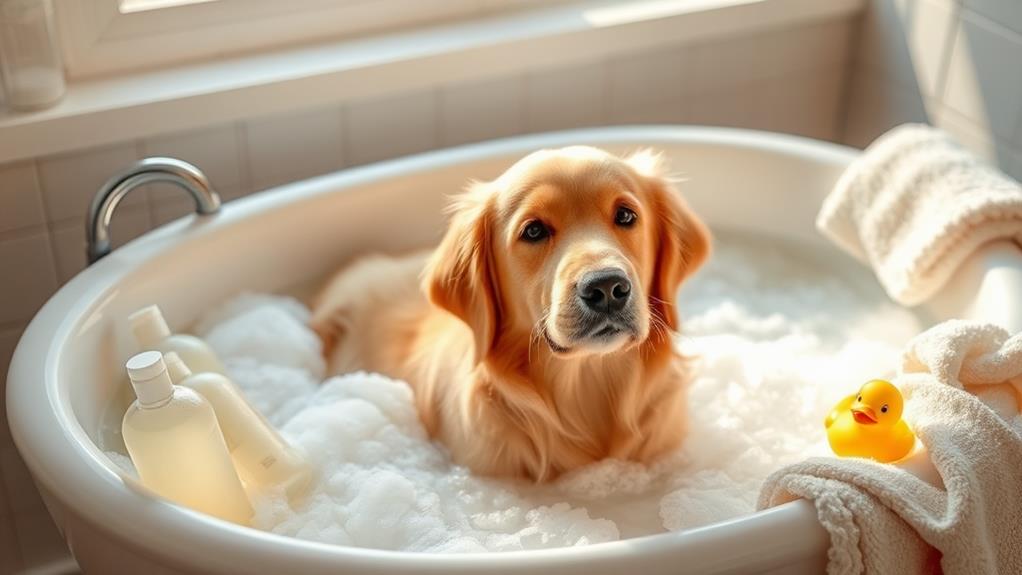
Before you start bathing your dog with sensitive skin, it's essential to gather the right supplies to ensure a comfortable and effective experience. First, choose a gentle, hypoallergenic dog shampoo specifically formulated for sensitive skin. Look for products that are free of harsh chemicals, and always check the ingredients to avoid any allergens.
Next, collect a soft washcloth or sponge. This will help you gently clean your dog without irritating their skin. Don't forget a non-slip mat to keep your dog safe and comfortable during the bath. You'll also need a detachable showerhead or a cup for rinsing, as controlling the water flow will help you avoid overwhelming your pup.
Prepare a few towels for drying afterward; opt for soft, absorbent ones to keep your dog cozy. If your dog is prone to anxiety, consider a calming spray or pheromone diffuser to create a soothing environment.
Lastly, have treats handy to reward your furry friend for their patience and cooperation. By gathering these supplies, you're setting the stage for a successful bathing experience that prioritizes your dog's comfort and well-being.
Prepare the Bathing Area
When you're ready to bathe your dog, pick a comfortable location that's easy for both of you.
Make sure you've gathered all the essential supplies within reach, so you won't have to leave your pup unattended.
Choose a Comfortable Location
Often, choosing a comfortable location for bathing your dog is crucial for a stress-free experience. A serene environment helps both you and your furry friend feel more relaxed.
Here are some key factors to consider when selecting the bathing area:
- Quiet Space: Pick a location away from distractions and loud noises to soothe your dog's nerves.
- Non-Slip Surface: Ensure the area has a non-slip surface to prevent slips and falls, keeping your dog safe.
- Temperature Control: Choose a spot that's neither too hot nor too cold, as comfort is essential for sensitive skin.
- Adequate Space: Make sure there's enough room for you and your dog, allowing you to move freely without feeling cramped.
Once you've identified the right location, ensure it's clean and free from any items that might cause discomfort.
If possible, use a bathing mat or towel to enhance your dog's grip. By creating a calm and safe environment, you'll help your dog feel at ease, making the bathing process much smoother and more enjoyable for both of you.
Your dog's comfort is your priority, so take the time to set the stage right.
Gather Essential Supplies
With the bathing area set up for your dog, it's time to gather the supplies you'll need for a successful bath. Start with a gentle, hypoallergenic dog shampoo specifically formulated for sensitive skin. This will help to avoid irritation and ensure a soothing experience for your furry friend.
Next, grab a soft washcloth or sponge to use for cleaning those hard-to-reach areas. It's helpful to have a detachable showerhead or a cup for rinsing, allowing you to control the flow of water easily.
Don't forget a non-slip mat to prevent your dog from slipping during bath time; safety is key! Have a few towels handy, preferably made from soft materials, to gently dry your dog after the bath.
Also, consider having treats on hand to reward your dog for their cooperation. This makes the experience more positive and encourages good behavior.
Control Water Temperature
How can you ensure your dog's bathing experience is as comfortable as possible? The water temperature plays a crucial role in keeping your pup relaxed and happy. For dogs with sensitive skin, using water that's too hot or too cold can lead to discomfort or even exacerbate their skin issues.
Here's what you need to keep in mind:
- Aim for lukewarm water: This is the ideal temperature for bathing. It's warm enough to be comfortable without being scalding.
- Test the water: Before you start, use your wrist to check the temperature. It should feel neither hot nor cold.
- Adjust as needed: Keep a close eye on your dog's reaction. If they seem uncomfortable, adjust the temperature immediately.
- Use a gentle spray: A handheld showerhead can help you control the water flow and temperature, ensuring a pleasant experience.
Brush Your Dog Before Bathing
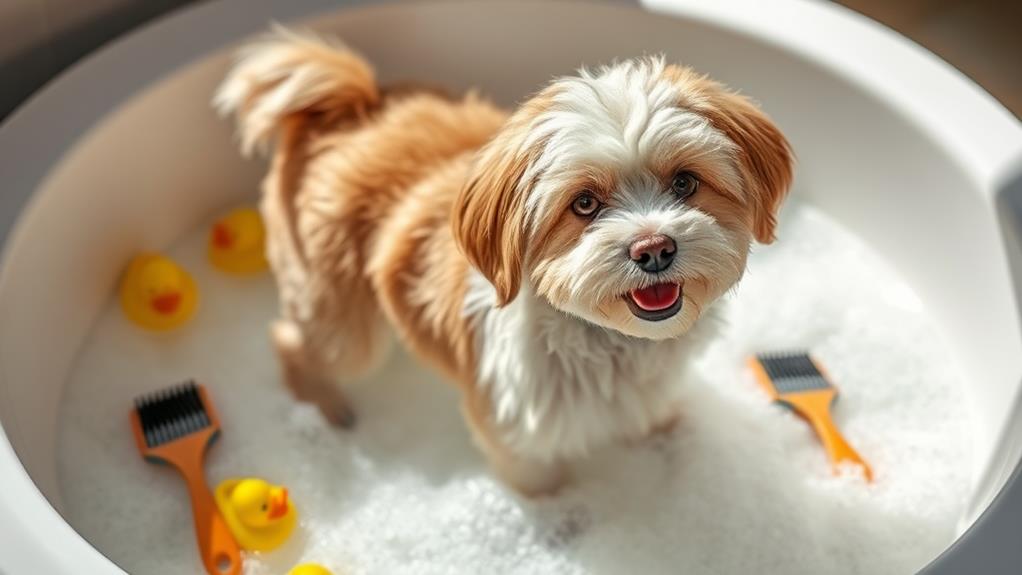
Before you start bathing your dog, it's essential to brush them thoroughly. This step not only helps remove loose fur and debris but also allows you to check for any skin irritations or sensitive areas that might need special attention.
Use a soft-bristled brush or a grooming glove, especially if your dog has sensitive skin, to avoid causing any discomfort. As you brush, be gentle and work in the direction of hair growth.
Pay close attention to any mats or tangles, as these can trap water and irritate the skin during the bath. If you encounter any stubborn knots, use a detangling spray formulated for dogs to make the process easier.
Brushing also stimulates your dog's skin, promoting healthy circulation and making the bathing experience more enjoyable for them. This connection can help ease any anxiety they might feel about the bath itself.
Use Lukewarm Water
After brushing your dog, it's time to fill the tub with lukewarm water. This temperature is crucial for keeping your pup comfortable during bath time. Too hot or too cold water can irritate their sensitive skin, leading to stress and discomfort.
Here's why lukewarm water is the best choice:
- Soothes Irritation: It helps calm any existing skin irritations.
- Encourages Relaxation: Your dog is more likely to enjoy the bath when the water feels pleasant.
- Promotes Skin Health: Lukewarm water helps maintain the skin's natural oils, preventing dryness.
- Reduces Anxiety: A comfortable temperature makes bath time less intimidating for sensitive dogs.
To check the temperature, dip your wrist into the water. If it feels comfortable for you, it's likely perfect for your dog.
Make sure the water level is appropriate, avoiding any deep water that might overwhelm them. Always focus on creating a positive experience, as your dog will remember how they felt during bath time.
Wet Your Dog Gradually
Starting at your dog's paws and working your way up is the best approach to wetting your dog gradually.
Begin by gently spraying or pouring a small amount of lukewarm water on their feet. This helps your dog acclimate to the sensation of water without overwhelming them. As you move up the legs, keep an eye on their body language. If they seem anxious, take a moment to reassure them with a calm voice or gentle petting.
Once the lower half is wet, proceed to the belly area, still using minimal water at first. Gradually wet the sides, always being mindful of how your dog reacts. If they appear uncomfortable, pause and allow them to adjust.
It's essential to maintain a relaxed environment, so consider providing treats or praise as positive reinforcement.
When you reach the back and neck, use a soft touch and keep the water flow steady but gentle. By wetting your dog gradually, you help them feel safe and secure throughout the bathing process, which is particularly important for sensitive skin.
Apply Shampoo Gently
Once your dog is comfortably wet, it's time to apply shampoo gently. Start by choosing a shampoo specifically formulated for sensitive skin. This will help avoid irritation and keep your furry friend comfortable during the bath.
Here are some tips to ensure you apply the shampoo safely and effectively:
- Use a small amount: Less is often more. A small dollop is usually enough for your dog, preventing waste and excess residue.
- Work from the neck down: This approach minimizes the risk of getting shampoo in your dog's eyes or ears, which can cause discomfort.
- Massage gently: Use your fingertips to gently massage the shampoo into your dog's coat. This not only helps cleanse but also creates a soothing experience for them.
- Watch for signs of distress: Keep an eye on your dog. If they seem anxious or uncomfortable, pause, reassure them, and take it slow.
Your goal is to make bath time a positive experience, so take your time and be gentle. With your careful approach, you can ensure that your dog feels safe and cared for during their bath.
Rinse Thoroughly
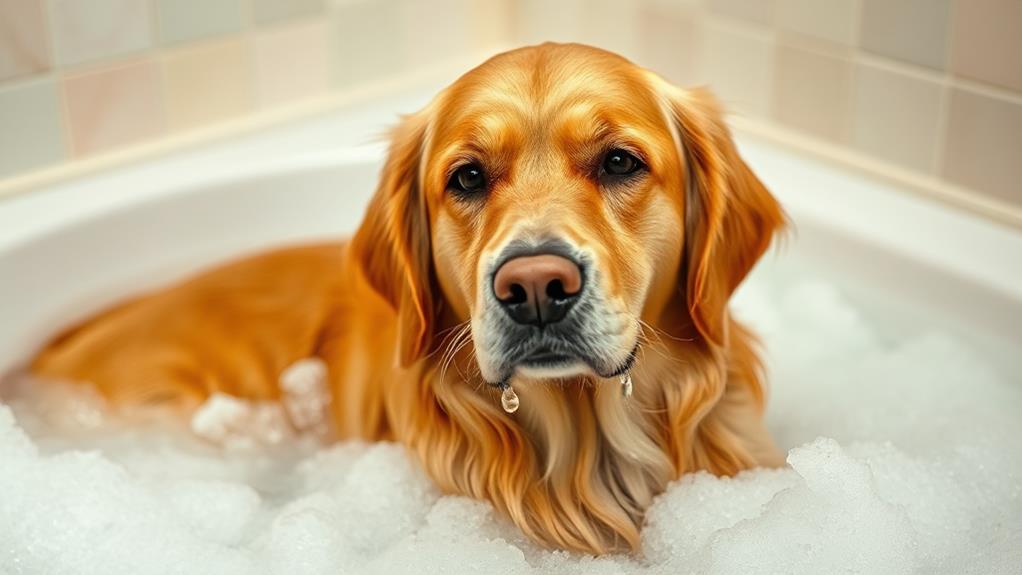
Rinsing thoroughly is crucial to ensuring your dog's skin remains healthy and irritation-free. After applying the shampoo, you want to make sure there's no residue left behind. Leftover shampoo can lead to dryness or allergic reactions, which can be particularly problematic for dogs with sensitive skin.
As you rinse, use lukewarm water and direct it gently over your dog's body. Start from the neck and work your way down, making sure to rinse every area, including under the belly, between the paws, and around the tail.
If your dog has longer fur, it might help to part the fur gently to ensure the water reaches the skin. Keep an eye on your dog's reaction during this process. If they seem uncomfortable, adjust the water flow or temperature.
You might need to rinse several times to make sure all the shampoo is removed. Always be patient and reassuring, as this helps your dog feel more at ease.
Once you're confident that the shampoo is completely rinsed away, you'll set the stage for a happier, healthier skin experience for your furry friend.
Dry Your Dog Carefully
After ensuring all the shampoo is rinsed away, it's time to focus on drying your dog carefully. This step is crucial for dogs with sensitive skin, as improper drying can lead to irritation or discomfort.
Here's how to do it right:
- Use a soft, absorbent towel: Choose a towel that feels gentle against your dog's skin to avoid any potential scratching.
- Pat, don't rub: Instead of rubbing your dog dry, gently pat the towel against their fur to absorb moisture without causing irritation.
- Consider a low-heat dryer: If your dog tolerates it, use a pet-safe blow dryer on a low, cool setting. Keep it at a distance to prevent overheating their skin.
- Check for damp spots: After drying, run your hands through your dog's coat to ensure there are no damp areas left, especially in folds or underbelly regions.
Consider Natural Remedies
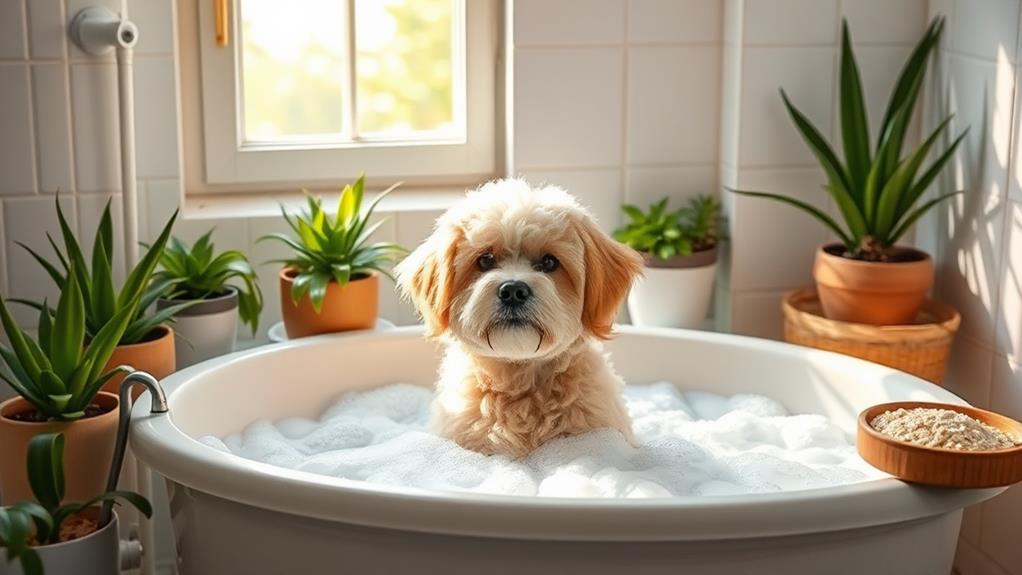
When it comes to soothing your dog's sensitive skin, considering natural remedies can be a great option. Many pet owners find that gentle, natural ingredients can provide relief without harsh chemicals.
For instance, oatmeal baths are well-known for their soothing properties. You can grind plain oatmeal into a fine powder and mix it with warm water before bathing your dog. This helps to moisturize the skin and relieve itching.
Another excellent choice is aloe vera gel, which has anti-inflammatory properties. You can apply a small amount directly to irritated areas. Just make sure it's pure aloe vera, as some commercial products contain additives that might irritate your dog's skin.
Coconut oil is another effective remedy; it not only hydrates but also has antibacterial and antifungal properties. Applying a little to your dog's skin can help keep it moisturized and healthy.
Lastly, consider adding fish oil to your dog's diet. It's rich in omega-3 fatty acids, which promote skin health and reduce inflammation.
Always consult your vet before introducing new remedies to ensure they're safe for your furry friend. By choosing natural remedies, you're giving your dog a gentle touch of care.
Monitor for Allergic Reactions
As you bathe your dog with sensitive skin, it's crucial to monitor for any allergic reactions that may arise. Your furry friend relies on you to keep them comfortable and safe, so staying alert during bath time is essential.
Here are some signs to watch for:
- Excessive scratching or biting at the skin
- Red or inflamed patches on the skin
- Swelling around the face, ears, or paws
- Unusual lethargy or changes in behavior
If you notice any of these symptoms, stop the bath immediately and rinse your dog with clean, lukewarm water to remove any soap or shampoo.
It's important to stay calm during this process; your dog will sense your anxiety. After rinsing, gently dry them with a soft towel and observe them for a while.
If symptoms persist or worsen, don't hesitate to consult your veterinarian. They can provide guidance and may suggest an allergy test to pinpoint the specific irritant.
Your dog's well-being is your priority, and being proactive can make all the difference in their comfort.
Establish a Bathing Routine
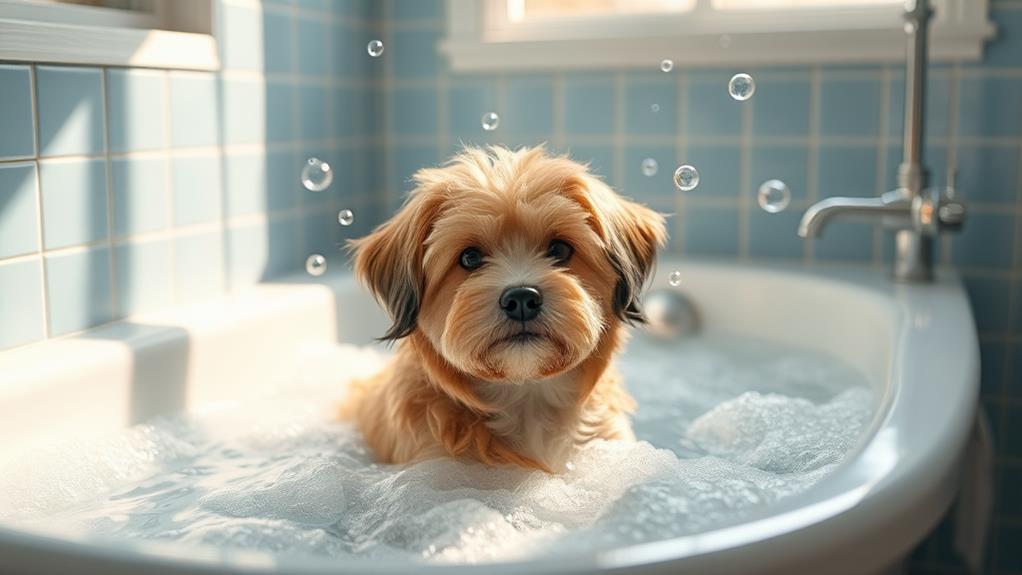
Establishing a consistent bathing routine can greatly benefit your dog with sensitive skin, helping to reduce the likelihood of allergic reactions. By creating a schedule, you give your dog the comfort of knowing when baths will occur, which can reduce anxiety. Aim to bathe your dog every four to six weeks, adjusting based on their specific needs and lifestyle.
Before starting, gather all necessary supplies—gentle, hypoallergenic shampoo, a soft brush, and towels. If your dog enjoys being brushed, consider doing this before the bath to help remove loose fur and dead skin.
Choose a calm, distraction-free environment for bath time, as this helps keep your dog relaxed. During the bath, use lukewarm water and ensure you're rinsing thoroughly to remove all shampoo residue.
After the bath, gently towel-dry your dog, avoiding vigorous rubbing that might irritate sensitive skin. Lastly, reward your dog with treats and affection after each bath to create positive associations.
Consult a Veterinarian if Needed
If you notice any persistent skin issues with your dog, it's crucial to consult a veterinarian.
They can help identify specific problems and provide professional advice tailored to your pet's needs.
Don't hesitate to seek their expertise for the best care possible.
Identify Skin Issues
Recognizing skin issues in your dog is crucial for their comfort and health. Sensitive skin can lead to discomfort, itching, and even serious infections if left untreated.
As a caring pet owner, you'll want to be vigilant and identify any potential problems. Here are some signs to watch for:
- Redness or inflammation
- Excessive scratching or biting at the skin
- Flaky or scaly patches
- Unpleasant odors emanating from the skin
If you notice any of these symptoms, it's essential to take action. Skin issues can be complicated, often stemming from allergies, parasites, or underlying health conditions.
Observing your dog's behavior and physical appearance will help you pinpoint the issue more accurately.
Don't hesitate to consult a veterinarian if you suspect something isn't right. They can provide guidance on the best course of action, ensuring your furry friend receives the care they need.
Get Professional Advice
Noticing signs of skin issues in your dog can be worrying, and seeking professional advice can help you understand the best way to address these concerns. Consulting a veterinarian is a crucial step in ensuring your dog's comfort and health.
They can provide a thorough examination to determine the underlying cause of your dog's skin sensitivity, whether it's allergies, infections, or other dermatological issues.
Don't hesitate to share detailed observations, like when the symptoms started or any changes in your dog's diet or environment. This information can help your vet make accurate recommendations.
They may suggest specific shampoos, treatments, or dietary adjustments tailored for your dog's needs.
Remember, your vet is your partner in your dog's health journey. If your dog's skin issues are severe or persistent, they might recommend a specialist for further evaluation.
Following your veterinarian's guidance not only helps alleviate your dog's discomfort but also promotes their overall well-being.
Frequently Asked Questions
How Often Should I Bathe My Dog With Sensitive Skin?
You should bathe your dog with sensitive skin every four to six weeks. This helps keep their coat clean without stripping natural oils. Always use a gentle, hypoallergenic shampoo to protect their delicate skin.
Can I Use Human Shampoo on My Dog?
You shouldn't use human shampoo on your dog. It can disrupt their skin's natural balance and cause irritation. Instead, opt for a gentle, dog-specific shampoo that caters to their sensitive skin for optimal care.
What Are Signs of Skin Irritation After Bathing?
After bathing, watch for redness, excessive scratching, or licking. If your dog's skin feels warm or develops bumps, it's likely irritated. You should consult a vet to address any potential issues and ensure their comfort.
Are There Specific Breeds Prone to Sensitive Skin?
Yes, certain breeds like Bulldogs, Dachshunds, and Spaniels often have sensitive skin. You'll want to watch for redness or irritation, ensuring you provide them with gentle care and appropriate grooming to keep their skin healthy.
Should I Bathe My Dog in Winter?
You can bathe your dog in winter, but consider the temperature. Ensure the water's warm, and dry them quickly afterward. Keeping your dog comfortable is key to a positive bathing experience during colder months.
Conclusion
Bathing your dog with sensitive skin doesn't have to be a monumental task! By understanding their needs and using the right products, you can turn bath time into a soothing experience. Remember to keep an eye out for reactions and adjust your routine as necessary. With a little care, you'll have your pup feeling as fresh as a daisy in no time! So grab those supplies and make bath day a breeze for both you and your furry friend!

Carlos Rodriguez is the Senior Product Reviewer at DogShampooReviews.com. With over 15 years of experience in canine grooming and skincare, Carlos brings a wealth of knowledge and passion to our team. His journey began at a young age, growing up on a family farm where he was surrounded by dogs of all breeds and sizes. This early exposure ignited his lifelong dedication to animal care and well-being.
Professional Background
- Certified Dog Groomer: Carlos is a certified professional groomer who has worked in some of the top grooming salons across the country. His expertise spans various grooming techniques suitable for different breeds and coat types.
- Canine Skincare Specialist: Recognizing the importance of skin health in dogs, Carlos pursued additional certifications in dermatological care for canines, specializing in treating skin conditions and allergies.
- Product Testing Expert: With a meticulous eye for detail, Carlos rigorously tests dog shampoos and grooming products, evaluating them on ingredients, efficacy, safety, and overall quality.
Passion for Dogs
Carlos’s love for dogs goes beyond his professional life. He is an active volunteer at local animal shelters, providing grooming services to help adoptable dogs look and feel their best. His own rescued dogs, Bella and Rocky, are often the first to try out new products, ensuring his reviews come from genuine experiences.
Why Trust Carlos
- Unbiased Reviews: Committed to integrity, Carlos ensures all his reviews are honest and based on thorough testing.
- Expert Insight: His extensive knowledge allows him to break down complex information into understandable advice for dog owners.
- Community Engagement: Carlos actively engages with our readers, answering questions and providing personalized recommendations.