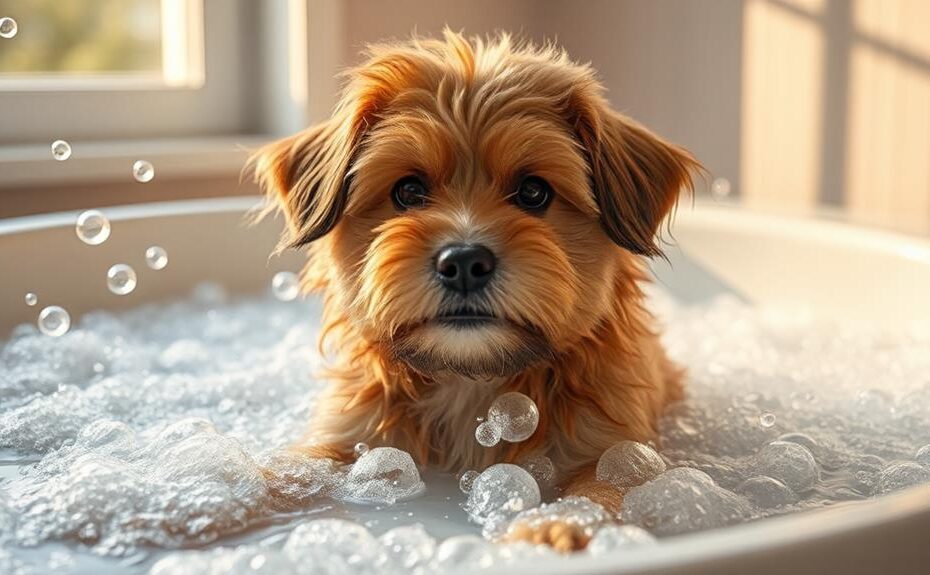
To bathe a dog with a yeast infection, start by gathering antifungal shampoo, soft washcloths, and towels. Use lukewarm water to wet your dog, avoiding the ears. Apply the antifungal shampoo gently, working it into sections of fur, and rinse thoroughly to remove all residue. Dry your dog with towels, paying special attention to folds and crevices to prevent moisture buildup. Bathe once a week initially, adjusting as needed based on your dog's response. Monitor their skin and behavior for any changes. You'll find additional tips to further support your dog's comfort and recovery.
Key Takeaways
- Use an antifungal shampoo specifically designed for yeast infections, ensuring it is pH balanced for dogs.
- Wet the dog gently, avoiding the ears, and reassure them throughout the process.
- Apply the shampoo in sections, massaging it lightly into the coat to reach the skin.
- Rinse thoroughly with lukewarm water, ensuring all shampoo is removed to prevent irritation.
- Dry the dog gently, focusing on moisture-prone areas, and monitor the skin for any residual dampness.
Understanding Yeast Infections in Dogs
Have you ever wondered why your dog seems to be itching more than usual? It could be a yeast infection, a common issue in dogs that often goes unnoticed. Yeast infections occur when the natural balance of microorganisms in your dog's body becomes disrupted, leading to an overgrowth of yeast, particularly in warm, moist areas like ears, paws, and skin folds.
You should know that yeast thrives in environments with excess moisture, so if your dog loves swimming or gets bathed frequently, this might contribute to the problem.
Allergies—whether food-related or environmental—can also play a significant role in triggering yeast infections, as they weaken your dog's immune system.
Recognizing the underlying causes is crucial for effective treatment. By understanding these factors, you can better support your dog's health and wellbeing.
Regular grooming and maintaining a clean, dry environment are essential. If you suspect a yeast infection, consulting your veterinarian is vital. They can provide guidance and recommend appropriate treatments, ensuring your furry friend feels comfortable and happy again.
Taking these steps not only helps your dog but also strengthens the bond you share.
Signs and Symptoms to Look For
When it comes to spotting a yeast infection in your dog, knowing the signs and symptoms is crucial.
You might notice common indicators like itching, redness, or a bad odor.
Additionally, keep an eye out for any behavioral changes, as your dog may become more irritable or withdrawn.
Common Yeast Infection Indicators
If you suspect your dog might've a yeast infection, there are several common indicators to watch for. Recognizing these signs early can help you provide the care your furry friend needs.
- Itchy Skin: One of the most noticeable signs is excessive scratching or biting at the skin. Your dog may seem restless and uncomfortable, indicating irritation.
- Foul Odor: Yeast infections often produce a distinct musty smell. If your dog has an unusual odor, particularly around the ears, paws, or skin folds, it could be a sign of a yeast issue.
- Red or Inflamed Areas: Look for redness, swelling, or rashes on the skin. Yeast infections can cause inflammation, leading to visible discomfort in affected areas.
Behavioral Changes in Dogs
Recognizing a yeast infection in your dog goes beyond just physical symptoms; behavioral changes can also provide important clues about their health. You might notice that your furry friend seems more irritable or withdrawn than usual.
If they're typically playful and suddenly lose interest in activities they once loved, it could signal discomfort caused by an infection.
Additionally, watch for signs of excessive scratching or licking. If your dog is obsessively grooming a specific area, it's a strong indicator that they're experiencing irritation.
They might also be more sensitive to touch, reacting negatively when you pet them in certain spots.
Changes in appetite can also be a red flag. If your dog suddenly refuses to eat or seems less enthusiastic about mealtime, it could be due to underlying pain or discomfort.
Lastly, keep an eye on their sleeping habits. Increased restlessness or difficulty settling down can hint at distress.
Choosing the Right Shampoo
Selecting the right shampoo is crucial for effectively treating a dog with a yeast infection. You want a product specifically formulated to combat yeast and soothe your furry friend's skin.
Here are three key factors to consider when choosing the right shampoo:
- Antifungal Ingredients: Look for shampoos containing antifungal agents like ketoconazole or miconazole. These ingredients help eliminate yeast and prevent future outbreaks.
- pH Balanced Formulas: Dogs have a different skin pH than humans, so opt for shampoos that are pH balanced for dogs. This ensures the product won't irritate their skin further.
- Natural Ingredients: Consider shampoos with natural ingredients like aloe vera or oatmeal. These can soothe irritation and provide moisture, making bath time a more pleasant experience for your dog.
Preparing for Bath Time
Once you've chosen the right shampoo, it's time to get everything ready for bath time.
Start by selecting a suitable location, like a bathtub or a large sink, where you can easily manage your dog. Make sure the area is free from distractions to help your furry friend feel calm and secure.
Next, check the water temperature. You want it warm but not too hot, as dogs can be sensitive to temperature changes. Fill the tub or sink with just a few inches of water to avoid overwhelming your dog.
Gather some treats to reward your pup for good behavior and to create a positive association with bath time. It's important to keep their spirits high throughout the process.
Gathering Necessary Supplies
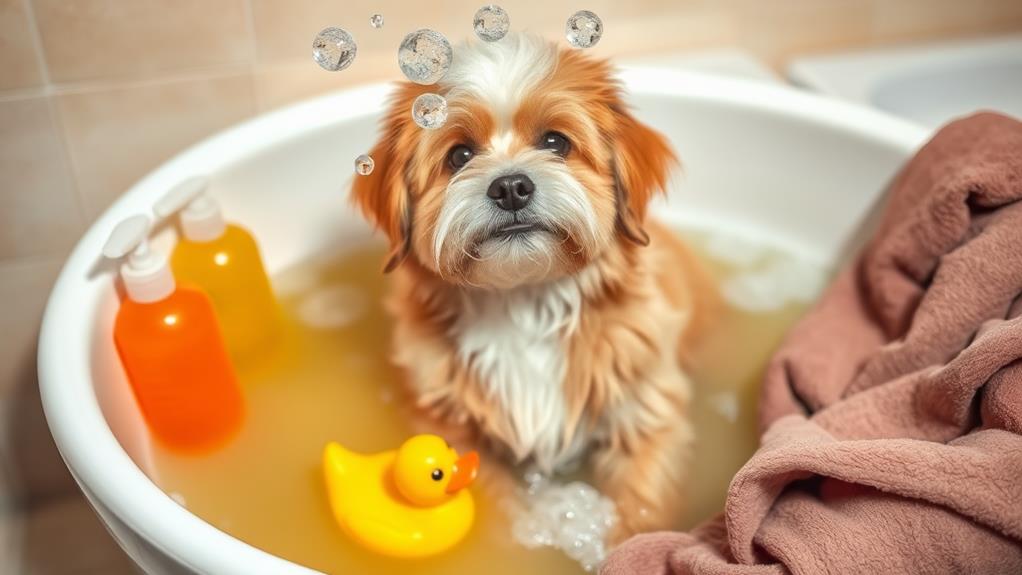
Before you start bathing your dog, you'll need to gather some essential supplies.
Make sure you have the right anti-fungal shampoo, plenty of towels, and any drying tools you might need.
This preparation will help make the process smoother and more effective for your pup's yeast infection.
Essential Bathing Products
When it comes to bathing a dog with a yeast infection, having the right supplies on hand makes all the difference.
You want to ensure your furry friend feels comfortable and gets the relief they need during this process. Here are three essential bathing products you should gather before getting started:
- Anti-fungal Shampoo: While we won't dive into specific brands just yet, having a medicated anti-fungal shampoo is crucial for addressing the yeast infection. Make sure it's suitable for dogs and recommended by your vet.
- Soft Washcloths: You'll need soft washcloths for gentle cleaning around sensitive areas. They're perfect for wiping away any discharge and keeping your dog clean without causing irritation.
- Non-Slip Mat: Bathing can be a slippery affair. A non-slip mat will help your dog feel secure and prevent accidents while they're in the tub.
Anti-Fungal Shampoo Options
Choosing the right anti-fungal shampoo is essential for effectively treating your dog's yeast infection. Look for shampoos specifically formulated to combat yeast, as these products contain ingredients like ketoconazole, miconazole, or chlorhexidine, which are known to target fungal infections.
When selecting a shampoo, verify that it's safe for your dog's skin type and age. Consider consulting your veterinarian for recommendations tailored to your dog's specific needs. They might suggest a medicated shampoo with a proven track record in treating yeast infections.
Additionally, check customer reviews and product descriptions to ensure the shampoo is effective and well-tolerated by other dogs. Don't forget to look for shampoos that have soothing properties, as yeast infections can cause discomfort. Ingredients like aloe vera or oatmeal can help calm inflamed skin during the bathing process.
Lastly, ensure that the shampoo is easy to use and rinse out, as this can make bath time less stressful for both you and your dog. By choosing the right anti-fungal shampoo, you're taking a vital step toward helping your furry friend feel better and restoring their skin health.
Towels and Drying Tools
To ensure a smooth bathing experience for your dog, gather the right towels and drying tools beforehand. Having everything ready will help you focus on your pup's comfort and health during the bath.
Here are three essential items to consider:
- Absorbent Towels: Choose thick, absorbent towels to quickly soak up moisture from your dog's fur. Microfiber towels work well as they're both soft and highly absorbent.
- Dog-Specific Dryer: If your dog tolerates noise, consider investing in a dog-specific dryer. These dryers are designed to be more gentle on your dog's skin and can speed up the drying process significantly.
- Brush: A soft-bristle brush or a comb can help detangle your dog's fur before and after bathing. This won't only make the drying process easier but can also help in distributing natural oils, promoting healthy skin.
Setting Up a Comfortable Space
Creating a comfortable space for your dog during bath time is essential, especially if they're dealing with a yeast infection. Start by choosing a quiet area, away from distractions and noise. This will help your dog feel secure and less anxious.
If possible, use a non-slip mat in the bathtub or sink to ensure they don't slide around.
Gather all the supplies you'll need in advance—shampoo, towels, and any other tools. This way, you won't have to leave your dog unattended while you search for something.
Consider placing their favorite toy nearby to provide comfort during the bath.
Make sure the water temperature is lukewarm, as extreme temperatures can be uncomfortable. If your dog has a favorite blanket or bed, consider placing it nearby for them to rest on after the bath.
Lastly, stay calm and reassuring. Your energy influences their mood, so speak softly and give gentle pats.
Wetting Your Dog Properly
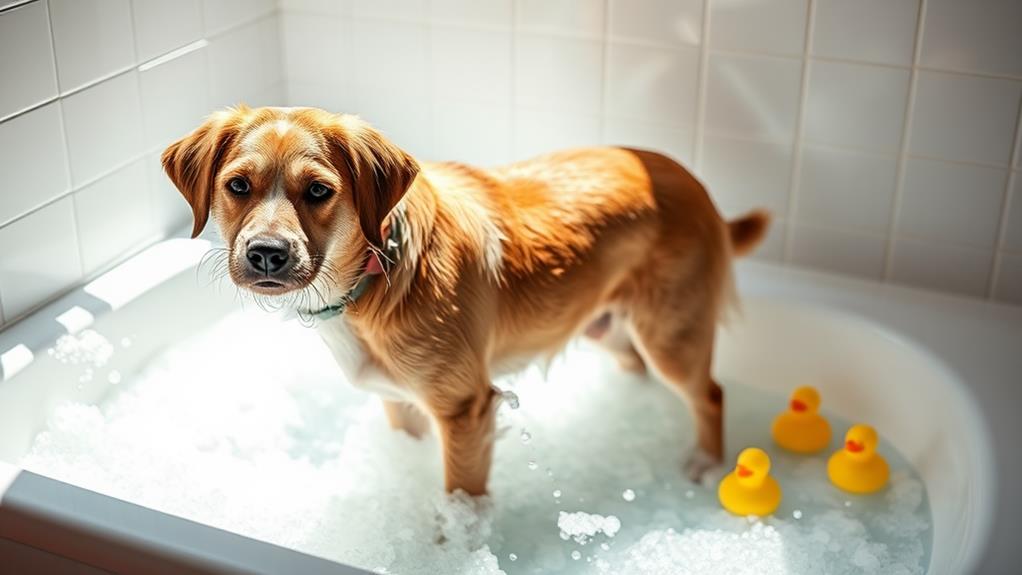
Before you start wetting your dog, gather all the necessary supplies like a hose, bucket, or showerhead.
Make sure the water temperature is just right—comfortably warm but not too hot. This will help your dog feel at ease during the bathing process.
Gather Necessary Supplies
Gathering the right supplies is crucial for wetting your dog properly before the bath.
Having everything ready not only makes the process smoother but also ensures that your dog feels comfortable and safe throughout.
Here's what you'll need:
- A Hose or Showerhead: A gentle spray will help you control the water flow, making it easier to wet your dog without startling them.
- Non-Slip Mat: Place a non-slip mat in your bathing area to give your dog a secure footing. This helps prevent slips and keeps your furry friend calm.
- Towels: Have a few absorbent towels on hand. You'll need them to dry your dog after the bath, and they can also help catch any water that splashes around.
Choose Optimal Water Temperature
Finding the right water temperature is essential for your dog's comfort during the bath. You want to aim for lukewarm water, as extreme temperatures can be uncomfortable or even harmful. Test the water with your wrist; it should feel warm but not hot. This helps ensure that your furry friend enjoys the process rather than dreading it.
When you wet your dog, start from the neck and work your way down. This method not only keeps them calm but also allows you to control the flow and temperature as you go. Avoid getting water in their ears, especially if they've a yeast infection, as moisture can exacerbate the issue.
If your dog seems uneasy, reassure them with gentle words and a calm demeanor. You're creating a positive experience that can help them feel more at ease during bath time.
Applying Shampoo Gently
Gentleness is crucial when applying shampoo to a dog suffering from a yeast infection. Your dog may be uncomfortable, and your careful approach can make a significant difference.
Start by using a shampoo specifically designed for yeast infections, as it will help soothe your dog's skin while effectively addressing the issue.
Here are three key steps to follow for a gentle application:
- Apply in Sections: Divide your dog's coat into manageable sections. This allows you to focus on one area at a time without overwhelming your pup.
- Use Your Fingers: Instead of a washcloth or sponge, use your fingers to apply the shampoo. This way, you can feel your dog's skin and ensure that you're being gentle, especially on sensitive spots.
- Massage Lightly: As you work the shampoo in, use a light massaging motion. This not only helps in spreading the shampoo evenly but also comforts your dog, making the experience more pleasant.
Rinsing Thoroughly
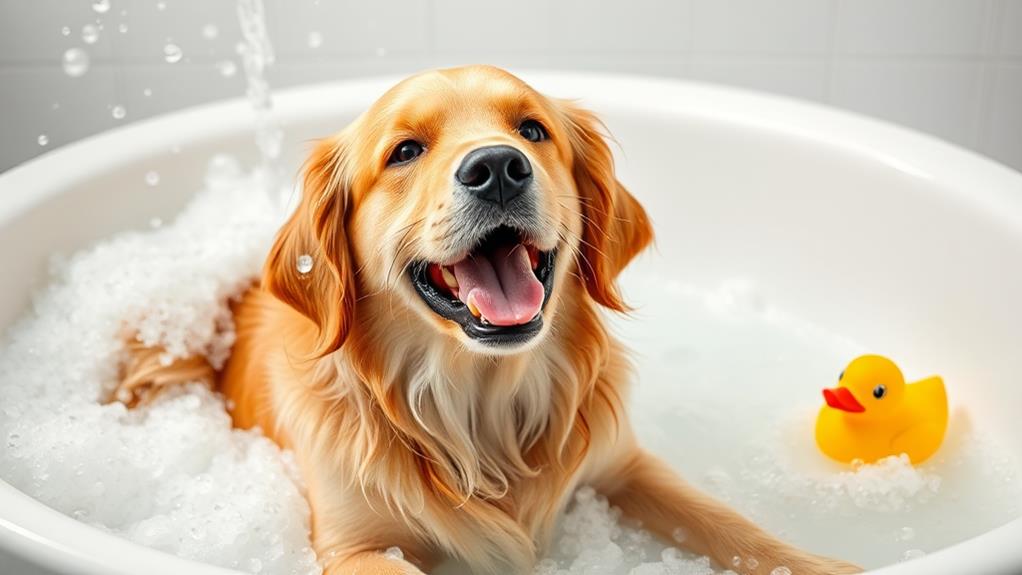
Once you've applied the shampoo and given your dog a gentle massage, it's time to rinse thoroughly. Start by using lukewarm water, as it's comfortable for your pup. Ensure you avoid getting water directly into their ears and eyes, as this can cause discomfort.
As you rinse, work from the neck down, allowing the water to flow over their body. Be mindful to remove all traces of shampoo, as residue can irritate your dog's skin, especially during a yeast infection.
Take your time to lift their fur, ensuring the water reaches the skin beneath. You might find it helpful to use your hands to guide the water and check for any leftover shampoo. If you notice any areas that still feel slippery or soapy, focus on those spots until they're clean.
Rinsing thoroughly not only helps comfort your dog but also supports the healing process by removing irritants. Once you're confident that all the shampoo is gone, finish with a final rinse to ensure your dog feels fresh and clean.
This extra effort shows how much you care for their well-being, making bathtime a positive experience for both of you.
Drying Your Dog Safely
After rinsing your dog, it's crucial to dry them safely to prevent any further irritation from moisture, especially in areas prone to yeast infections.
Start by gently towel-drying your dog. Use a soft, absorbent towel to pat their coat, focusing on the areas that tend to retain moisture, like the paws, ears, and underbelly.
Here are three tips to help you dry your dog effectively:
- Use a Dryer on Low Heat: If your dog tolerates it, consider using a pet-specific hair dryer. Keep it on the lowest setting to avoid overheating their skin.
- Check for Moisture Accumulation: After towel drying, check for any remaining moisture in folds or crevices. Use a cotton ball or soft cloth to gently dab these areas.
- Stay Calm and Reassuring: Throughout the drying process, maintain a calm demeanor. Speak softly and reassure your dog to make them feel comfortable and secure.
Post-Bath Skin Care
Post-bath skin care is essential for keeping your dog comfortable and preventing further irritation. After drying your dog thoroughly, check for any residual moisture, especially in skin folds, where yeast can thrive. Gently pat these areas dry with a soft towel to ensure they remain moisture-free.
Next, consider applying a veterinarian-recommended topical treatment specifically designed for yeast infections. This can help soothe your dog's skin and combat any lingering issues. Always follow the instructions provided by your vet to ensure safe and effective use.
If your dog has sensitive skin, you might also want to use a calming spray or ointment that's free from harsh chemicals. Look for products containing natural ingredients like aloe vera or chamomile, which can help reduce inflammation and promote healing.
Frequency of Baths
When it comes to bathing a dog with a yeast infection, the frequency of baths plays a crucial role in managing their condition. You'll want to find a balance that helps alleviate symptoms without irritating their skin further. Generally, bathing your dog once a week is a good starting point, but you may need to adjust based on your dog's specific needs and how they respond to treatment.
Here are three key points to consider regarding bath frequency:
- Observe Their Condition: Keep an eye on your dog's skin and overall health. If symptoms worsen, you might need to bathe them more frequently until improvement is noticeable.
- Use the Right Products: Always opt for medicated shampoos designed for yeast infections. These can be used weekly or as directed by your veterinarian.
- Avoid Overbathing: While it's essential to keep your dog clean, overbathing can strip natural oils and cause more irritation. Stick to your plan and adjust only as necessary.
When to Consult a Veterinarian
Recognizing the signs that warrant a trip to the veterinarian is essential for effectively managing your dog's yeast infection. If your dog's symptoms persist after a few baths or seem to worsen, it's time to consult a professional.
Look for signs like excessive itching, redness, swelling, or a foul odor emanating from their skin or ears. These could indicate a more severe infection that might require medical intervention.
Additionally, if you notice any changes in your dog's behavior, such as increased irritability or lethargy, don't hesitate to reach out to your vet. These behavioral changes can signal discomfort or pain, which should never be ignored.
Also, if you see any unusual discharge or if your dog is losing hair in patches, these are red flags that need immediate attention.
Frequently Asked Questions
Can I Use Human Shampoo for My Dog With a Yeast Infection?
Using human shampoo for your dog isn't recommended, especially with a yeast infection. It can disrupt their skin's pH balance. Instead, opt for a vet-approved dog shampoo designed to treat their specific condition safely.
How Long Does It Take for a Yeast Infection to Clear Up?
Clearing a yeast infection can feel like waiting for a storm to pass. Generally, you'll see improvement in a week or two with proper care, but it's crucial to follow your vet's guidance for best results.
Are Home Remedies Effective for Treating Yeast Infections in Dogs?
Home remedies can be helpful for treating yeast infections in dogs, but they're not always effective. You should consult your vet for proper guidance and treatment options to ensure your dog's health and comfort.
Can Diet Changes Help With My Dog's Yeast Infection?
Can changing your dog's diet help with yeast infections? Absolutely! Think of it as giving your dog a fresh start. A balanced, low-sugar diet can strengthen their immune system and combat yeast growth effectively.
Is It Safe to Bathe a Dog With a Yeast Infection Daily?
Bathing your dog daily can irritate their skin, especially with a yeast infection. Instead, focus on gentle cleaning and consult your vet for a suitable schedule that won't exacerbate the condition or cause discomfort.
Conclusion
In conclusion, bathing a dog with a yeast infection requires careful attention and the right approach. By understanding the signs, choosing suitable products, and following a gentle routine, you'll help your furry friend feel more comfortable. Just like nurturing a delicate flower, your efforts can significantly improve their skin health. Remember, if symptoms persist or worsen, don't hesitate to consult a veterinarian. Your dog deserves the best care, and you're their most trusted guardian in this journey.

Carlos Rodriguez is the Senior Product Reviewer at DogShampooReviews.com. With over 15 years of experience in canine grooming and skincare, Carlos brings a wealth of knowledge and passion to our team. His journey began at a young age, growing up on a family farm where he was surrounded by dogs of all breeds and sizes. This early exposure ignited his lifelong dedication to animal care and well-being.
Professional Background
- Certified Dog Groomer: Carlos is a certified professional groomer who has worked in some of the top grooming salons across the country. His expertise spans various grooming techniques suitable for different breeds and coat types.
- Canine Skincare Specialist: Recognizing the importance of skin health in dogs, Carlos pursued additional certifications in dermatological care for canines, specializing in treating skin conditions and allergies.
- Product Testing Expert: With a meticulous eye for detail, Carlos rigorously tests dog shampoos and grooming products, evaluating them on ingredients, efficacy, safety, and overall quality.
Passion for Dogs
Carlos’s love for dogs goes beyond his professional life. He is an active volunteer at local animal shelters, providing grooming services to help adoptable dogs look and feel their best. His own rescued dogs, Bella and Rocky, are often the first to try out new products, ensuring his reviews come from genuine experiences.
Why Trust Carlos
- Unbiased Reviews: Committed to integrity, Carlos ensures all his reviews are honest and based on thorough testing.
- Expert Insight: His extensive knowledge allows him to break down complex information into understandable advice for dog owners.
- Community Engagement: Carlos actively engages with our readers, answering questions and providing personalized recommendations.