Bathing a senior dog with joint pain takes careful planning and a gentle approach. Start by gathering supplies like non-slip mats, gentle shampoo, and towels. Choose a quiet, comfortable space, like a walk-in shower or low tub. Use lukewarm water and introduce it slowly, rinsing from the neck down. Handle your dog carefully, prioritizing comfort, and take breaks if needed. After bathing, use soft towels to dry them gently. Always watch for signs of discomfort, adjusting your technique as necessary. To make your bathing experience even smoother, you might want to explore various tips and techniques.
Key Takeaways
- Gather essential supplies like gentle shampoo, non-slip mats, and towels to ensure a safe bathing environment for your senior dog.
- Use lukewarm water and a handheld sprayer to introduce water slowly, minimizing stress on your dog’s joints.
- Employ gentle touch techniques and monitor your dog’s body language to ensure comfort throughout the bathing process.
- Dry your dog carefully with soft towels and avoid vigorous rubbing to prevent any strain on their joints.
- Consider alternatives like damp cloths or professional grooming if your dog shows signs of discomfort during traditional baths.
Understanding Joint Pain in Dogs
As dogs age, many experience joint pain, making it essential for you to understand the signs and causes.
You might notice your senior dog hesitating to jump or climb stairs, and they may seem more reluctant to play. Increased stiffness, especially after resting, can also indicate discomfort. It’s crucial to observe these changes, as your dog can’t communicate their pain verbally.
Joint pain in dogs often stems from arthritis, which results from the wear and tear of cartilage over time.
Other factors like obesity, previous injuries, and genetic predispositions can exacerbate this condition. Being proactive about your dog’s health can make a significant difference.
Regular vet check-ups will help identify joint issues early on and allow for effective management.
Preparing for the Bath
Before you start bathing your senior dog, you’ll want to gather all the essential supplies, like shampoo and towels.
Choose a comfortable space where your dog feels secure, whether it’s in the tub or outside.
Don’t forget to ensure safety measures are in place to prevent slips and make the process as smooth as possible.
Gather Essential Supplies
Gathering essential supplies is key to ensuring a smooth bathing experience for your senior dog. Start by collecting a gentle dog shampoo specifically designed for sensitive skin. Look for products that are free from harsh chemicals and fragrances to avoid irritating your dog’s skin.
Next, grab a non-slip mat to place in the tub or shower; it’ll help prevent your dog from slipping, making the process safer and more comfortable.
You’ll also need a soft brush or comb to remove any tangles or debris from your dog’s coat before the bath. This step can make bathing easier and more enjoyable for them.
Don’t forget towels—lots of towels! Having several on hand will help you dry your dog quickly after the bath, preventing chills.
Lastly, keep a cup or handheld sprayer nearby to rinse your dog thoroughly. This ensures all shampoo is removed, which is crucial for their skin health.
Choose a Comfortable Space
Creating a comfortable space for your senior dog is essential for a stress-free bathing experience. Start by selecting a quiet area where distractions are minimal.
Consider using a non-slip mat or towel to provide stability, especially if your dog has joint pain. This will help them feel secure while they’re being bathed.
If possible, use a bathtub or a large basin that allows your dog to sit comfortably. Make sure the water temperature is warm, but not hot, to ensure your dog feels relaxed.
Gather everything you need beforehand—shampoo, towels, and brushes—so you won’t have to leave your dog alone during the process.
You might also want to have their favorite toys or treats nearby to create positive associations with bath time. Soft music can help set a calm atmosphere, easing their anxiety.
Lastly, keep in mind the height of the bathing area; if your dog struggles to jump in, consider using a ramp or bathing them in a location that’s easier to access.
A little preparation goes a long way in ensuring your senior dog feels safe and comfortable during their bath.
Ensure Safety Measures
Ensuring safety measures is crucial when preparing for your senior dog’s bath. Start by gathering non-slip mats to place in the bathing area. This helps prevent any slips or falls, which can be particularly harmful for dogs with joint pain.
Make sure the water temperature is lukewarm; water that’s too hot or too cold can cause discomfort.
Next, have all your bathing supplies ready—shampoo, towels, and a gentle brush—so you won’t need to leave your dog unattended. If your dog is anxious, consider using a calming product or playing soft music to create a soothing environment.
Use a harness or a sturdy leash to keep your dog stable during the bath. You might also want to enlist someone to help hold your dog if they’re particularly wiggly.
Always speak softly and reassuringly to let them know they’re safe.
Choosing the Right Location
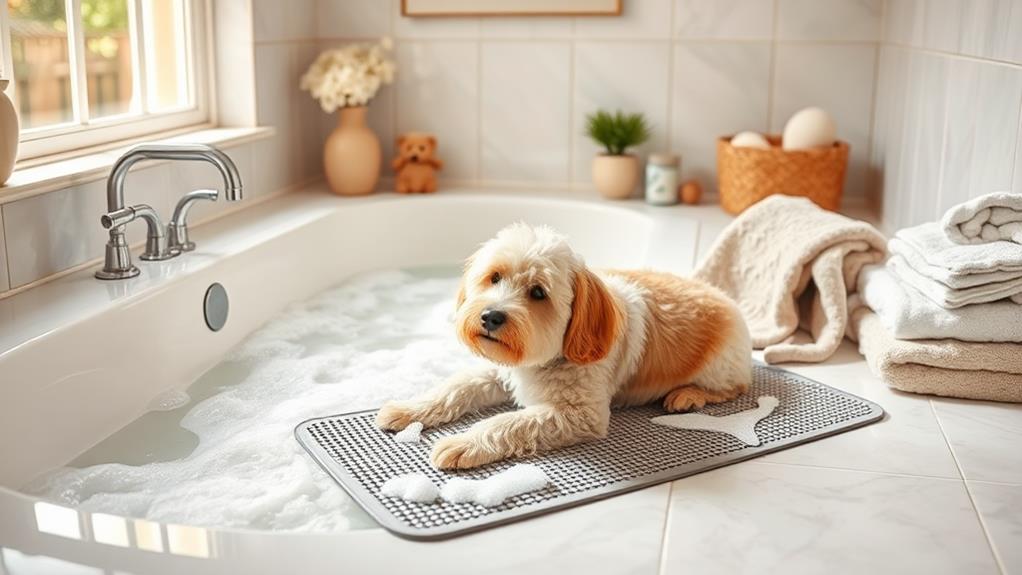
When it comes to bathing your senior dog, picking the right location can make a world of difference. You want a space that’s comfortable and safe for your furry friend, allowing them to feel secure while you help them clean up.
Consider using a non-slip mat to prevent any slips, especially if you’re bathing them in a bathtub or shower. A walk-in shower or a bathtub with a low entry point can be excellent choices, as they minimize the strain on your dog’s joints.
If your senior dog is particularly anxious, bathing them outdoors in a warm, sunny area can provide a calming atmosphere. Just make sure it’s a private space where they won’t feel overwhelmed.
Temperature matters, too. Ensure the water is warm but not too hot, as their skin may be sensitive. If it’s cold outside, it’s best to stay indoors to keep them comfortable.
Gathering Necessary Supplies
Before you start bathing your senior dog, you need to gather all the necessary supplies.
Having the right bathing essentials and comfort-enhancing tools on hand will make the process smoother for both of you.
Let’s look at what you’ll need to ensure your dog feels safe and clean.
Essential Bathing Supplies
Gathering the right supplies is crucial for a successful bath with your senior dog. Begin by choosing a gentle, dog-specific shampoo that’s free from harsh chemicals. Look for options designed for sensitive skin, as your senior dog may have more delicate skin than before. A soft washcloth or sponge will help you clean those hard-to-reach areas without causing discomfort.
You’ll also want to gather a non-slip mat for the bathing area. This will provide your dog with stability and reduce the risk of slips, making bath time less stressful for both of you. A handheld shower head or a cup for rinsing can make it easier to control the water flow, ensuring it’s gentle enough for your pup.
Don’t forget towels—plenty of them! Choose soft, absorbent towels to help dry your dog after the bath. If your dog enjoys treats, have some on hand to reward them for their patience.
Comfort-Enhancing Tools
To ensure your senior dog feels comfortable during bath time, consider incorporating a few comfort-enhancing tools into your setup. These tools can help ease any discomfort and make the experience more enjoyable for both of you.
Start with a non-slip mat in your bathing area. This gives your dog stability and prevents slips, which can be especially important for dogs with joint pain. A handheld showerhead can also be beneficial, allowing you to control the water flow and avoid overwhelming your dog with sudden sprays.
Consider using a grooming sling or harness, which can help support your dog if they struggle to stand. This provides extra stability and helps you keep them secure while bathing.
Additionally, a soft, warm towel can be a great comfort tool. After bathing, wrap your dog in it to help them dry off and feel cozy.
Lastly, calming sprays or soothing music can create a relaxing atmosphere. Your senior dog deserves a gentle, stress-free bathing experience, and these comfort-enhancing tools will help achieve that.
With the right setup, bath time can become a bonding experience rather than a chore.
Selecting Dog-Friendly Products
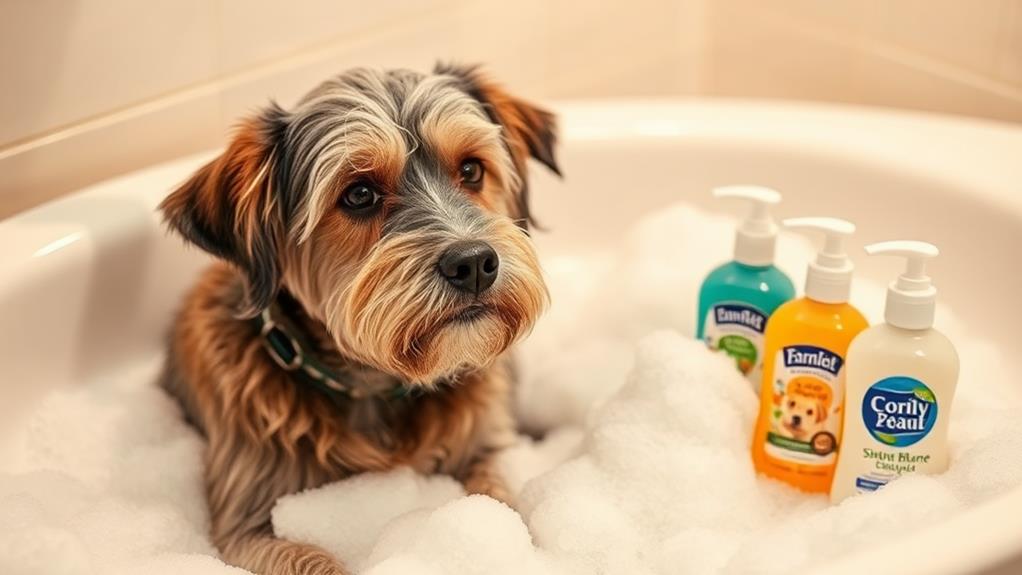
When it comes to bathing your senior dog, selecting dog-friendly products is essential for their comfort and safety.
Start with a gentle, hypoallergenic shampoo specifically designed for dogs. Avoid human shampoos, as they can irritate your dog’s skin and disrupt their natural pH balance. Look for products that contain soothing ingredients like oatmeal or aloe vera, which can help alleviate any skin sensitivities.
Next, consider using a conditioner to keep their coat soft and manageable. A dog-friendly conditioner can also help detangle any knots, making the bathing process smoother. Always read the label to ensure the product is safe for senior dogs.
Don’t forget about ear cleaning solutions! Older dogs can be more prone to ear infections, so using a gentle, dog-specific formula can help keep their ears clean without causing discomfort.
Lastly, invest in a dog-friendly deodorizing spray that’s free from harsh chemicals. This can freshen up your dog without the need for frequent baths, which can be tiring for them.
Using a Non-Slip Surface
A non-slip surface can make bath time much safer and more comfortable for your senior dog.
When your furry friend is dealing with joint pain, stability is key to preventing slips and falls that could exacerbate their discomfort.
Here are some options to consider:
- Rubber Mats: Place rubber mats in your bathtub or shower. They provide excellent traction and are easy to clean.
- Non-Slip Bathing Slippers: If your dog tolerates them, consider using non-slip bathing slippers designed for pets. They can give extra grip and confidence in the water.
- Towels or Blankets: Lay down a thick towel or a soft blanket in the bathing area. This can cushion your dog’s joints and prevent them from sliding around.
Easing Your Dog’s Anxiety
When it’s time to bathe your senior dog, creating a calm environment is essential for easing their anxiety.
You can use gentle touch techniques to help them feel secure, and playing soothing sounds can also make a big difference.
Let’s explore these methods to ensure your pup feels relaxed during bath time.
Create a Calm Environment
Creating a calm environment is essential for easing your senior dog’s anxiety during bath time. When your dog feels relaxed, the experience can be far less stressful for both of you.
Here are three simple ways to create that tranquil atmosphere:
- Limit Noise: Keep the area quiet by turning off loud appliances and reducing chatter. Soft music can help soothe your dog, but avoid anything too jarring.
- Choose a Comfortable Space: Select a familiar spot, like the bathroom or laundry room, where your dog feels safe. If possible, use a non-slip mat to help them feel secure on their feet.
- Use Soothing Scents: Consider using calming essential oils, like lavender, in a diffuser. Just be sure to check that any scents are safe for dogs and used in moderation.
Use Gentle Touch Techniques
Gentle touch techniques can significantly ease your senior dog’s anxiety during bath time. Start by approaching your dog calmly and slowly, allowing them to see and smell you before you begin. Use a soft, reassuring voice to let them know you’re there to help.
When you touch your dog, keep your movements slow and deliberate. Avoid sudden gestures that might startle them. Begin by gently stroking their back, working your way down to their legs and paws. Pay special attention to any areas where they may have joint pain; use a light touch and avoid pressure.
This not only reassures your dog but also helps you gauge their comfort level. If they seem tense, take a moment to pause and offer a scratch or a gentle massage. Incorporating gentle touch into your bathing routine creates a calming experience for both you and your dog.
Always be aware of their body language; if they seem anxious, adjust your approach. Remember, your patience and tenderness can transform bath time into a bonding experience rather than a stressful chore, making it easier for your furry friend to trust you.
Employ Soothing Sounds
Play calming music or soft sounds to help ease your senior dog’s anxiety during bath time. Creating a soothing environment can work wonders, especially for a dog with joint pain who might already feel vulnerable.
Here are three effective ways to incorporate soothing sounds:
- Choose Soft Music: Select gentle tunes or classical music that can lull your dog into a state of relaxation. Look for playlists designed specifically for pets.
- Nature Sounds: Consider playing recordings of nature sounds, like gentle rain or birds chirping. These can provide a peaceful backdrop that distracts your dog from the bathing process.
- White Noise: A white noise machine can help mask any unsettling sounds associated with bathing, like running water or splashing. This steady sound can create a comforting atmosphere.
Supporting Your Dog’s Body
When you’re bathing a senior dog, it’s crucial to support their body to ensure they feel secure and comfortable. Joint pain can make it difficult for them to stand or move, so provide steady support throughout the process. Use one hand to cradle their hindquarters while the other hand supports their chest or front legs. This will help alleviate pressure on their joints and keep them stable.
Consider using a non-slip mat in the tub or shower to prevent slipping, which can be distressing for your dog. If your dog is particularly large or heavy, you might want to enlist a friend or family member to assist you. Having an extra set of hands can help you manage their weight and make the experience feel safer for both of you.
Additionally, speak softly to reassure your dog as you bathe them. Your calm voice can provide comfort and let them know you’re there for support.
Watch for signs of discomfort, and be prepared to pause if they seem stressed. Your goal is to make this bathing experience as gentle and loving as possible, reinforcing that they’re safe in your care.
Temperature Considerations
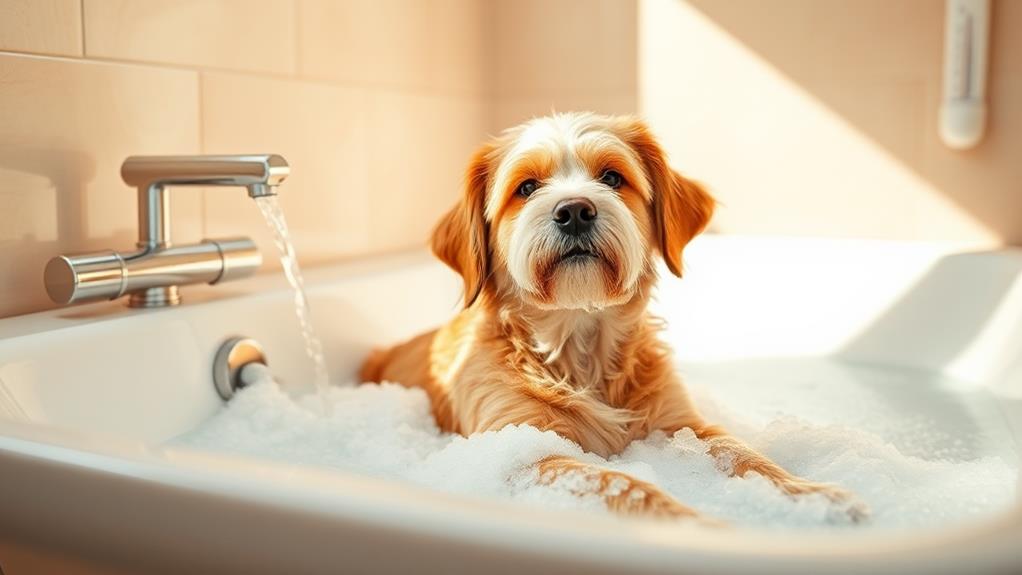
Getting the water temperature just right is essential for your senior dog’s comfort during bath time. Since older dogs can be more sensitive to extremes, a lukewarm temperature is usually best. Too cold, and your dog might shiver; too hot, and it could cause discomfort or burns.
Here are some tips to help you find that perfect temperature:
- Test the Water: Before introducing your dog, always test the water with your wrist or elbow. It should feel warm, but not hot.
- Adjust as Needed: If your dog seems uncomfortable after getting in, don’t hesitate to adjust the temperature. A little cooler might be just what they need.
- Keep It Consistent: Once you’ve found the right temperature, try to maintain it throughout the bath. You can do this by adding warm water as needed to prevent it from cooling down too much.
Gentle Bathing Techniques
Using gentle bathing techniques can make all the difference for your senior dog’s bath experience. Start by choosing a calm, quiet area where your dog feels safe. Use a non-slip mat to prevent any slipping and give your dog confidence as they stand.
When you introduce water, do it slowly. A handheld sprayer can help you control the flow and pressure, making it easier to avoid startling your pup. As you wet your dog, use soft, soothing motions. Start from the back and work your way forward, being mindful of any sensitive areas.
Keep your voice reassuring, and don’t rush the process. If your dog seems anxious, take breaks and give them gentle pets to keep them relaxed. Opt for a mild, dog-friendly shampoo designed for sensitive skin, applying it gently with your fingertips rather than scrubbing.
This not only cleans your dog but also provides a comforting massage, helping ease any joint pain. Remember to always prioritize your dog’s comfort; if they show signs of distress, take a step back and try again later. Your patience and understanding will create a positive experience for both of you.
Rinsing and Drying Safely
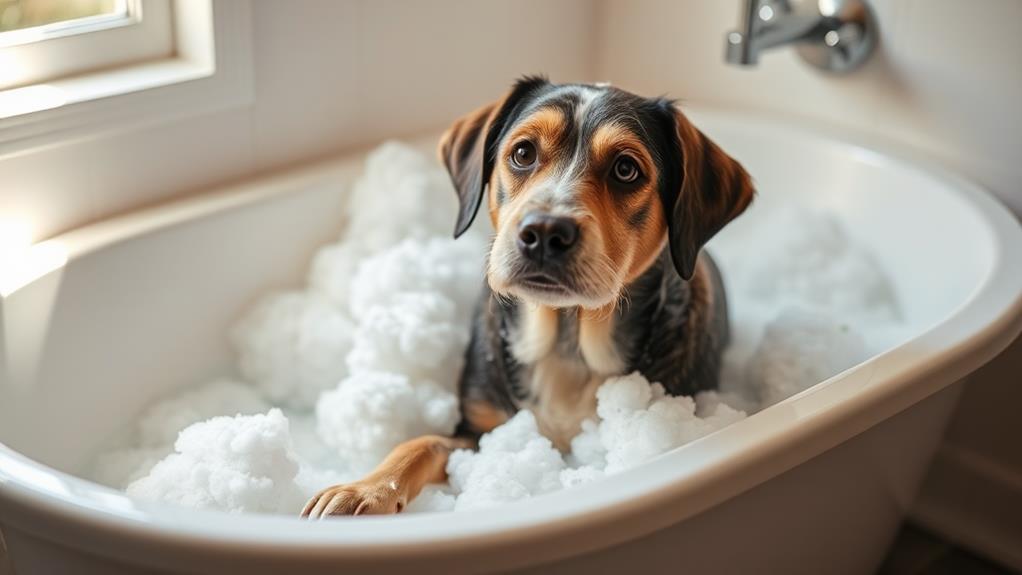
Rinsing your senior dog thoroughly is crucial and should be done gently to ensure their comfort. Use lukewarm water to avoid shocking their system and keep the pressure low to prevent any discomfort.
Here are some steps to follow for a safe rinsing and drying experience:
- Use a Handheld Showerhead: If possible, use a handheld showerhead to control the water flow better. This allows you to rinse specific areas without overwhelming your dog.
- Rinse from the Neck Down: Start rinsing from the neck down, avoiding the head initially. This minimizes the chances of water getting into their ears or eyes, which can be uncomfortable.
- Dry Gently with a Towel: After rinsing, wrap your dog in a large, absorbent towel. Pat them dry gently, avoiding vigorous rubbing that could cause joint strain.
Always keep an eye on your dog’s body language during this process. If they seem anxious or uncomfortable, take a break and reassure them.
This gentle approach not only keeps your senior dog safe but also helps strengthen your bond.
Post-Bath Care Tips
Now that your senior dog is clean, it’s important to focus on gentle drying techniques to keep their skin comfortable.
Use soft towels to blot away excess moisture, and consider applying skin care products designed for older dogs to maintain their coat’s health.
These steps will help ensure your pup feels cozy and cared for after their bath.
Gentle Drying Techniques
After you’ve finished bathing your senior dog, it’s crucial to dry them gently to ensure their comfort and safety.
Senior dogs with joint pain can be sensitive, so using the right techniques can make all the difference. Here are three gentle drying techniques you can use:
- Soft Towels: Use a soft, absorbent towel to pat your dog dry. Avoid vigorous rubbing, as this can hurt their joints. Instead, gently press the towel against their fur to soak up excess water.
- Low Heat Setting: If your dog tolerates it, you can use a blow dryer on the lowest heat setting. Keep it at a safe distance and constantly move it around to prevent overheating any one area. Always monitor your dog’s comfort level.
- Warm Room: Consider drying your dog in a warm, draft-free room. This helps them stay comfortable while they dry naturally. You can also wrap them in a dry towel and cuddle with them to provide warmth and reassurance.
Taking these steps will help ensure your senior dog feels safe and cared for after bath time.
Skin Care Products
Choosing the right skin care products after bathing your senior dog can significantly enhance their comfort and overall skin health.
Begin by selecting a gentle, hypoallergenic shampoo specifically designed for senior dogs. These shampoos not only cleanse but also hydrate their skin, reducing dryness and irritation.
After bathing, consider applying a soothing conditioner with natural ingredients like oatmeal or aloe vera. These can help alleviate itching and promote healing for any skin irritations.
Always rinse thoroughly to avoid any residue that might cause discomfort.
Next, look into moisturizing sprays or balms tailored for dogs. Products containing essential fatty acids can help maintain your dog’s skin barrier, especially if they’re prone to dryness.
Be sure to apply these products according to the manufacturer’s instructions.
Lastly, keep an eye on any changes in your dog’s skin condition. If you notice excessive dryness, redness, or irritation, consult your veterinarian for recommendations tailored to your dog’s specific needs.
Regular Grooming Routine
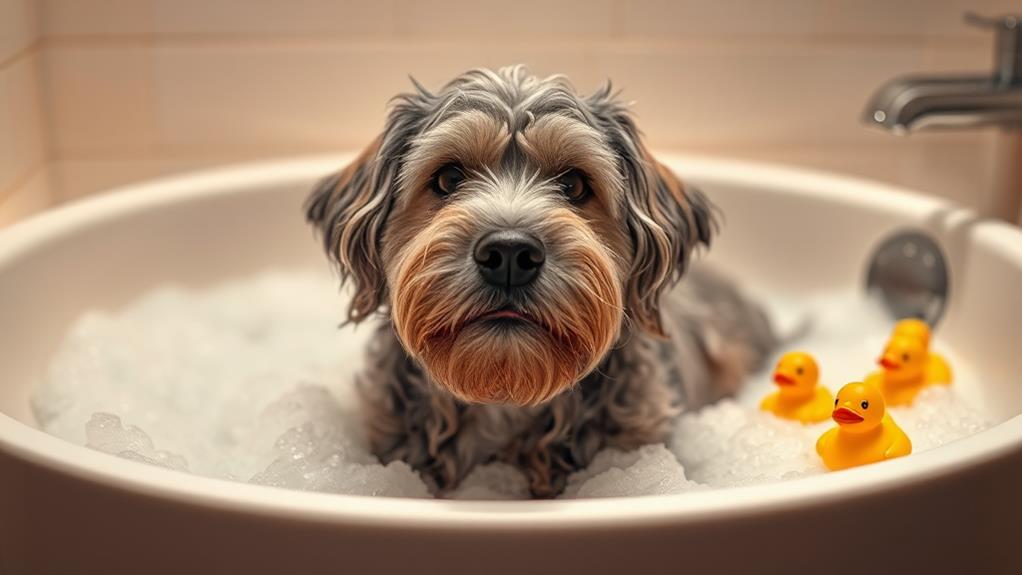
How often do you groom your senior dog? Regular grooming is essential, especially for older dogs with joint pain. It not only helps maintain their coat but also fosters a strong bond between you two.
Here are three key components to include in your grooming routine:
- Brushing: Aim to brush your dog at least once a week. This removes loose fur and prevents matting, which can be uncomfortable for senior dogs.
- Bathing: Depending on their activity level, bathe your dog every 4-6 weeks. Use gentle, moisturizing shampoos designed for senior dogs to soothe their skin.
- Nail Trimming: Keep an eye on their nails and trim them every 3-4 weeks. Long nails can cause discomfort and affect their ability to walk comfortably.
Incorporating these steps into your regular grooming routine will help keep your senior dog comfortable and healthy.
Signs of Discomfort to Watch
Watching your senior dog closely during grooming and bathing is crucial for their comfort and well-being. As they age, they may struggle with joint pain, making it essential to be aware of signs of discomfort.
Pay attention to their body language; if they’re stiff, hesitant to move, or pulling away, these are clear indicators that they’re uncomfortable.
Listen for vocalizations as well. Whining, growling, or even a sudden yelp can signify distress. Observe their breathing too; rapid, shallow breaths may indicate anxiety or pain.
If your dog tries to escape the bathing area or seems agitated, it’s time to pause and reassess.
Additionally, check for any signs of trembling or excessive panting. These reactions can indicate stress or discomfort.
Look at their eyes; dilated pupils or a glazed look can also be warning signs.
Your senior dog relies on you to recognize their needs and make bathing a more pleasant experience. By being attentive to these signs, you can adjust your approach, ensuring that your beloved pet feels safe and secure during their grooming sessions.
Alternatives to Traditional Baths
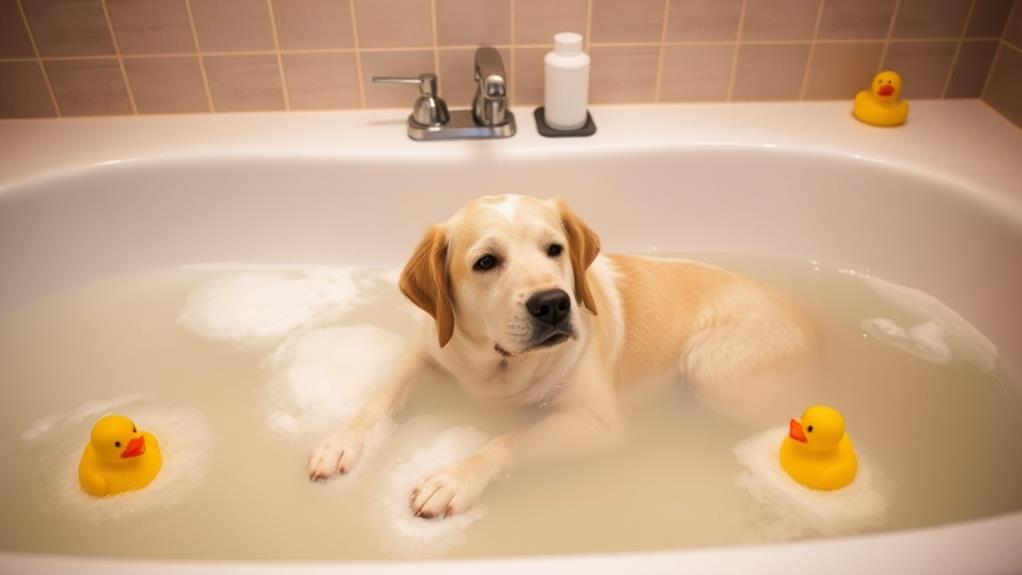
If your senior dog shows signs of discomfort during traditional baths, exploring alternatives can make the grooming process easier for both of you.
Here are some options to consider that can help your furry friend stay clean and comfortable:
- Spot Cleaning: Use a damp cloth or pet wipes to clean specific areas like the paws, face, or underbelly. This method minimizes stress and keeps your dog feeling secure while still addressing dirt and odors.
- Dry Shampoo: Consider using a dry shampoo formulated for dogs. This product absorbs oils and dirt without the need for water, making it a simple way to refresh your pet’s coat. Just sprinkle it on, rub it in, and brush it out!
- Professional Grooming: If budget allows, take your dog to a professional groomer who specializes in senior pets. They often have techniques and tools designed to accommodate dogs with joint pain, ensuring a safe and comfortable experience.
Frequently Asked Questions
Can I Use Human Shampoo on My Senior Dog?
You shouldn’t use human shampoo on your senior dog. It can irritate their skin and disrupt their natural oils. Instead, opt for a gentle dog shampoo specifically formulated for their unique needs and sensitivities.
How Often Should I Bathe a Senior Dog With Joint Pain?
When it comes to pampering your senior dog, aim for a gentle bath every four to six weeks. This keeps them clean without stressing their joints, ensuring they feel loved and comfortable during bath time.
Should I Consult a Vet Before Bathing My Senior Dog?
Yes, you should consult a vet before bathing your senior dog. They can provide specific advice tailored to your dog’s health needs, ensuring you keep your furry friend comfortable and safe during bath time.
What if My Dog Resists Getting Into the Bath?
If your dog resists getting into the bath, try using treats or toys to entice them. You can also create a calm environment and gently encourage them, showing patience and understanding throughout the process.
Are There Specific Breeds That Are More Prone to Joint Pain?
Some breeds seem like delicate flowers, more prone to joint pain, such as Labrador Retrievers, German Shepherds, and Bulldogs. You’ll want to keep an eye on them, ensuring their comfort and mobility remain a priority.
Conclusion
Bathing your senior dog with joint pain doesn’t have to be a struggle. Picture your furry friend, gently splashed with warm water, their coat glistening as you soothe their aches with each careful stroke. By creating a calm, supportive environment and using the right supplies, you can transform bath time into a comforting ritual. Remember to watch for any signs of discomfort, and your pup will not only feel clean but loved, too.

Carlos Rodriguez is the Senior Product Reviewer at DogShampooReviews.com. With over 15 years of experience in canine grooming and skincare, Carlos brings a wealth of knowledge and passion to our team. His journey began at a young age, growing up on a family farm where he was surrounded by dogs of all breeds and sizes. This early exposure ignited his lifelong dedication to animal care and well-being.
Professional Background
- Certified Dog Groomer: Carlos is a certified professional groomer who has worked in some of the top grooming salons across the country. His expertise spans various grooming techniques suitable for different breeds and coat types.
- Canine Skincare Specialist: Recognizing the importance of skin health in dogs, Carlos pursued additional certifications in dermatological care for canines, specializing in treating skin conditions and allergies.
- Product Testing Expert: With a meticulous eye for detail, Carlos rigorously tests dog shampoos and grooming products, evaluating them on ingredients, efficacy, safety, and overall quality.
Passion for Dogs
Carlos’s love for dogs goes beyond his professional life. He is an active volunteer at local animal shelters, providing grooming services to help adoptable dogs look and feel their best. His own rescued dogs, Bella and Rocky, are often the first to try out new products, ensuring his reviews come from genuine experiences.
Why Trust Carlos
- Unbiased Reviews: Committed to integrity, Carlos ensures all his reviews are honest and based on thorough testing.
- Expert Insight: His extensive knowledge allows him to break down complex information into understandable advice for dog owners.
- Community Engagement: Carlos actively engages with our readers, answering questions and providing personalized recommendations.