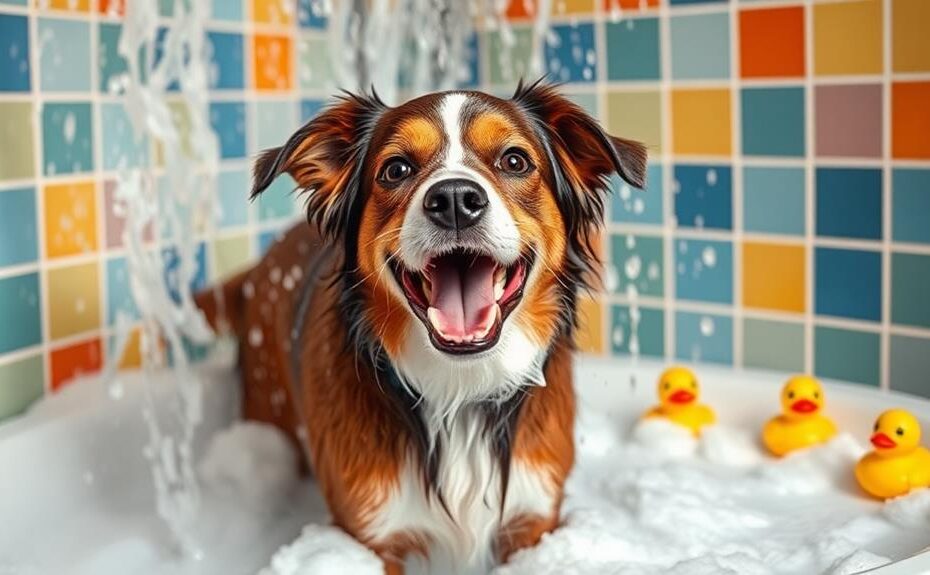
You can definitely bathe your dog in the shower, turning the space into a comforting oasis for both of you. Just make sure to gather all your supplies first, like dog-friendly shampoo and towels. The water should be warm, not hot, to keep your pup comfortable. Use a non-slip mat to help your dog feel secure, and start wetting from the neck down, avoiding the face initially. Don't forget to dry your dog carefully afterward to prevent skin irritation. For tips tailored to your dog's specific needs, keep exploring the best practices for a smooth bathing experience.
Key Takeaways
- Yes, you can bathe your dog in the shower, provided you ensure their comfort and safety with non-slip mats.
- Adjust the water temperature to lukewarm to keep your dog comfortable during the bathing process.
- Use dog-friendly shampoo and rinse thoroughly to avoid skin irritation from residue.
- Smaller shower spaces can offer better control and reduce anxiety for some dogs.
- Always monitor your dog's behavior during the bath and provide reassurance as needed.
Benefits of Showering Your Dog
Showering your dog offers a range of benefits that can enhance both their health and your bond. Regular baths can keep your furry friend clean, removing dirt, allergens, and loose fur that can lead to skin irritations. You'll notice how much better they feel with a fresh coat, and it can even help reduce odors, making cuddle time more enjoyable for both of you.
Bathing your dog also allows you to inspect their skin and coat closely, helping you spot any abnormalities like lumps or rashes early on. This simple act of care can lead to better overall health for your pet.
Plus, showering can be a relaxing experience for them, especially if you use warm water and gentle, pet-safe shampoos.
Additionally, shower time can strengthen the bond between you and your dog. As you wash and rinse them, you're providing comfort and trust, reinforcing that they're safe with you. It's a lovely opportunity for some quality time, making them feel loved and cared for.
Considerations for Different Breeds
When bathing your dog in the shower, it's important to consider their size and coat type.
A small, short-haired breed may require a different approach than a large, fluffy one.
Additionally, your dog's temperament can affect how they handle bath time, so be prepared to adapt your technique accordingly.
Size and Coat Type
Considering your dog's size and coat type is crucial for a successful showering experience.
If you've got a small breed, like a Chihuahua or a Pomeranian, you might find it easier to use a handheld showerhead or a cup for rinsing. Their delicate coats require gentle handling, and warm, not hot, water is essential to keep them comfortable.
For medium to large breeds, like Labradors or Golden Retrievers, you'll want to ensure your shower space can accommodate their size. A non-slip mat can help prevent accidents, as larger dogs may be less stable on wet surfaces.
Pay attention to their fur type too; dogs with thick or double coats may need more rinsing to ensure you remove all shampoo and dirt.
If your dog has a long or curly coat, consider using a conditioner to keep their fur manageable and tangle-free.
Always remember that bathing frequency varies by breed, so check with your vet or breed guidelines to avoid over-bathing.
Tailoring your approach to your dog's specific needs will make shower time a more enjoyable experience for both of you.
Temperament and Behavior
Understanding your dog's temperament and behavior is essential for a smooth bathing experience. Different breeds exhibit varying reactions to water, so it's important to consider your dog's individual personality. For instance, some breeds, like retrievers, often love the water and might jump in eagerly, making the process easier for you.
On the other hand, smaller or more timid breeds may feel anxious and require a gentle approach.
Before you start bathing, observe your dog's body language. If they seem relaxed, you can proceed with confidence. However, if they're nervous or trying to escape, take a moment to reassure them. Using treats or toys can help create a positive association with bath time.
Also, keep in mind that some dogs may need more breaks during the bath, especially if they're anxious. Patience is key!
If your dog has a natural instinct to resist, consider using a non-slip mat to help them feel secure.
Preparation Before Bathtime
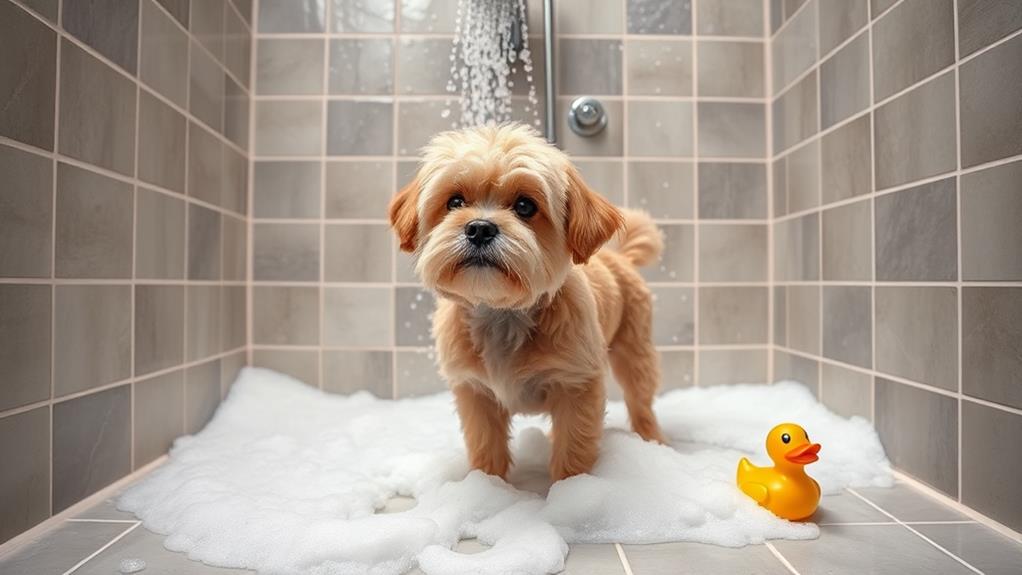
Preparing for bathtime with your dog involves gathering essential supplies and creating a comfortable environment. Start by collecting everything you'll need: a dog-friendly shampoo, a non-slip mat for the shower floor, towels for drying, and a brush to remove any tangles beforehand. Having these items within reach can make the process smoother.
Next, consider the temperature of the water. You want it warm but not too hot, ensuring your dog feels relaxed, not stressed. If your dog tends to be anxious, it might help to play some calming music in the background.
Before you begin, brush your dog's fur to remove loose hair and tangles. This not only makes bathing easier but also helps you bond with your pet.
It's also a good time to check for any skin issues that may need attention.
Showering Techniques for Dogs
When you're ready to shower your dog, start by securing them in the shower area to prevent any slips or escapes.
Use a non-slip mat or towel on the floor to give them a stable footing. Next, adjust the water temperature to lukewarm—too hot or too cold can be uncomfortable for your furry friend.
As you begin to wet your dog, use a handheld showerhead if you have one; it offers better control and allows you to reach those tricky spots. Start from the neck and work your way down, avoiding the face initially to keep them calm.
When it's time to wash, apply a dog-friendly shampoo, lathering it gently into their coat. Make sure to massage it well, as this not only cleans but also gives them a soothing experience.
Rinse thoroughly, ensuring no shampoo residue remains, as it can irritate their skin.
If your dog is nervous, speak to them softly throughout the process. Your reassuring words and gentle touch will help them feel secure and cared for, making bath time a positive experience for both of you.
Post-Bath Care and Drying
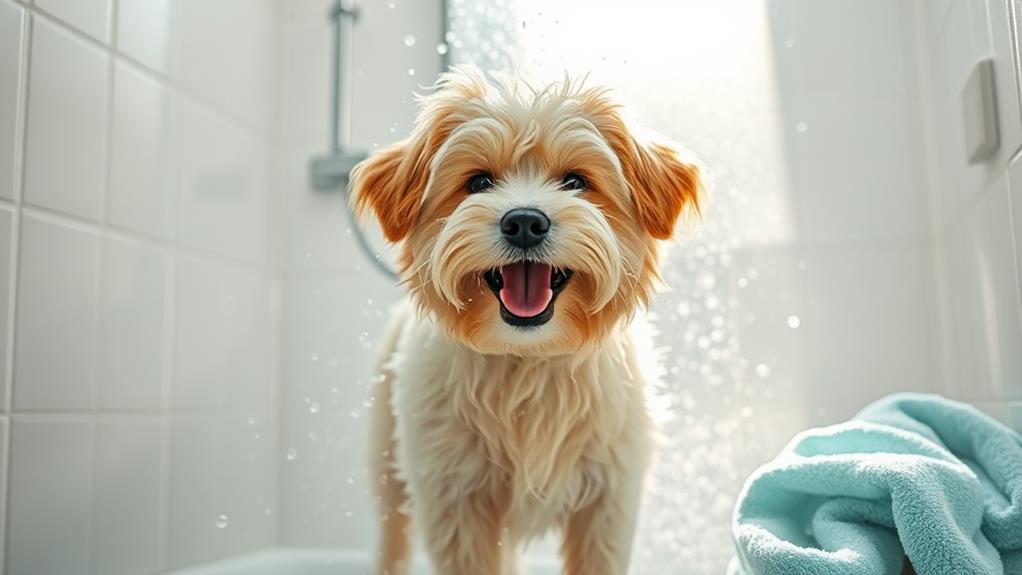
Once your dog's bath is done, it's time to focus on drying and caring for their skin.
You'll want to use the right techniques to ensure they dry comfortably while also considering any specific skin needs they might have.
Plus, a little post-bath grooming can go a long way in keeping your pup looking and feeling great.
Drying Techniques Explained
After your dog's refreshing shower, drying them properly is crucial to keep their coat healthy and prevent chills.
Start by using a large, absorbent towel to gently pat your dog's coat. Avoid rubbing, as this can create tangles or irritate their skin. If your dog enjoys the experience, you might even let them shake off some water first—just be ready for a little splash!
For those with long-haired breeds, consider using a second towel to help absorb extra moisture. You can also use a pet-specific blow dryer on a low setting, keeping it a safe distance from their skin to avoid overheating. This can be particularly effective for thick coats, but always monitor your dog's comfort during the process.
If your dog is anxious about the noise, try a soft towel dry and some cuddle time instead. Offering treats can make the experience more enjoyable too.
Skin Care Considerations
Post-bath skin care is essential for maintaining your dog's health and comfort. After a shower, it's crucial to thoroughly dry your dog to prevent skin irritation. Use a soft towel or a pet dryer on a low setting to gently remove excess water, focusing on areas where moisture tends to linger, like the ears and underbelly.
Once your dog is dry, check their skin for any signs of redness, irritation, or dryness. If you notice any issues, consider applying a pet-safe moisturizer to soothe their skin.
Additionally, it's a good idea to brush your dog's coat after drying. This not only removes loose hair but also helps distribute natural oils, promoting a healthy, shiny coat.
Don't forget to keep your dog hydrated, as proper hydration supports skin health. If your dog has specific skin conditions or sensitivities, consult your veterinarian for tailored care recommendations.
Post-Bath Grooming Tips
Grooming your dog after a bath is a rewarding experience that enhances both their appearance and comfort.
Once your pup is clean, it's time to focus on drying and grooming. Start by gently towel-drying your dog, absorbing as much water as possible. This not only helps them dry faster but also prevents chills, especially in cooler weather.
Next, consider using a pet-friendly blow dryer on a low, cool setting. Keep it at a safe distance to avoid overheating their skin. As you dry, give your dog a reassuring voice and gentle touch to keep them calm.
Once they're mostly dry, it's time for a brush. Use a brush suited for their coat type, working through any tangles carefully. This not only removes loose fur but also distributes natural oils, leaving their coat shiny and healthy.
Alternatives to Showering
If your dog isn't a fan of the shower, there are plenty of alternatives to keep them clean and happy. You can try various methods that suit both your and your dog's preferences.
Here are three effective alternatives:
- Wet Wipes: Dog-specific wet wipes are great for quick clean-ups. They're handy for wiping away dirt, mud, and odors without the need for a full bath.
- Dry Shampoo: Using a dog-friendly dry shampoo can help absorb oil and odors. Simply sprinkle it on, massage it into your dog's coat, and brush it out. It's a simple way to refresh your dog between baths.
- Bathing in a Tub or Sink: If your dog is more comfortable in a smaller space, consider bathing them in a bathtub or a sink. This allows for better control and can help reduce anxiety.
Frequently Asked Questions
Is It Safe to Shower a Puppy?
Yes, it's safe to shower a puppy, as long as you use lukewarm water and gentle shampoo. Keep the environment calm, and make sure to rinse thoroughly to avoid skin irritation. Your puppy will appreciate it!
How Often Should I Shower My Dog?
You should shower your dog every month, but adjust based on their activity level, coat type, and any skin issues. Regular brushing helps too, keeping their coat clean and reducing the need for frequent baths.
Can I Use Human Shampoo on My Dog?
Using human shampoo on your dog's like trying to fit a square peg in a round hole. It can irritate their skin. Instead, choose a dog-specific shampoo for a gentle, effective clean that keeps them happy.
What Temperature Should the Water Be for My Dog?
You should use lukewarm water for your dog. It's comfortable and safe, helping to avoid any shock. Test the temperature with your wrist, ensuring it's not too hot or cold before starting the bath.
How Can I Reduce My Dog's Anxiety During Showers?
To reduce your dog's anxiety during showers, create a calm atmosphere, use soothing voices, and reward them with treats. Consistency in routine helps too, making it a positive experience they look forward to.
Conclusion
In conclusion, showering your dog can be a rewarding experience for both of you, fostering a bond while keeping your furry friend clean. Just as you enjoy a refreshing shower after a long day, your dog appreciates the care and attention that comes with bath time. With the right preparation and techniques, you'll create a positive routine that benefits your pup's hygiene and happiness. So, embrace the coincidence of shared moments—it's bath time for you both!

Carlos Rodriguez is the Senior Product Reviewer at DogShampooReviews.com. With over 15 years of experience in canine grooming and skincare, Carlos brings a wealth of knowledge and passion to our team. His journey began at a young age, growing up on a family farm where he was surrounded by dogs of all breeds and sizes. This early exposure ignited his lifelong dedication to animal care and well-being.
Professional Background
- Certified Dog Groomer: Carlos is a certified professional groomer who has worked in some of the top grooming salons across the country. His expertise spans various grooming techniques suitable for different breeds and coat types.
- Canine Skincare Specialist: Recognizing the importance of skin health in dogs, Carlos pursued additional certifications in dermatological care for canines, specializing in treating skin conditions and allergies.
- Product Testing Expert: With a meticulous eye for detail, Carlos rigorously tests dog shampoos and grooming products, evaluating them on ingredients, efficacy, safety, and overall quality.
Passion for Dogs
Carlos’s love for dogs goes beyond his professional life. He is an active volunteer at local animal shelters, providing grooming services to help adoptable dogs look and feel their best. His own rescued dogs, Bella and Rocky, are often the first to try out new products, ensuring his reviews come from genuine experiences.
Why Trust Carlos
- Unbiased Reviews: Committed to integrity, Carlos ensures all his reviews are honest and based on thorough testing.
- Expert Insight: His extensive knowledge allows him to break down complex information into understandable advice for dog owners.
- Community Engagement: Carlos actively engages with our readers, answering questions and providing personalized recommendations.