Bathing your dog too often can be harmful. It strips away essential oils, leading to dry, irritated skin and a dull coat. You might notice signs of overbathing like redness, flakiness, or increased scratching. Moreover, frequent baths can cause anxiety and discomfort during grooming. To maintain a healthy coat, aim for baths every 4 to 6 weeks, adjusting based on your dog's breed and activity level. Remember, brushing or using dry shampoo can help reduce the need for baths. If you're curious about the best approaches to keeping your dog clean and happy, there's more to explore.
Key Takeaways
- Overbathing can strip natural oils from a dog's skin, leading to dryness and irritation.
- Signs of overbathing include redness, flakiness, and increased scratching or licking.
- Frequent baths may cause behavioral changes, like anxiety and fear during grooming.
- Active dogs may need more frequent baths, but general recommendations are every 4 to 6 weeks.
- Alternatives like dog wipes and dry shampoos can help maintain cleanliness without frequent baths.
Understanding Dog Skin and Coat
Understanding your dog's skin and coat is essential for keeping them healthy and happy. Your dog's skin acts as a barrier, protecting them from bacteria, allergens, and other irritants. By knowing how to care for it, you can ensure their comfort and well-being.
The coat serves not only as an aesthetic feature but also plays a critical role in regulating temperature and providing protection from the elements. Different breeds have varying coat types, and understanding these differences can guide your grooming routine.
For example, long-haired dogs may require more frequent brushing to prevent mats, while short-haired breeds often benefit from regular bathing to remove dirt and dander.
Pay attention to your dog's skin condition, too. Healthy skin should appear smooth and free of flakes or redness. If you notice any abnormalities, like excessive itching or rashes, it could indicate an underlying issue that needs addressing.
Regularly checking your dog's coat and skin helps you catch problems early, allowing for timely intervention. By prioritizing their skin and coat care, you not only enhance their quality of life but also strengthen the bond you share with your furry friend.
Signs of Overbathing
How can you tell if you're overbathing your dog? Pay close attention to their skin and coat. If you notice excessive dryness, flakiness, or redness, these could be signs that you're bathing them too often.
Your dog's natural oils are essential for maintaining a healthy coat and skin barrier, so frequent washing might strip these away.
Another indicator is a change in your dog's behavior. If they become more anxious during bath time or start to avoid it altogether, it could signal discomfort from overbathing.
Additionally, if you see an increase in scratching or licking, this may indicate irritation caused by too many baths.
Check for a dull coat, too. A healthy dog's fur shines, but overbathing can lead to a lackluster appearance.
Lastly, if you detect a strong doggy odor despite regular baths, this could mean that you're disrupting their natural balance, and your bathing routine might need adjustment.
Consequences of Frequent Baths
Frequent baths can lead to several negative consequences for your dog's health and well-being. While keeping your furry friend clean is important, overdoing it can strip away essential oils, leaving their skin dry and irritated.
Here are three key consequences of frequent bathing:
- Skin Irritation: Regular washing can disrupt the natural barrier of your dog's skin, leading to redness, itching, and even infections. It's crucial to pay attention to any signs of discomfort.
- Allergic Reactions: Bathing too often may increase your dog's exposure to shampoos and other products that could trigger allergic reactions. This can manifest as rashes or excessive scratching, causing distress for your pet.
- Behavioral Changes: If your dog associates baths with negative experiences, frequent bathing could lead to anxiety or fear during grooming sessions. This can strain your bond and make bathing a challenging task.
Recommended Bathing Frequency
When it comes to bathing your dog, finding the right frequency is crucial for their skin health and coat condition.
Too many baths can strip essential oils, while too few can lead to dirt buildup and skin issues.
Let's explore how often you should wash your furry friend to keep them happy and healthy.
Skin Health Considerations
Regularly bathing your dog is essential for maintaining healthy skin and coat. However, finding the right balance in bathing frequency can greatly impact your dog's skin health. Overbathing can strip natural oils, leading to dryness and irritation.
Here are some skin health considerations to keep in mind:
- Skin Type: Dogs with oily skin may require more frequent baths, while those with dry or sensitive skin should be bathed less often. Pay attention to your dog's specific needs.
- Seasonal Changes: During shedding season or hot weather, a bath may help remove excess fur and dirt, promoting comfort and cleanliness. Adjust your bathing routine according to the season.
- Activity Level: If your dog enjoys outdoor adventures, they may need more frequent baths to keep their skin healthy and free from irritants. Regular grooming can help minimize the need for baths.
Coat Condition Maintenance
To keep your dog's coat in top condition, it's important to establish a bathing schedule that suits their individual needs. Factors like breed, coat type, and lifestyle play a significant role in determining how often you should bathe your pup.
For instance, dogs with long, thick fur may require more frequent bathing to prevent tangles and matting, while short-haired breeds might only need a bath every few months.
Generally, bathing your dog every 4 to 6 weeks is a good rule of thumb, but you should adjust based on their activities. If your dog loves to roll in dirt or play in water, you might need to bathe them more often. On the flip side, if your dog has sensitive skin, a less frequent schedule with gentle, hypoallergenic shampoos might be best.
Regular brushing also helps maintain coat health, removing loose fur and distributing natural oils. This combination of bathing and brushing will keep your dog's coat shiny, clean, and healthy.
Remember to observe your dog's coat condition and adjust your routine as necessary to best serve your furry companion's needs.
Factors Influencing Bathing Needs
When it comes to your dog's bathing needs, several factors play a role.
The breed, skin sensitivity, and activity level can all influence how often your furry friend should hit the tub.
Understanding these elements will help you keep your dog clean and comfortable.
Dog Breed Considerations
Different dog breeds have unique bathing needs influenced by their coat type, size, and skin sensitivity. Understanding these factors helps you serve your furry friend better, ensuring they stay clean without compromising their health.
Here are three key considerations:
- Coat Type: Breeds with long, thick fur, like Golden Retrievers, may require more frequent baths to prevent matting. In contrast, short-haired breeds, such as Beagles, often need less frequent bathing as dirt doesn't cling as easily.
- Size: Larger breeds, like Great Danes, may require more water and space during baths. This can make the process a bit more challenging, so planning ahead is essential. Smaller breeds, like Chihuahuas, can be bathed in a sink or tub, making it easier for you.
- Activity Level: Active breeds, like Border Collies, might get dirty more often due to their outdoor adventures. Regular baths can help keep their skin healthy and free from irritants.
Skin Type Sensitivity
Understanding your dog's skin type sensitivity is just as important as considering their breed and coat. Every dog is unique, and factors like skin type can significantly influence how often they need a bath. For instance, dogs with oily skin might require more frequent bathing to prevent buildup and odor, while those with dry or sensitive skin may only need an occasional wash to avoid irritation.
You'll want to pay attention to any signs of discomfort, such as excessive scratching or redness. If your dog has allergies, their skin might react negatively to certain shampoos or frequent baths. In such cases, using a gentle, hypoallergenic shampoo can help soothe their skin while keeping them clean.
It's essential to adjust your bathing routine based on these sensitivities. Consult your vet for personalized advice if you're unsure about your dog's specific needs.
Activity Level Impact
Many factors influence how often your dog needs a bath, and one of the most significant is their activity level. If your furry friend is highly active, they're likely to get dirtier more often, which means they may need more frequent baths. Understanding your dog's activity level can help you maintain their hygiene without overdoing it.
Consider these three points to assess your dog's bathing needs:
- Outdoor Adventures: If your dog loves to romp around in mud or splash through puddles, you might need to bathe them more frequently to keep their coat clean and healthy.
- Exercise Routine: Dogs that engage in regular physical activities, like running or playing fetch, may accumulate sweat and dirt, warranting more baths to prevent skin issues.
- Indoor Lifestyle: If your dog spends most of their time indoors and is more sedentary, you might find they require fewer baths.
Alternatives to Bathing
Considering alternatives to bathing your dog can save time and reduce stress for both you and your furry friend.
One effective option is to use dog wipes, which are designed to clean your pup's fur without the need for water. These wipes can help remove dirt and odors quickly, making them perfect for in-between baths.
Another alternative is dry shampoo specifically formulated for dogs. This product can absorb oils and freshen up your dog's coat, leaving them smelling nice without a full wash. Just sprinkle or spray it on, brush it through, and you're good to go!
Regular brushing is also a fantastic way to keep your dog clean. It helps remove loose fur and dirt, while also distributing natural oils throughout their coat. Plus, it's a bonding activity that both you and your dog can enjoy.
If your dog loves splashing around, consider letting them play in a kiddie pool filled with fresh water. This can rinse off dirt while providing them a fun way to cool down.
Grooming Techniques for Dogs
Grooming your dog goes beyond just occasional baths; it's an essential part of keeping them healthy and happy. Regular grooming helps maintain their coat, prevents matting, and promotes good hygiene.
Here are three key techniques you should incorporate into your routine:
- Brushing: Depending on your dog's coat type, brushing can range from daily to weekly. Regular brushing removes dirt, debris, and loose hair, while distributing natural oils for a shiny coat.
- Nail Trimming: Keeping your dog's nails trimmed is crucial for their comfort and mobility. Aim to trim their nails every 3-4 weeks. If you hear clicking on hard surfaces, it's time for a trim!
- Ear Cleaning: Check your dog's ears weekly for dirt, wax buildup, or signs of infection. Use a vet-recommended ear cleaner and a cotton ball to gently wipe the outer ear.
Incorporating these grooming techniques not only enhances your dog's appearance but also strengthens your bond with them.
A well-groomed dog is a happy, healthy dog, and you'll feel fulfilled knowing you're caring for them in the best way possible.
Choosing the Right Dog Shampoo
When it comes to bathing your dog, choosing the right shampoo plays a vital role in their grooming routine. You want something that not only cleans but also nurtures your dog's skin and coat.
First, consider your dog's specific needs. If they've sensitive skin, look for hypoallergenic shampoos that avoid harsh chemicals. For dogs with allergies, oatmeal or aloe-based shampoos can provide relief and moisture.
If your dog has a particular coat type, such as long, short, or curly, select a shampoo designed for that texture. For example, a conditioner-rich formula can help detangle and soften long-haired breeds.
Always read the label and steer clear of products with artificial fragrances or sulfates, as these can irritate your dog's skin. If you're unsure, consult your veterinarian for recommendations tailored to your dog's health.
Lastly, consider a shampoo that addresses specific issues, like flea and tick control or odor elimination, but use these sparingly.
With the right shampoo, you'll not only keep your dog clean but also contribute to their overall well-being, making bath time a positive experience for both of you.
Tips for Bathing Your Dog
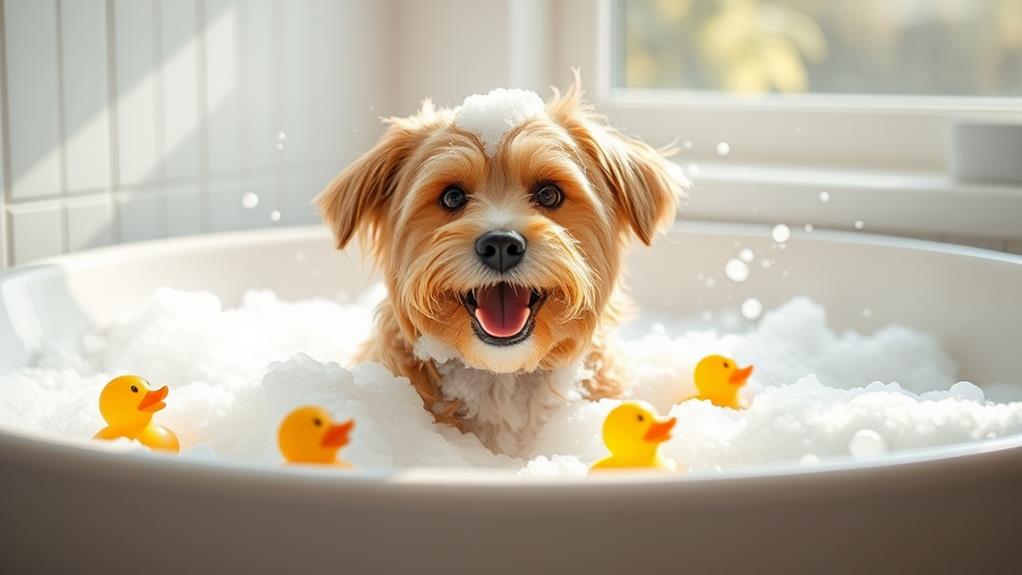
Before you start bathing your dog, it's essential to gather all the necessary supplies to make the process smooth and efficient. Having everything on hand not only helps the bath go quicker but also keeps your furry friend calm and comfortable.
Here's a quick list of must-have items:
- Dog Shampoo: Choose a gentle, pet-specific shampoo that suits your dog's skin type.
- Towels: Have a couple of absorbent towels ready for drying off your pup afterward.
- Non-Slip Mat: Place a mat in the tub or sink to prevent slipping and provide stability for your dog.
Once you've gathered your supplies, it's time to create a positive environment. Speak softly and reassure your dog throughout the bath.
Make sure the water temperature is lukewarm, as this will help your pooch relax. Start by wetting your dog's fur gradually, avoiding the eyes and ears.
Apply shampoo gently, working it into a lather while massaging your dog's skin. Rinse thoroughly to remove all residue.
Frequently Asked Questions
Can Certain Dog Breeds Tolerate More Baths Than Others?
Certain dog breeds, like Poodles, have coats that can handle more frequent baths, while others, such as Bulldogs, may need less. You should consider your dog's coat type and skin sensitivity when bathing.
How Can I Tell if My Dog Enjoys Bath Time?
To tell if your dog enjoys bath time, watch for wagging tails, relaxed body language, and playful behavior. If your pup approaches the bath eagerly, you're likely giving them a fun and rewarding experience.
Are There Any Natural Alternatives to Commercial Dog Shampoos?
You can use natural alternatives like oatmeal, baking soda, or apple cider vinegar mixed with water. These options gently cleanse your dog's coat without harsh chemicals, ensuring a safe and enjoyable bath experience for your furry friend.
What Should I Do if My Dog Hates Baths?
If your dog hates baths, try making it a fun experience! Use toys, treats, and praise to create positive associations. Gradually introduce water, and soon, your pup might look forward to bath time with you!
Can Bathing My Dog Too Often Affect Their Behavior?
Bathing your dog too often can lead to stress and anxiety, affecting their behavior. It might make them associate bath time with discomfort, so finding a balance is essential for their happiness and well-being.
Conclusion
In the grand garden of pet care, balance is the key to a thriving landscape. Just as overwatering can drown the roots, excessive bathing can strip your dog's skin of vital oils. Embrace the rhythm of nature—bathe your furry friend when needed, not just out of habit. By tuning into their unique needs, you'll nurture a healthy coat and skin, letting your bond blossom beautifully. Remember, moderation is the sunlight that helps your relationship flourish.

Carlos Rodriguez is the Senior Product Reviewer at DogShampooReviews.com. With over 15 years of experience in canine grooming and skincare, Carlos brings a wealth of knowledge and passion to our team. His journey began at a young age, growing up on a family farm where he was surrounded by dogs of all breeds and sizes. This early exposure ignited his lifelong dedication to animal care and well-being.
Professional Background
- Certified Dog Groomer: Carlos is a certified professional groomer who has worked in some of the top grooming salons across the country. His expertise spans various grooming techniques suitable for different breeds and coat types.
- Canine Skincare Specialist: Recognizing the importance of skin health in dogs, Carlos pursued additional certifications in dermatological care for canines, specializing in treating skin conditions and allergies.
- Product Testing Expert: With a meticulous eye for detail, Carlos rigorously tests dog shampoos and grooming products, evaluating them on ingredients, efficacy, safety, and overall quality.
Passion for Dogs
Carlos’s love for dogs goes beyond his professional life. He is an active volunteer at local animal shelters, providing grooming services to help adoptable dogs look and feel their best. His own rescued dogs, Bella and Rocky, are often the first to try out new products, ensuring his reviews come from genuine experiences.
Why Trust Carlos
- Unbiased Reviews: Committed to integrity, Carlos ensures all his reviews are honest and based on thorough testing.
- Expert Insight: His extensive knowledge allows him to break down complex information into understandable advice for dog owners.
- Community Engagement: Carlos actively engages with our readers, answering questions and providing personalized recommendations.