You can keep your dog clean even when water isn't available by using several effective methods. Try dry shampoo; it's great for absorbing oil and smells. Baby wipes are handy for quick clean-ups, especially around the face and paws. For a deeper clean, consider a mixture of vinegar and baking soda, which neutralizes odors. Rubbing alcohol on a cloth can help with tough spots too. Remember to brush your dog regularly to remove loose dirt. With these techniques, your pup will stay fresh and happy. There's even more to explore to elevate your dog's grooming routine!
Key Takeaways
- Use dry shampoos or homemade alternatives like cornstarch and baking soda to clean the dog's coat and absorb odors.
- Baby wipes offer a quick solution; choose unscented, hypoallergenic options to avoid skin irritation.
- Rubbing alcohol can remove dirt and odors; use a pet-safe product and monitor for irritation.
- A mixture of vinegar and baking soda is effective for odor neutralization and gentle cleaning.
- Regular brushing helps remove loose dirt and dead hair, contributing to overall coat health.
Importance of Dog Hygiene
When it comes to keeping your dog healthy and happy, maintaining proper hygiene is essential. Good hygiene prevents a range of health issues, like skin infections, bad odors, and parasites. By regularly grooming and caring for your dog's hygiene, you're not just promoting their well-being; you're also strengthening the bond you share.
You'll find that a clean dog is often a happier dog. Regular brushing removes dirt, loose fur, and dander, which can improve their skin health and reduce allergens in your home. Additionally, keeping their ears clean helps prevent infections, while regular dental care can ward off gum disease and bad breath.
Moreover, consistent hygiene practices help you spot any unusual changes in your dog's skin or coat, allowing for early detection of potential health issues. You might also notice that a well-groomed dog tends to socialize better, as they're more pleasant to be around.
Ultimately, prioritizing your dog's hygiene is an act of love and responsibility. By investing time in their care, you're ensuring they lead a happy, healthy life, which is rewarding for both you and your furry friend.
Assessing the Situation
Before you start bathing your dog without water, it's important to assess the situation. First, observe your dog's coat and skin. Check for any tangles, mats, or areas that might be particularly dirty. If you notice any skin irritations or injuries, it's best to consult a veterinarian before proceeding.
Next, consider the environment. Ensure you're in a well-ventilated area with enough space to work comfortably. Remove any items that could get in the way or distract your dog. You want to create a calm atmosphere to help your furry friend feel secure.
Think about your dog's temperament, too. If your dog tends to get anxious during grooming, be patient and gentle. You might want to have some treats on hand to reward good behavior.
Lastly, gather the necessary supplies. You'll need brushes, wipes, and any other grooming tools specific to your dog's needs.
Dry Shampoo Alternatives
For those moments when your dog needs a refresh without a full bath, dry shampoo alternatives can be a game-changer. These products are designed to clean your dog's coat, absorb excess oil, and leave them smelling fresh.
When choosing a dry shampoo, look for options specifically formulated for pets, as human products may contain ingredients harmful to them.
You can also make your own dry shampoo using simple ingredients. A popular recipe involves mixing equal parts of cornstarch and baking soda. Sprinkle the mixture onto your dog's coat, massaging it in to ensure it reaches the skin.
Let it sit for a few minutes to absorb odors and oils, then brush it out thoroughly.
Another effective alternative is using unscented baby powder, which can also absorb moisture and odors. Just remember to avoid using too much, as it can leave a residue.
Lastly, if you want to impart a pleasant scent, consider adding a few drops of essential oils like lavender or chamomile, ensuring they're safe for pets.
With these dry shampoo alternatives, you can keep your furry friend clean and comfortable between baths.
Using Baby Wipes
Using baby wipes can be a quick and convenient way to clean your dog between baths. They're gentle, safe, and easy to use, making them an excellent option for those times when water isn't available. Start by choosing unscented, hypoallergenic baby wipes to avoid irritating your dog's skin.
Begin by wiping your dog's face, gently removing any dirt or debris around their eyes and mouth. Ensure you're using a clean section of the wipe for each area to prevent spreading dirt.
Next, move to the body, focusing on areas that tend to accumulate dirt, like the paws, belly, and behind the ears.
If your dog has a long coat, you might want to work through the fur with your fingers or a brush after wiping to avoid tangles. Always keep an eye on your dog's reaction; some may enjoy the attention, while others might be a bit apprehensive.
Using baby wipes can be a great way to maintain your dog's hygiene and freshness without the hassle of a full bath. You'll find it not only benefits your dog but also strengthens your bond with them through this simple act of care.
Rubbing Alcohol Method
When you need to freshen up your dog without a bath, the rubbing alcohol method can be an effective solution. This method works well for removing dirt and odors, especially if your furry friend has rolled in something unpleasant.
Start by gathering your supplies: a clean cloth or sponge and rubbing alcohol. Make sure to choose a rubbing alcohol that's safe for pets, typically around 70% isopropyl alcohol.
To use this method, pour a small amount of rubbing alcohol onto the cloth or sponge. Gently rub it over your dog's coat, focusing on areas that seem particularly dirty or smelly. Be careful around sensitive spots like the face and paws. The alcohol will help to dissolve oils and lift dirt away from the fur.
After you've finished rubbing, let your dog air dry for a bit. This method not only cleans your dog but also helps to eliminate bacteria and odor.
Remember to keep an eye on your dog for any signs of irritation, and if you notice anything unusual, it's best to consult your veterinarian. With this simple technique, you can keep your dog smelling fresh and clean, even when water isn't an option.
Cornstarch for Oil Removal
After addressing surface dirt with rubbing alcohol, cornstarch offers an excellent way to tackle oil and greasy substances on your dog's coat. This natural powder isn't only safe for your furry friend but also highly effective.
To get started, simply sprinkle a generous amount of cornstarch onto the oiliest areas of your dog's coat. Gently massage the cornstarch into the fur using your fingers or a soft brush. This helps absorb the oil while lifting dirt and odors.
Let it sit for about 10 to 15 minutes, allowing the cornstarch to work its magic. Afterward, you can use a brush or a vacuum with a brush attachment to remove the powder along with the absorbed oil.
Keep in mind that cornstarch is a fantastic option for spot cleaning, especially if your dog has gotten into something particularly greasy. It's essential to ensure your dog doesn't ingest large amounts of cornstarch, so monitor their behavior during the process.
With this simple method, you can help your furry companion look and feel fresh, even when water isn't available. Your effort in keeping them clean goes a long way in their overall comfort and happiness.
Vinegar and Baking Soda Mix
When it comes to keeping your dog clean, a vinegar and baking soda mix can work wonders.
The vinegar solution helps break down dirt while also acting as a natural deodorizer, and the baking soda neutralizes any lingering odors.
Benefits of Vinegar Solution
One of the simplest and most effective ways to clean your dog without water is by using a vinegar solution, specifically a mix of vinegar and baking soda. This natural combination offers numerous benefits, making it an excellent choice for any dog owner looking to serve their furry friend.
First, vinegar acts as a gentle cleanser that helps remove dirt and grime from your dog's coat. It's safe and non-toxic, so you can use it without worrying about harsh chemicals harming your pet.
Baking soda, meanwhile, adds an extra layer of cleaning power while helping to neutralize odors. When you apply this solution, you'll notice that it not only cleans but also leaves your dog smelling fresh.
Your pet will appreciate the attention, and you'll be proud knowing you've chosen a natural method. Additionally, vinegar has antibacterial properties, which can help keep your dog's skin healthy and free from infections.
Baking Soda Odor Neutralizer
Baking soda is a powerful ally in the battle against pet odors, especially when combined with vinegar. This dynamic duo can help you tackle unpleasant smells that cling to your furry friend.
When you mix baking soda with vinegar, you create a fizzing reaction that works wonders in neutralizing odors, making your dog smell fresh without the need for water.
To use this odor-fighting mix, start by sprinkling a generous amount of baking soda directly onto your dog's fur. Allow it to sit for a few minutes to absorb the odors.
Next, create a vinegar solution by mixing equal parts vinegar and water in a spray bottle. Lightly spray the vinegar solution onto the baking soda-covered areas, avoiding saturation.
As the two ingredients react, you'll notice a bubbling effect, which helps lift dirt and odors. Once the reaction slows, gently brush your dog's coat to remove the baking soda and any loosened particles.
This method not only freshens your dog's scent but also makes them feel cleaner. By using baking soda and vinegar, you're providing a simple, effective way to care for your pet when water isn't available.
Application Techniques for Cleaning
To effectively clean your dog's coat with the vinegar and baking soda mix, start by gathering your supplies: baking soda, vinegar, water, a spray bottle, and a brush.
Mix one part baking soda with two parts vinegar in the spray bottle, then add a little water to create a smooth consistency. This solution helps to neutralize odors and lift dirt from your dog's fur.
Next, spray the mixture lightly over your dog's coat, avoiding their eyes and nose. Work in sections to ensure an even application. Use your hands to massage the solution into the fur, focusing on any particularly dirty areas. This gentle scrubbing action helps break down grime and leaves your pup feeling fresh.
After applying the mixture, let it sit for a few minutes to allow the ingredients to work their magic.
Then, use the brush to gently comb through the coat, removing any debris and distributing the mixture evenly. Finally, wipe your dog's coat with a damp cloth to remove any excess solution and dirt.
With these simple techniques, you'll keep your furry friend looking and smelling great, even when water isn't available.
Spot Cleaning With Towels
When your dog gets into something messy but you can't give them a full bath, spot cleaning with towels is a quick and effective solution. This method allows you to target specific areas, ensuring your furry friend stays clean without the hassle of a full wash.
Here's how to do it:
- Choose the right towel: A microfiber towel works best, as it absorbs moisture and dirt efficiently.
- Dampen the towel: Lightly moisten the towel with water or a pet-safe cleaning solution. Avoid soaking it; you want it damp, not dripping.
- Spot clean: Gently rub the towel on the dirty area, using circular motions. Be patient and let the towel do the work.
- Dry the area: Once you've removed the mess, use a dry towel to wipe the area again. This helps prevent any leftover moisture from causing irritation.
Brushing for Loose Dirt
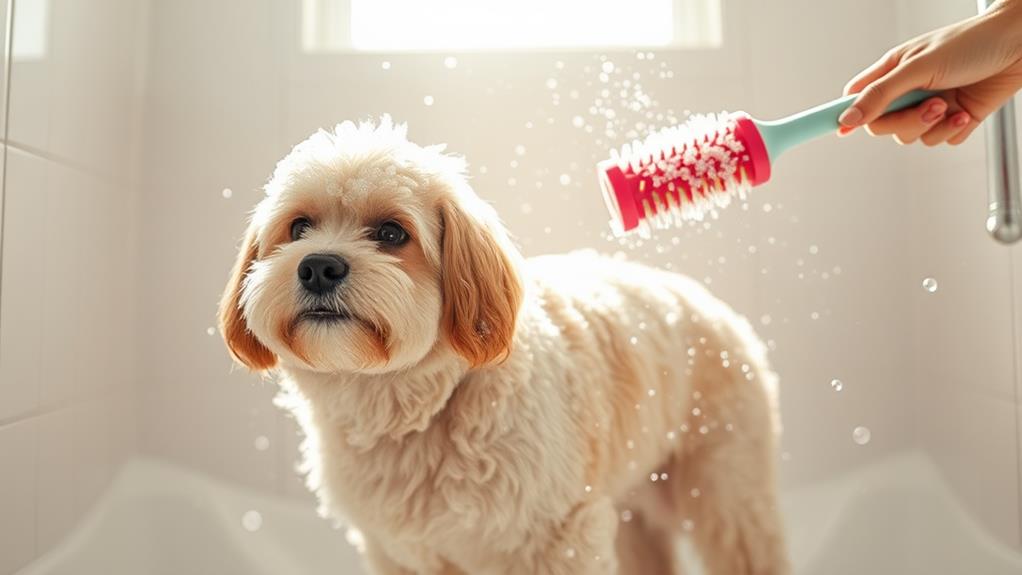
After spot cleaning with towels, brushing your dog can be a great way to remove any loose dirt and debris that might still linger. This step not only helps in keeping your dog clean but also fosters a bond between you two.
Start by choosing a brush suitable for your dog's coat type; a slicker brush works well for long-haired breeds, while a bristle brush is ideal for short-haired ones.
Gently run the brush through your dog's fur, working in sections to ensure you cover every area. Use smooth, consistent strokes to avoid pulling on their hair, which can be uncomfortable.
Pay special attention to areas that tend to collect dirt, like the paws, underbelly, and behind the ears.
As you brush, you'll likely notice loose dirt and dead hair coming out, which helps keep your dog's coat healthy and shiny. Plus, this process can be soothing for them, making it a wonderful way to show your love and care.
After brushing, you can check for any mats or tangles that need extra attention, ensuring your dog feels comfortable and looks great!
Essential Oils for Freshness
Essential oils can be a fantastic way to refresh your dog's coat without using water. These natural scents not only help combat odors but can also promote relaxation and well-being for your furry friend.
When choosing essential oils, it's essential to ensure they're safe for dogs. Here are some great options:
- Lavender: Known for its calming properties, lavender can help soothe your dog during stressful times.
- Cedarwood: This oil has a fresh, woodsy scent that can repel insects while providing a cozy aroma.
- Tea Tree: With its antibacterial properties, tea tree oil can help keep your dog's skin healthy.
- Chamomile: This gentle oil is great for sensitive skin and offers a sweet, soothing fragrance.
To use these oils, dilute a few drops in a carrier oil and lightly massage it into your dog's coat.
Be sure to avoid sensitive areas like the eyes and nose. Always observe your dog for any adverse reactions, and consult your vet if you're unsure about using a specific oil.
Cleaning Dog Accessories
Keeping your dog clean goes beyond just bathing; it also involves taking care of their accessories. Regularly cleaning items like collars, leashes, and toys helps maintain your dog's hygiene and prevents any buildup of dirt or bacteria.
Start by removing any loose dirt or debris from these items. For collars and leashes, you can use a damp cloth with mild soap to wipe them down. Rinse thoroughly with clean water to avoid any residue, then hang them to dry.
When it comes to toys, check the labels for washing instructions. Most rubber and plastic toys can be washed with warm, soapy water or placed in the dishwasher for a thorough clean. For plush toys, consider tossing them into the washing machine on a gentle cycle. Just make sure to remove any squeakers or batteries beforehand.
Don't forget to check your dog's bedding, too. Wash it regularly in hot water to eliminate any germs and allergens.
Maintaining Regular Grooming
Maintaining regular grooming is essential for your dog's health and appearance.
You can enhance your routine with effective brushing techniques, dry shampoos for a fresh scent, and wipes for those quick clean-ups.
Let's explore how these methods can keep your pup looking and feeling great without the need for water.
Brushing Techniques Explained
Regularly brushing your dog is crucial for their overall health and coat condition. It not only helps remove dirt and loose fur but also stimulates the skin, promoting natural oils. This way, you're ensuring your furry friend feels comfortable and looks their best.
Here are some effective brushing techniques to keep in mind:
- Choose the right brush: Select a brush suited for your dog's coat type—slickers for tangles, bristle brushes for smoothing, or combs for finishing touches.
- Work in sections: Divide your dog's coat into manageable sections. Start from the head and work your way down to the tail, ensuring you don't miss any spots.
- Be gentle: Use gentle strokes, especially in sensitive areas like the belly and ears. This creates a positive experience and fosters trust between you and your dog.
- Reward your dog: After a brushing session, offer treats or praise. This reinforces positive behavior and makes your dog associate grooming with good experiences.
Dry Shampoo Options
Brushing your dog is just one part of a complete grooming routine. To keep your furry friend looking and smelling fresh between baths, consider incorporating dry shampoos into your regimen. These products are designed to absorb excess oil, dirt, and odors without the need for water, making them perfect for quick clean-ups.
When selecting a dry shampoo, look for ones specifically formulated for dogs. Natural ingredients like oatmeal, aloe, and essential oils can soothe the skin and add a pleasant scent, all while ensuring safety.
You can easily apply the dry shampoo by shaking the container and sprinkling it evenly over your dog's coat, then massaging it in with your hands or a brush. Remember to follow the manufacturer's instructions for the best results.
Pay attention to areas where dirt tends to accumulate, like behind the ears and around the paws. Afterward, give your dog a good brushing to distribute the product and remove any remaining residue.
Regular use of dry shampoo can't only enhance your dog's appearance but also strengthen the bond between you as you care for their grooming needs.
Wipes for Quick Clean
For busy pet owners, wipes can be a lifesaver when it comes to keeping your dog clean between baths. They're convenient, easy to use, and perfect for quick clean-ups.
Whether your furry friend had a romp in the mud or just needs a bit of freshening up, wipes can help maintain their hygiene and comfort.
Here are some benefits of using pet wipes:
- Quick Clean-Up: Instantly remove dirt, mud, and odors without the hassle of a full bath.
- Skin and Coat Health: Many wipes are formulated with ingredients that nourish your dog's skin and coat.
- Convenience: Ideal for travel, long walks, or when you're short on time.
- Gentle Formula: Most wipes are designed to be safe for your dog's sensitive skin.
Using wipes regularly not only keeps your dog looking great but also strengthens your bond.
You're showing your love and care by ensuring they're clean and comfortable.
Creating a Bathing Routine
Establishing a consistent bathing routine for your dog can make the process smoother and more enjoyable for both of you. Start by choosing a specific day each week dedicated to your dog's grooming. This regularity helps your dog anticipate and accept the routine. If it's easier for you, set a time that fits into your schedule, whether it's a weekend or a weekday.
Next, gather all the necessary supplies beforehand, including pet wipes, brushes, and any dog-safe cleaning products. Having everything ready will streamline the process and reduce stress.
Before you begin, create a calm environment by playing soothing music or using treats to make your dog feel at ease.
When you start the bathing session, be gentle and reassuring. Talk to your dog in a soothing voice, letting them know it's time for their pampering.
After the session, reward them with praise or a favorite toy. This positive reinforcement reinforces the routine and strengthens your bond.
Over time, your dog will come to look forward to these moments, making bathing a delightful experience for you both.
Frequently Asked Questions
Can I Use Human Shampoo on My Dog?
You shouldn't use human shampoo on your dog. It can irritate their skin and disrupt their natural pH balance. Instead, opt for a gentle, dog-specific shampoo to keep your furry friend healthy and clean.
How Often Should I Clean My Dog's Ears?
Cleaning your dog's ears isn't just a chore; it's a bonding experience! You should check and clean them every few weeks, or whenever they look dirty, to keep your furry friend happy and healthy.
Are There Any Safe Home Remedies for Dog Odor?
For dog odor, you can use baking soda sprinkled on their coat, let it sit, then brush it out. You might also try diluted apple cider vinegar as a refreshing spray. Just ensure your dog's comfortable!
What Should I Do if My Dog Hates Water?
If your dog hates water, try introducing it gradually. Use treats and positive reinforcement to create a positive association. You can also explore dry bathing options to keep your pup clean without the stress of water.
Is It Safe to Use Scented Products on My Dog?
Using scented products on dogs can be risky; about 30% of dogs can develop skin sensitivities. It's best to choose unscented, pet-safe products to ensure your furry friend stays healthy and comfortable.
Conclusion
So, when water's as scarce as a cat at a dog park, don't panic! Just remember, your pooch doesn't need a spa day every time they roll in something questionable. With a little dry shampoo, some baby wipes, and maybe a splash of essential oils, you can keep them fresh without an aquatic adventure. Who needs a bath anyway? After all, a little dirt just adds character—right? Embrace the chaos and enjoy your furry friend's delightful aroma!

Carlos Rodriguez is the Senior Product Reviewer at DogShampooReviews.com. With over 15 years of experience in canine grooming and skincare, Carlos brings a wealth of knowledge and passion to our team. His journey began at a young age, growing up on a family farm where he was surrounded by dogs of all breeds and sizes. This early exposure ignited his lifelong dedication to animal care and well-being.
Professional Background
- Certified Dog Groomer: Carlos is a certified professional groomer who has worked in some of the top grooming salons across the country. His expertise spans various grooming techniques suitable for different breeds and coat types.
- Canine Skincare Specialist: Recognizing the importance of skin health in dogs, Carlos pursued additional certifications in dermatological care for canines, specializing in treating skin conditions and allergies.
- Product Testing Expert: With a meticulous eye for detail, Carlos rigorously tests dog shampoos and grooming products, evaluating them on ingredients, efficacy, safety, and overall quality.
Passion for Dogs
Carlos’s love for dogs goes beyond his professional life. He is an active volunteer at local animal shelters, providing grooming services to help adoptable dogs look and feel their best. His own rescued dogs, Bella and Rocky, are often the first to try out new products, ensuring his reviews come from genuine experiences.
Why Trust Carlos
- Unbiased Reviews: Committed to integrity, Carlos ensures all his reviews are honest and based on thorough testing.
- Expert Insight: His extensive knowledge allows him to break down complex information into understandable advice for dog owners.
- Community Engagement: Carlos actively engages with our readers, answering questions and providing personalized recommendations.