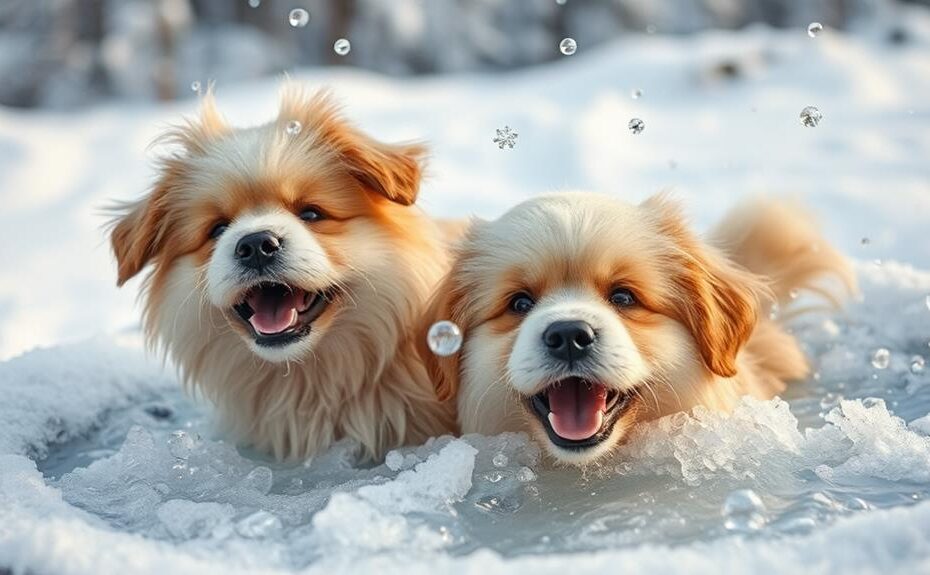
Bathing a dog in the cold can be tricky, but it's doable! Start by choosing a warm, sheltered location and ensure the water's between 100-102°F. Gather all supplies ahead of time, including dog shampoo and towels. Use a non-slip mat to keep your dog safe, and keep baths short—about 5 to 10 minutes. Afterward, wrap your dog in a warm towel and monitor their comfort. Be sure to reward them with treats for good behavior. With these tips, you can make the experience pleasant for both of you, and there's more to discover about dog care.
Key Takeaways
- Use warm water (100-102°F) to keep the dog comfortable during the bath and prevent cold exposure.
- Select a sheltered, indoor location with good drainage and a non-slip surface to enhance safety.
- Limit bathing time to 5-10 minutes and ensure all supplies are prepared in advance.
- Dry the dog thoroughly with large towels and consider using a dog dryer set to a safe distance.
- Reward the dog with treats and praise before, during, and after the bath to promote a positive experience.
Assess Your Dog's Comfort
Before you start bathing your dog in the cold, it's crucial to assess their comfort level. Pay attention to their body language and behavior. Are they showing signs of anxiety, like pacing or whining? If so, it might be best to postpone the bath or find a way to make it more comfortable for them.
Consider your dog's breed and coat type; some dogs are more tolerant of cold temperatures than others. If your dog has a thick coat, they may handle the chill better, but don't assume they're all right without checking in with them first.
You should also gauge the water temperature. Even in colder weather, warm water can help your dog feel more at ease. A gentle introduction to the bath can go a long way, so allow them to sniff around the bathing area and explore before you begin.
Ultimately, your goal is to create a positive experience. By being attentive and responsive to your dog's needs, you'll not only ensure their comfort but also strengthen your bond and build trust.
Choose the Right Location
Finding the right location for your dog's bath can make all the difference in their comfort and your convenience. Choose a space that's sheltered from the cold, such as a garage, laundry room, or even a bathroom. This way, you can keep your dog warm and reduce the risk of them getting chilled during the bath.
Ensure the area has good drainage, so water doesn't pool around your dog. If you can, use a non-slip surface like a rubber mat to prevent any accidents, especially when they're wet. It's also a great idea to have all your supplies within reach—shampoo, towels, and brushes—so you don't have to leave your dog unattended.
If your dog is large, consider using a bathtub or a kiddie pool. For smaller dogs, a sink can work perfectly. Whatever you choose, make sure the location allows you to comfortably maneuver around your dog.
Prepare Warm Water
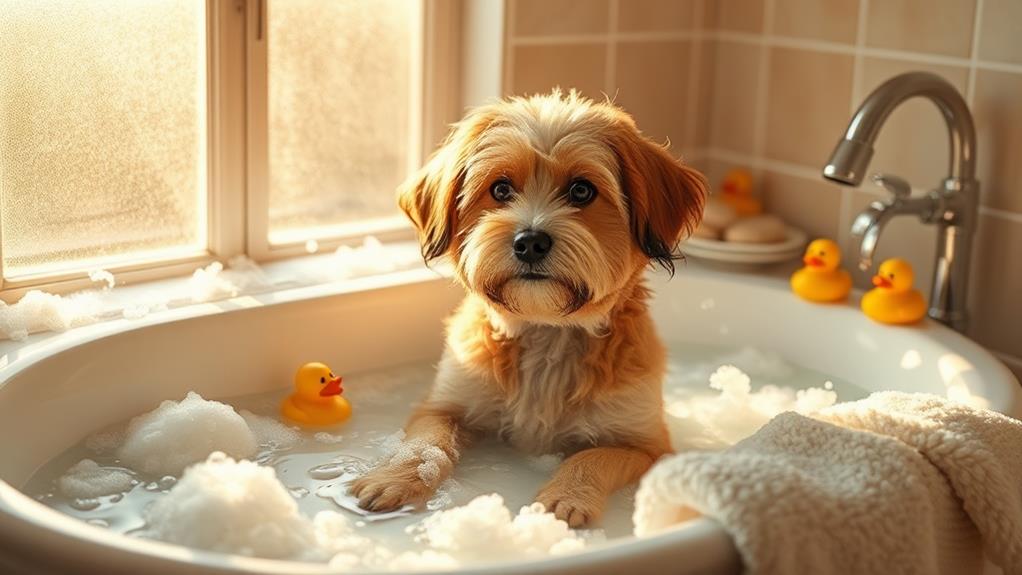
To ensure your dog stays comfortable during their bath, it's essential to prepare warm water that won't shock them. Start by filling a tub or basin with water that's around lukewarm, roughly 100-102°F (37-39°C). You can check the temperature with your wrist; it should feel warm but not hot. This way, your furry friend won't feel any sudden temperature changes that could lead to discomfort or stress.
If you're using a hose, consider filling a bucket with warm water from your sink and then transferring it to the tub. This method lets you control the temperature better. Remember, dogs have sensitive skin, and water that's too hot can be painful.
Once you've got the right temperature, you can adjust the water levels based on your dog's size. Smaller dogs may only need a few inches of water, while larger breeds may require more.
Ensure the water is deep enough to wet their fur without overwhelming them. This thoughtful preparation not only makes the bathing process smoother but also shows your dog that you care about their comfort and well-being, fostering trust during what can be an anxious experience for them.
Gather Necessary Supplies
Gathering the right supplies is crucial for a successful dog bath in cold weather. Start by collecting dog shampoo specifically designed for your pup's coat type. Look for gentle, moisturizing formulas that won't strip away natural oils.
Next, grab a large towel to dry your dog afterward—preferably one that's thick and absorbent to keep your furry friend warm.
You'll also need a non-slip mat or towel to prevent slipping during the bath. A detachable showerhead or spray nozzle can make rinsing easier, ensuring you wash away all the shampoo thoroughly.
Don't forget a brush or comb to detangle your dog's coat before and after the bath; this helps keep their fur healthy and manageable.
If your dog tends to shake water everywhere, consider using a waterproof apron to protect yourself.
Lastly, have some treats on hand to reward your pup for their good behavior. This not only makes the experience more enjoyable for them but also strengthens your bond.
Use a Non-Slip Surface
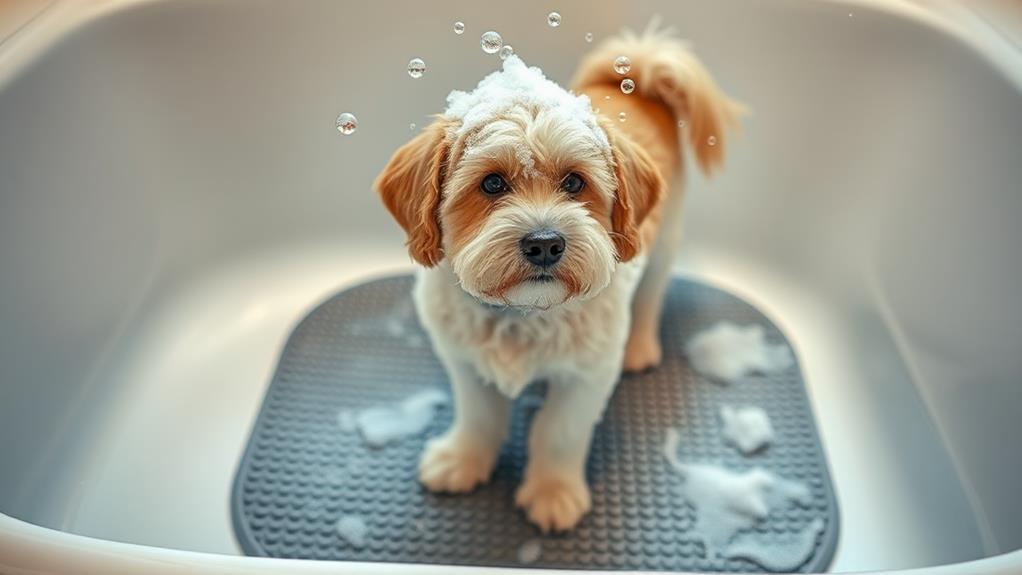
A non-slip surface is essential for keeping your dog safe and comfortable during bath time, especially in cold weather. When your dog is wet, their paws can easily slip on smooth surfaces, leading to potential injuries or panic. To prevent this, consider using a rubber mat or a non-slip bath mat in your bathing area. These mats provide grip, helping your furry friend feel more secure as they stand.
You can also use towels to create a non-slip surface. Simply place a few towels on the floor where your dog will stand. This not only provides traction but also adds a layer of comfort for your pet. Make sure the towels are dry and positioned securely to avoid any slipping.
If you're bathing your dog in a tub, ensure the bottom has a non-slip coating or consider adding a non-slip liner. This extra layer of safety can help your dog feel more at ease during the bath.
Brush Before Bathing
Before you bathe your dog, it's crucial to brush them thoroughly.
This helps you choose the right brush for their coat type, removes loose fur, and allows you to check for any mats that need attention.
Taking this step will make the bathing process smoother and more effective.
Choose the Right Brush
Choosing the right brush for your dog is essential before you start the bathing process. The brush you select can make a significant difference in how well you remove dirt and loose fur, making the actual bath easier for both of you.
First, consider your dog's coat type. For short-haired dogs, a bristle brush or rubber grooming mitt works well, as these tools effectively remove dirt without irritating their skin.
If your dog has a medium coat, a pin brush or a slicker brush is ideal for detangling and smoothing the fur. For long-haired breeds, opt for a wide-toothed comb or a specialized dematting tool to tackle any knots gently.
Always remember to brush in the direction of hair growth, as this will make the experience more comfortable for your pup. And don't rush—spending time brushing your dog not only prepares them for the bath but also strengthens your bond.
Remove Loose Fur
Brushing your dog before bathing is an important step to remove loose fur and minimize mess. By taking a few minutes to brush, you'll not only reduce the amount of hair that ends up in your bathwater but also create a more enjoyable experience for your pup. Loose fur can clump together when wet, potentially leading to tangles and discomfort.
Choose a brush suited to your dog's coat type, and gently work through the fur, starting from the head and moving towards the tail. Use long, smooth strokes, being careful around sensitive areas like the ears and belly. This process not only helps to eliminate loose fur but also stimulates the skin and distributes natural oils, which can enhance your dog's coat health.
Make this a part of your dog's grooming routine; it's a great way to bond and shows your pet that you care. As you brush, pay attention to your dog's reactions. If they seem uncomfortable, take a break or switch to a gentler brush.
When you finish, you'll notice a noticeable reduction in the amount of fur in the bath, making the entire bathing process smoother and more pleasant for both of you.
Check for Mats
While you're brushing your dog, it's essential to check for mats in their fur, as these can become more difficult to remove once they're wet.
Mats can trap moisture, dirt, and debris, making your dog uncomfortable and leading to skin issues. Here's how to effectively check for and handle mats before bathing:
- Inspect the Fur: Look closely at areas prone to matting, like behind the ears, under the legs, and around the collar.
- Use the Right Tools: A slicker brush or comb can help you identify and tease apart any tangled spots.
- Work Gently: If you find a mat, use your fingers to gently separate the fur. Avoid pulling too hard, as this can irritate your dog's skin.
- Reward Your Dog: Offer treats and praise throughout the process to keep your dog relaxed and cooperative.
Limit Bathing Time
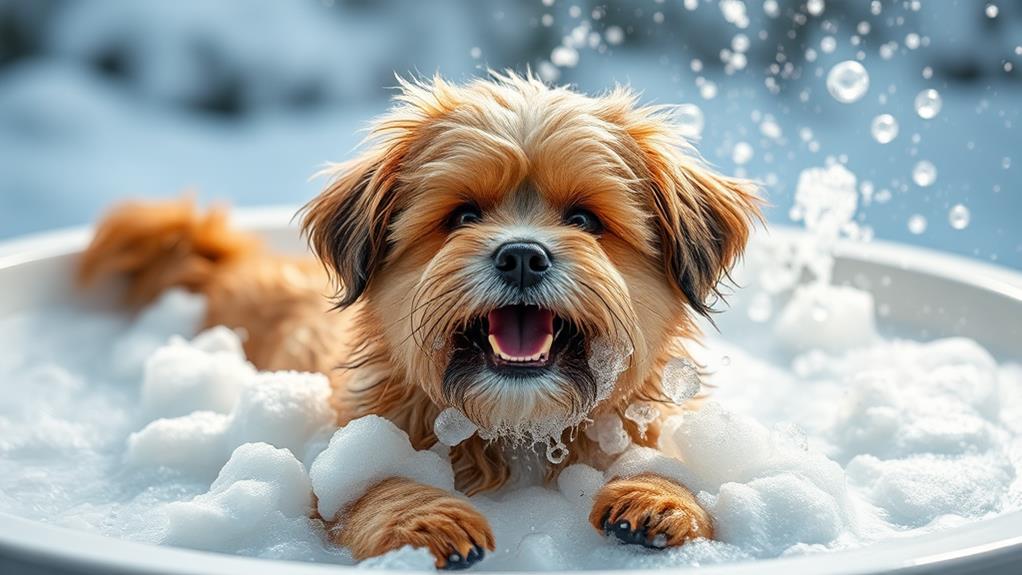
To keep your dog comfortable during a bath in the cold, it's essential to limit the bathing time. Dogs can easily get cold, especially when the temperature drops, so aim for quick baths that focus on cleanliness without overexposure to chilly air.
Ideally, you should keep the bath to around 5 to 10 minutes. This way, your furry friend stays warm and happy throughout the process.
Before starting, gather everything you'll need—shampoo, towels, and brushes—so you can minimize the time your dog spends in the cold environment.
If your dog is particularly anxious or doesn't enjoy baths, consider breaking the bathing process into smaller sessions. You can wash one section at a time, allowing breaks in between to help your dog feel more relaxed.
Keep Bathing Area Warm
A warm bathing area significantly enhances your dog's comfort during a cold-weather bath.
By ensuring the space is cozy, you not only make the experience pleasant for your furry friend but also create a more manageable bathing process for yourself.
Here are some tips to keep the bathing area warm:
- Choose an Indoor Location: If possible, bathe your dog indoors where it's naturally warmer. A laundry room or bathroom typically works well.
- Use Space Heaters: If you're in a garage or basement, consider using a portable space heater to raise the temperature. Just be sure to keep it out of your dog's reach.
- Warm Water: Fill your tub or basin with warm water before bringing your dog in. It'll help maintain a comfortable temperature throughout the bath.
- Insulate the Area: If you're bathing outside, try to block the wind with tarps or blankets. This'll create a windbreak, keeping the area warmer.
Rinse Thoroughly
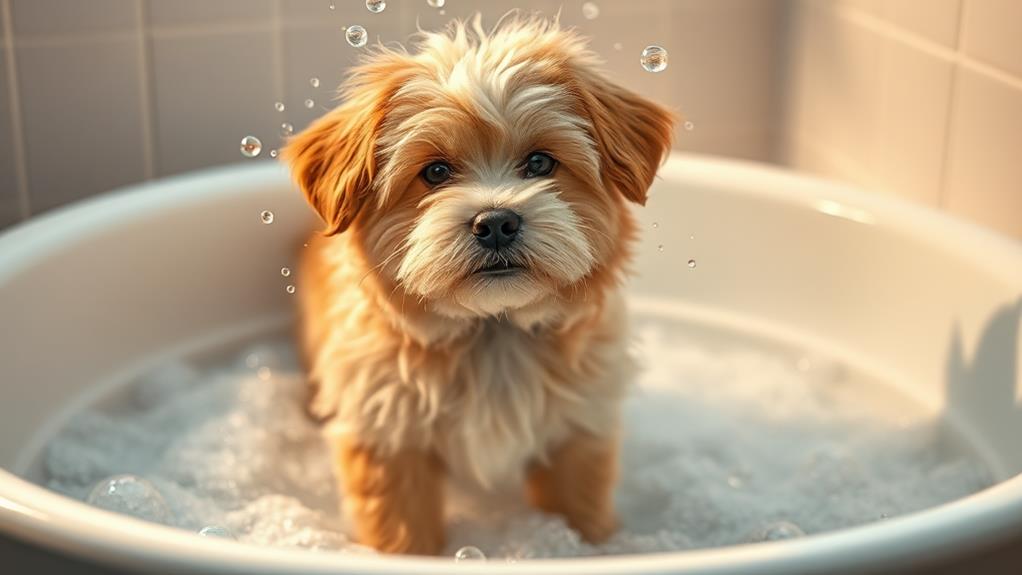
After lathering your dog with shampoo, rinsing thoroughly is crucial to ensure all soap residue is removed from their coat. Soap left behind can irritate their skin and lead to discomfort.
Start by using a gentle spray or a cup to rinse your dog. Focus on one section at a time, making sure to lift the fur and wash out all the suds.
Pay special attention to areas where dirt tends to accumulate, like under the belly, behind the ears, and between the paws. These spots often trap soap, so a thorough rinse is essential.
Use lukewarm water, as cold water can be uncomfortable for your dog, especially in colder weather.
Don't rush the process; take your time to ensure every bit of shampoo is washed away. You might want to run your fingers through their fur while rinsing to help dislodge any remaining residue.
Once you feel confident that the soap is gone, give your dog a final rinse to ensure they're clean and comfortable. A thorough rinse not only promotes healthy skin but also leaves your furry friend feeling refreshed and happy after their bath.
Drying Techniques
Drying your dog effectively after a bath is crucial, especially in cold weather. Wet fur can lead to discomfort or even health issues like hypothermia.
To ensure your furry friend stays warm and cozy, here are some drying techniques to consider:
- Use Absorbent Towels: Start with a few large, absorbent towels. Wrap your dog in one and gently press to soak up excess water, avoiding vigorous rubbing that can tangle the fur.
- Create a Drying Station: Set up a comfortable area where your dog feels secure. This can be a warm room or an area with good ventilation, away from drafts.
- Patience is Key: Take your time drying your dog. A calm approach will help both you and your pet feel relaxed. Use soothing words to reassure them during the process.
- Check for Damp Spots: After towel drying, check for damp areas, especially around the ears, paws, and belly. Use a smaller towel for these spots, ensuring they're thoroughly dry before letting your dog roam free.
Following these techniques will keep your dog warm and happy after their bath!
Use a Dog Dryer
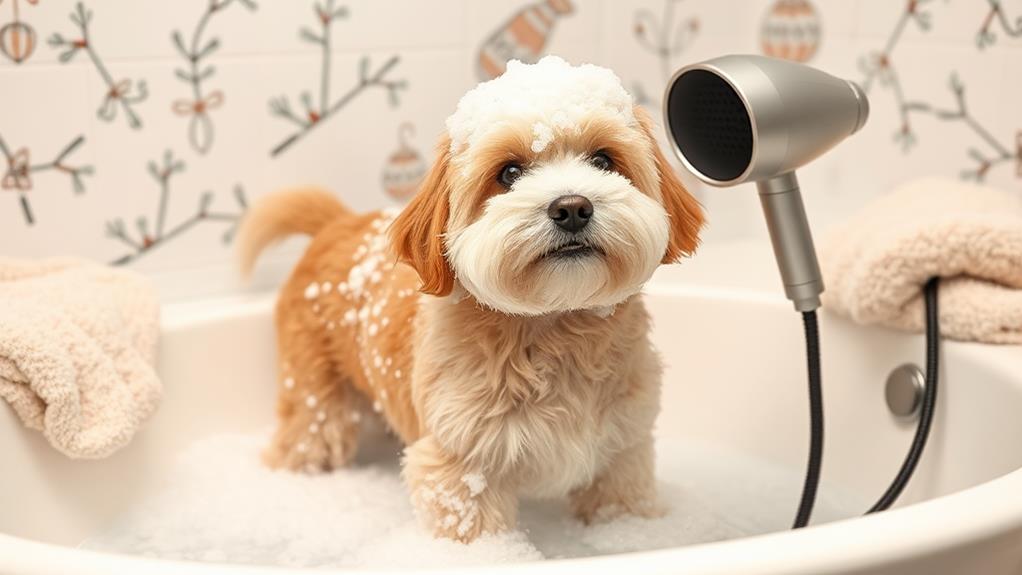
Using a dog dryer can make the drying process faster and more efficient, especially in chilly weather. These specialized dryers are designed to safely and effectively dry your furry friend without the risk of overheating.
You'll find that a dog dryer can reduce the time your pet spends damp and uncomfortable, which is crucial during colder months.
When using a dog dryer, keep the nozzle at a safe distance from your dog's skin to avoid discomfort. Start with a low setting and gradually increase the heat as needed.
Move the dryer around continually to prevent concentrating heat on one spot. This not only ensures your dog stays comfortable but also helps distribute the airflow evenly, promoting quicker drying.
It's also a good idea to talk to your dog during the process, reassuring them and making it a positive experience. If your dog seems anxious, take breaks and give them treats to encourage calm behavior.
Wrap in a Warm Towel
Once your dog is clean and the dog dryer has done its job, wrapping them in a warm towel can provide an extra layer of comfort. This simple step helps your furry friend feel cozy and secure after their bath, especially in the cold weather.
Here's how to do it effectively:
- Choose the Right Towel: Opt for a large, fluffy towel to ensure your dog is fully enveloped. A towel made of microfiber can also help absorb moisture quickly.
- Warm the Towel: Before wrapping your dog, consider warming the towel in the dryer for a few minutes. Just be sure it's not too hot to avoid burning your pet's skin.
- Wrap Gently: Once the towel is warm, gently wrap it around your dog, making sure to cover their body without restricting movement. This will help them feel safe.
- Hold and Cuddle: While wrapped, hold and cuddle your dog for a few minutes. Your warmth and affection will reassure them, creating a positive experience after their bath.
This thoughtful gesture can make a big difference in your dog's comfort level during cold-weather baths.
Monitor Your Dog's Behavior
Monitoring your dog's behavior during and after the bath is crucial, especially in cold weather. You need to keep a close eye on how your furry friend reacts to the entire process. Look for signs of discomfort or anxiety, such as shaking, whining, or trying to escape. If your dog seems stressed, it might be a good idea to pause and offer some reassurance. A calm voice and gentle touch can go a long way in making them feel safe.
After the bath, continue to observe your dog for any signs of distress. Keep an eye on their body language; if they're shivering, it's essential to wrap them up warmly and provide extra comfort.
You may also notice how they respond to the towel or the drying process. If your dog gets uneasy, adapt your approach to ensure they feel secure.
Additionally, consider the room temperature. A warm environment can help alleviate any chill your dog might feel.
Reward After Bathing
After bathing your dog, it's important to reward their good behavior to reinforce the experience.
Giving treats can make them associate bath time with something positive.
You can also engage in some fun playtime afterward to help them shake off any lingering discomfort from the cold water.
Treats for Good Behavior
Rewarding your dog with treats for good behavior during and after a bath can make the experience more enjoyable for both of you. Positive reinforcement encourages your furry friend to associate bath time with pleasant rewards.
Here are four effective treat strategies:
- Pre-Bath Treat: Give your dog a small treat before starting the bath. This sets a positive tone and builds anticipation.
- During Bath Time: If your dog remains calm and cooperative, offer a few treats throughout the bathing process. This keeps them relaxed and focused on you.
- Post-Bath Reward: Once the bath is complete, shower your pup with their favorite treat! This helps them associate the end of the bath with a fun reward.
- Consistent Praise: Along with treats, use verbal praise and affection to reinforce good behavior. Your enthusiasm will boost their confidence and make them eager for their next bath.
Post-Bath Playtime Fun
Once your dog is all clean and dried off, it's the perfect time to shift gears and indulge in some playful activities. This post-bath fun not only rewards your furry friend for enduring the wash but also strengthens your bond.
Grab their favorite toy or engage them in a game of fetch. The excitement will help shake off any residual tension from the bath.
You might also consider a little hide-and-seek. Hide treats around the room and let your dog use their nose to find them. This not only entertains them but also mentally stimulates their senses.
If your space allows, setting up a mini obstacle course can be a fantastic way to keep their energy up while reinforcing their agility.
Don't forget to give lots of praise and affection during playtime. This reinforces positive behavior and makes your dog more eager for future baths.
Maintain Regular Grooming
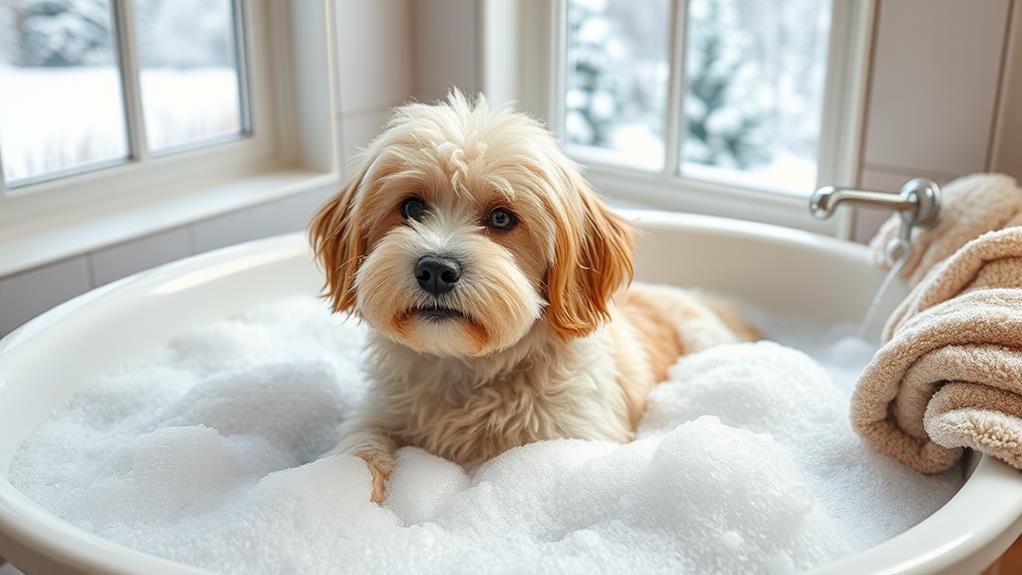
Regular grooming is essential for keeping your dog comfortable, especially during colder months. It helps manage their coat and keeps them looking and feeling great.
By maintaining a consistent grooming routine, you can prevent matting and ensure your dog stays warm and healthy. Here are four key grooming tips to consider:
- Brush Regularly: Make it a habit to brush your dog's coat at least once a week. This removes loose fur and helps distribute natural oils, promoting a healthy shine.
- Check for Mats: Pay special attention to areas prone to matting, like behind the ears and around the paws. If you find any, gently work them out with your fingers or a mat comb.
- Trim Nails: Keep your dog's nails trimmed to prevent discomfort and injuries, especially during walks on icy surfaces.
- Clean Ears: Regularly check and clean your dog's ears to prevent moisture buildup that can lead to infections, particularly if they enjoy splashing in snow.
Frequently Asked Questions
Can I Bathe My Dog Outside in the Cold?
You can bathe your dog outside in the cold, but it's important to keep the water warm and limit exposure to chilly temperatures. Make sure your pup stays comfortable and dry afterward to prevent any discomfort.
What if My Dog Hates Water?
If your dog hates water, try introducing them to it gradually. Use positive reinforcement, like treats and praise, to create a more enjoyable experience. Patience and gentle encouragement can help them feel more comfortable.
How Often Should I Bathe My Dog in Winter?
You should bathe your dog every 4 to 6 weeks during winter, unless they get particularly dirty. Regular brushing helps keep their coat clean and reduces the need for frequent baths. Keep their comfort in mind!
Can I Use Human Shampoo on My Dog?
Using human shampoo on your dog is like dressing a cat in a dog costume—it's just not right. Stick to dog-specific shampoos, as they're formulated for their skin and coat, ensuring your pup stays healthy.
What Are Signs of My Dog Being Too Cold?
If your dog's shivering, whining, or seeking warmth, it's likely too cold. You might notice lethargy or curled-up posture. Keep an eye on their behavior to ensure they stay comfortable and safe outdoors.
Conclusion
Bathing your dog in the cold doesn't have to be a daunting task. By keeping your pup comfortable and using warm water, you can turn a chilly chore into a cozy experience. Remember to reward your furry friend afterward—those tail wags will feel like a thousand suns warming your heart! Regular grooming not only helps keep bath time easier but also strengthens your bond. So, gear up and make bath time an adventure you both look forward to!

Carlos Rodriguez is the Senior Product Reviewer at DogShampooReviews.com. With over 15 years of experience in canine grooming and skincare, Carlos brings a wealth of knowledge and passion to our team. His journey began at a young age, growing up on a family farm where he was surrounded by dogs of all breeds and sizes. This early exposure ignited his lifelong dedication to animal care and well-being.
Professional Background
- Certified Dog Groomer: Carlos is a certified professional groomer who has worked in some of the top grooming salons across the country. His expertise spans various grooming techniques suitable for different breeds and coat types.
- Canine Skincare Specialist: Recognizing the importance of skin health in dogs, Carlos pursued additional certifications in dermatological care for canines, specializing in treating skin conditions and allergies.
- Product Testing Expert: With a meticulous eye for detail, Carlos rigorously tests dog shampoos and grooming products, evaluating them on ingredients, efficacy, safety, and overall quality.
Passion for Dogs
Carlos’s love for dogs goes beyond his professional life. He is an active volunteer at local animal shelters, providing grooming services to help adoptable dogs look and feel their best. His own rescued dogs, Bella and Rocky, are often the first to try out new products, ensuring his reviews come from genuine experiences.
Why Trust Carlos
- Unbiased Reviews: Committed to integrity, Carlos ensures all his reviews are honest and based on thorough testing.
- Expert Insight: His extensive knowledge allows him to break down complex information into understandable advice for dog owners.
- Community Engagement: Carlos actively engages with our readers, answering questions and providing personalized recommendations.