
You shouldn't bathe a dog with an ear infection, as it can worsen their discomfort and extend recovery time. Water can get trapped in the ear canal, increasing irritation and moisture. Instead, focus on spot cleaning with a damp cloth while keeping their ears dry. Use pet-safe wipes or dry shampoo for a gentler approach. This way, you can maintain hygiene without aggravating the infection. If you notice persistent symptoms, consult your veterinarian for tailored advice and treatment options to ensure your dog's comfort and health during this time. There's more to know to help your furry friend!
Key Takeaways
- Bathing a dog with an ear infection is not recommended due to the risk of trapping moisture in the ears.
- Water exposure can worsen the infection and cause increased discomfort for the dog.
- Spot cleaning with damp cloths or pet-safe wipes is a safer alternative to full baths.
- If necessary, consult a veterinarian for guidance on grooming while managing the infection.
- Prioritize gentle handling and avoid water around the ears during any cleaning process.
Understanding Ear Infections in Dogs
Ear infections in dogs can be a frustrating issue for both pets and their owners. When your furry friend develops an ear infection, it often leads to discomfort and irritability. You might notice your dog shaking its head, scratching at its ears, or even displaying signs of pain.
Understanding the causes of these infections is essential for providing the right care. Ear infections can stem from various factors, including allergies, moisture, and foreign objects lodged in the ear canal. Dogs with floppy ears or those that swim frequently are particularly susceptible.
When you observe any unusual behavior, it's crucial to act promptly. Ignoring the symptoms can lead to more severe complications. As a caring owner, you should seek veterinary advice if you suspect an ear infection.
Your vet can provide a proper diagnosis and recommend a suitable treatment plan tailored to your dog's needs. Remember, early intervention can make a significant difference in your pet's recovery and prevent future infections.
Risks of Bathing With an Ear Infection
Bathing a dog with an ear infection can pose significant risks, as water entering the ear canal may exacerbate the problem. When water gets trapped in the ear, it can create a breeding ground for bacteria and yeast, leading to a more severe infection. You don't want to worsen their discomfort or prolong their recovery.
Moreover, the agitation of bathing can stress your dog, especially if they're already in pain. If your dog shakes their head or tries to rub their ears during a bath, that might introduce more moisture into the ear canal, compounding the issue.
Additionally, using certain shampoos or soaps can irritate their skin and ears, which might lead to further complications. Even if you're careful, it's easy for water to accidentally splash into areas you didn't intend.
Instead of bathing, consider spot cleaning your dog with a damp cloth to keep them comfortable without risking their ear health.
Prioritizing their wellbeing means recognizing when it's best to wait until they're fully healed. Always consult your vet to determine the best course of action for your furry friend.
Signs Your Dog Has an Ear Infection
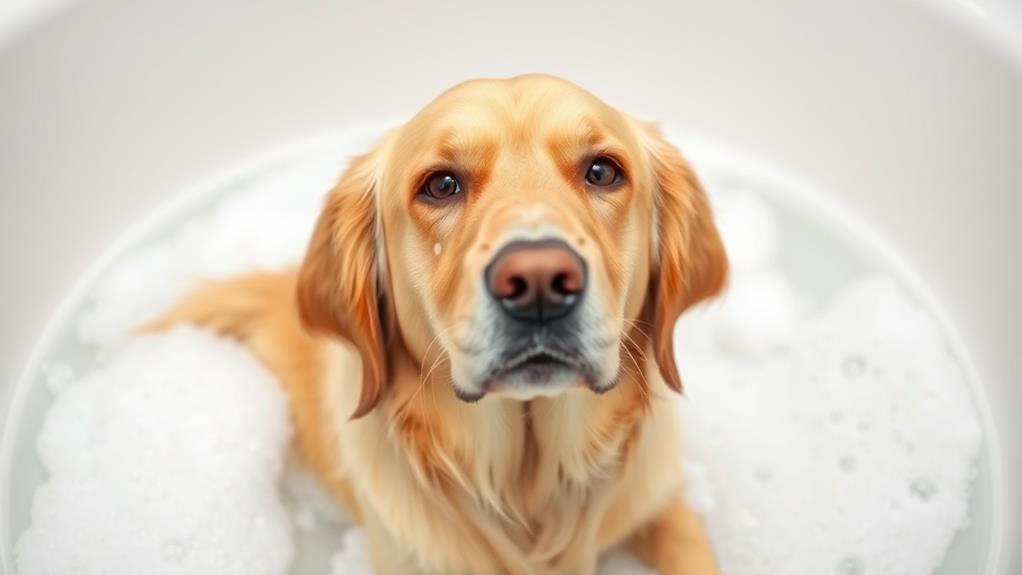
If you suspect your dog might've an ear infection, keep an eye out for common symptoms.
Look for signs like excessive scratching, shaking their head, or unusual odors coming from their ears.
You should also note any behavioral changes, such as increased irritability or lethargy, as these can indicate discomfort.
Common Symptoms to Observe
An ear infection can cause noticeable discomfort for your dog, and recognizing the signs early can make a big difference in their recovery. Keep an eye out for common symptoms that indicate your furry friend might be suffering.
One of the first signs you might notice is excessive scratching or rubbing of the ears. If your dog is constantly pawing at their ears or rubbing them against furniture, it's a red flag.
Additionally, watch for any unusual head tilting or shaking, which can signal irritation or pain. You should also check for discharge coming from the ear, as this can be a clear indicator of an infection.
A strong odor emanating from the ears can further suggest a problem. Furthermore, observe your dog's ear temperature; if it feels warmer than usual, that might be a sign of inflammation.
Lastly, keep an eye on their overall well-being. If your pup seems more lethargic than normal or loses interest in activities they usually enjoy, it could be worth investigating further.
Prompt action can help your dog feel better sooner, so don't hesitate to consult your vet if you notice these symptoms.
Behavioral Changes to Note
Noticing your dog's behavioral changes can be crucial in identifying an ear infection. If your furry friend seems more irritable or withdrawn than usual, it's a sign that something might be bothering them. You may notice them shaking their head frequently or scratching at their ears. These actions often indicate discomfort or pain.
Additionally, watch for changes in their usual habits. Is your dog reluctant to engage in playful activities? Have they stopped responding to commands they typically follow? Such shifts in behavior can signal underlying issues, including an ear infection. You might also observe a change in their appetite; dogs often lose interest in food when they're in pain.
Keep an eye out for unusual vocalizations, like whining or yelping, especially when you touch their head or ears. These sounds can indicate distress and should be taken seriously.
If you notice these behavioral changes, it's essential to consult your veterinarian promptly. They can help ensure your dog receives the care they need, providing relief from discomfort and preventing further complications.
Safe Bathing Practices for Dogs
When it comes to bathing a dog, especially one with an ear infection, following safe practices is essential for their comfort and health. Start by gathering all necessary supplies, like a gentle dog shampoo, towels, and a non-slip mat to prevent slipping.
Make sure you choose a quiet, warm space to help your dog feel secure and relaxed. Before you begin, brush your dog's coat to remove any tangles.
During the bath, keep water away from their ears. Use a damp cloth to clean the rest of their body, and avoid submerging their head. If your dog enjoys a shower, consider using a handheld sprayer on a low setting, ensuring it's not too forceful.
After the bath, dry your dog thoroughly with a towel. Pay special attention to the areas around the ears, but don't rub too vigorously.
If it's safe to do so, you can use a hairdryer on a low, cool setting to dry their fur, keeping it at a distance. Lastly, reward your dog with praise or treats to create a positive association with bath time, reinforcing their trust in you during this experience.
Alternative Grooming Methods

If your dog has an ear infection, you might want to explore alternative grooming methods.
Dry bathing techniques can help keep your pup clean without the stress of a full bath, and spot cleaning specific areas can be effective too.
These options not only maintain hygiene but also support your dog's comfort during recovery.
Dry Bathing Techniques
Dry bathing techniques offer a practical alternative for grooming dogs with ear infections, especially when traditional bathing methods might aggravate their condition. These methods allow you to keep your furry friend clean while avoiding any potential discomfort from water exposure.
One effective approach is using dry shampoo specifically designed for pets. You can apply it directly to your dog's coat, massaging it in gently. These products typically absorb oils and dirt without the need for rinsing.
Another option is using pet-safe wipes, which can be used to clean your dog's fur and paws easily. This method is particularly useful if your dog has sensitive skin.
You can also brush your dog thoroughly to remove loose hair and dander, which helps maintain their coat's health. Regular brushing requires minimal effort and can provide comfort to your pet.
Remember to be gentle and attentive throughout the process. By utilizing these dry bathing techniques, you can ensure your dog remains clean and comfortable while their ear infection heals.
Your care and attention make a significant difference in their well-being during this time.
Spot Cleaning Areas
Although your dog might need special care due to an ear infection, spot cleaning specific areas can effectively maintain their hygiene without causing additional discomfort.
Focus on the areas that tend to get dirty, like the paws, belly, and around the face. Using a damp cloth or a pet-safe cleansing wipe, gently wipe these spots to remove dirt and debris.
When cleaning your dog's paws, pay attention to any mud or allergens that might irritate their skin. If your dog's belly is dirty, a soft cloth with lukewarm water can help refresh that area. For the face, avoid getting too close to the ears, but you can clean around the eyes and muzzle to keep them tidy.
It's important to approach the process with patience and care. Make it a positive experience by offering praise or a treat afterward.
Always keep an eye on your dog's reaction; if they seem uncomfortable, take a break. Spot cleaning is a great way to maintain your dog's hygiene without the stress of a full bath, especially when they're dealing with an ear infection. Your loving attention will help keep them feeling their best.
When to Consult a Veterinarian
When should you consider consulting a veterinarian for your dog's ear infection? If you notice persistent symptoms like excessive scratching, shaking of the head, or a foul odor coming from the ears, it's time to seek professional help. These signs can indicate a more serious issue that requires medical attention.
Additionally, if your dog shows signs of pain or discomfort, such as whining or irritability, don't hesitate to reach out to your vet. Ear infections can be quite uncomfortable, and your furry friend deserves relief.
If you see any discharge, especially if it's yellow, brown, or bloody, that's another clear signal that a vet visit is necessary.
Keep an eye out for changes in your dog's behavior, like loss of appetite or lethargy, as these can indicate that the infection is affecting their overall health.
If your dog's symptoms worsen or don't improve after a few days of at-home care, it's crucial to consult a veterinarian. Early intervention can prevent more severe complications and ensure your beloved pet receives the proper treatment.
Your dog's well-being is worth every moment spent seeking expert advice.
Frequently Asked Questions
Can I Use Dog Shampoo if My Dog Has an Ear Infection?
You can use dog shampoo, but it's best to avoid getting it near your dog's ears. Focus on gentle cleaning, and consult your vet for specific recommendations to ensure your dog's comfort and health.
How Often Should I Bathe a Dog With an Ear Infection?
Bathing a dog with an ear infection should be like tiptoeing through a tulip garden—carefully. Limit baths to avoid irritation, and consult your vet for the best frequency tailored to your dog's needs.
Are There Specific Breeds More Prone to Ear Infections?
Certain breeds, like Cocker Spaniels, Bulldogs, and Poodles, tend to be more prone to ear infections. You should keep an eye on their ears and maintain regular cleanings to help prevent issues.
Can Ear Infections Be Contagious to Other Pets?
Ear infections aren't contagious between pets. However, you should keep an eye on your other furry friends. If they show symptoms, consult your vet. Regular check-ups help ensure everyone stays healthy and happy.
What Home Remedies Can Help Soothe My Dog's Ear Infection?
To soothe your dog's ear infection, you can try applying warm compresses, using a diluted apple cider vinegar solution, or massaging the area gently. Always consult your vet for advice tailored to your dog's specific needs.
Conclusion
In conclusion, while you might think a bath could help your dog feel better, it's crucial to consider the risks of bathing with an ear infection. Imagine splashing water around, only to see your pup shake their head in discomfort. Instead, focus on gentle grooming and keep an eye on those symptoms. If things don't improve, don't hesitate to consult your vet. Your furry friend deserves the best care, especially when they're feeling under the weather.

Carlos Rodriguez is the Senior Product Reviewer at DogShampooReviews.com. With over 15 years of experience in canine grooming and skincare, Carlos brings a wealth of knowledge and passion to our team. His journey began at a young age, growing up on a family farm where he was surrounded by dogs of all breeds and sizes. This early exposure ignited his lifelong dedication to animal care and well-being.
Professional Background
- Certified Dog Groomer: Carlos is a certified professional groomer who has worked in some of the top grooming salons across the country. His expertise spans various grooming techniques suitable for different breeds and coat types.
- Canine Skincare Specialist: Recognizing the importance of skin health in dogs, Carlos pursued additional certifications in dermatological care for canines, specializing in treating skin conditions and allergies.
- Product Testing Expert: With a meticulous eye for detail, Carlos rigorously tests dog shampoos and grooming products, evaluating them on ingredients, efficacy, safety, and overall quality.
Passion for Dogs
Carlos’s love for dogs goes beyond his professional life. He is an active volunteer at local animal shelters, providing grooming services to help adoptable dogs look and feel their best. His own rescued dogs, Bella and Rocky, are often the first to try out new products, ensuring his reviews come from genuine experiences.
Why Trust Carlos
- Unbiased Reviews: Committed to integrity, Carlos ensures all his reviews are honest and based on thorough testing.
- Expert Insight: His extensive knowledge allows him to break down complex information into understandable advice for dog owners.
- Community Engagement: Carlos actively engages with our readers, answering questions and providing personalized recommendations.