
You should bathe your puppy under 6 months every 3 to 4 weeks to maintain their sensitive skin. Bathing too often can strip essential oils, leading to dryness and irritation. If your puppy plays outdoors frequently, you might need to bathe them every 2 weeks. Always be on the lookout for signs they need a bath, like unpleasant odors or visible dirt. Make sure to use a hypoallergenic shampoo to prevent skin irritation. There’s plenty more to explore about bathing techniques and post-bath care to ensure a pleasant experience for both you and your puppy!
Key Takeaways
- Puppies under 6 months should ideally be bathed every 3 to 4 weeks to maintain their natural oils.
- Active puppies may require bathing every 2 weeks due to increased dirt and odor.
- Bathing too frequently can strip essential oils, leading to dryness and skin irritation.
- Monitor your puppy for signs of irritation after bathing to adjust future schedules.
- Consult a veterinarian for personalized advice based on your puppy’s breed and skin type.
Understanding Puppy Skin Sensitivity
Puppies have delicate skin that requires special attention as they grow. Their skin is thinner and more sensitive than that of adult dogs, making it crucial to handle them gently.
When you pet or bathe your puppy, you might notice that they react differently to touch; this sensitivity can lead to discomfort if not managed properly.
To serve your puppy best, pay close attention to any signs of irritation, such as redness, itching, or flaking. These symptoms may indicate that their skin is reacting to products or environmental factors.
Using gentle, hypoallergenic shampoos can help minimize the risk of irritation. Always test any new product on a small area first to see how your puppy’s skin reacts.
Additionally, consider their environment. Extreme temperatures, harsh chemicals, and allergens can exacerbate skin sensitivity.
Regularly check your puppy’s skin for any changes, as early detection is key to preventing more serious issues.
By understanding their unique needs, you can create a nurturing atmosphere that promotes healthy skin and overall comfort for your furry friend.
Your attentive care makes all the difference in their happy, healthy development.
Recommended Bathing Frequency
Finding the right bathing frequency for your puppy is important, especially given their sensitive skin. Generally, it’s best to bathe your puppy every 3 to 4 weeks. This schedule helps maintain their natural oils while ensuring they stay clean. Bathing too often can strip their skin of these essential oils, leading to dryness and irritation.
However, you should also consider your puppy’s lifestyle. If they frequently romp outside, roll in mud, or have a tendency to get into mischief, you might need to adjust their bath schedule. In such cases, bathing once every 2 weeks can be appropriate, but always keep an eye on their skin condition afterward.
After each bath, make sure you thoroughly dry your puppy to prevent any chilling or skin issues. Using a gentle puppy shampoo is crucial; harsh soaps can aggravate their delicate skin.
Always take the time to check for any signs of irritation or allergies after bathing, as this can inform your future bathing frequency. By maintaining a thoughtful approach to your puppy’s bathing routine, you’ll contribute positively to their overall health and happiness.
Signs Your Puppy Needs a Bath
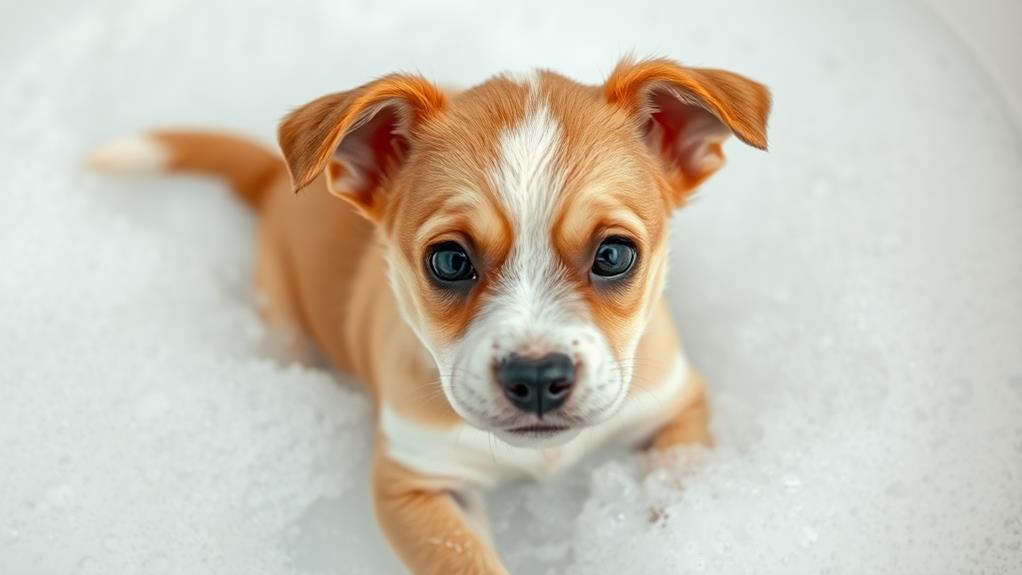
A quick sniff can often tell you if your puppy needs a bath. If you catch a whiff of an unpleasant odor, it’s a sure sign that a bath is in order.
Besides smell, you should also look for visible dirt or grime on your puppy’s fur. If their coat appears greasy or sticky, it’s time to help them feel fresh again.
Another indicator is your puppy’s behavior. If they’re scratching or licking themselves more than usual, it could be a sign of irritation or buildup that needs washing away.
Additionally, if your puppy tends to roll around in dirt, mud, or even something less pleasant during playtime, you’ll want to give them a bath sooner rather than later.
Keep an eye on their paws, too. If they’re muddy after a walk, washing their feet can help keep your home clean.
Lastly, consider your puppy’s breed and coat type; some may require more frequent baths than others.
Choosing the Right Shampoo
When choosing a shampoo for your puppy, it’s crucial to consider hypoallergenic options, especially if your pup has sensitive skin.
Look for products with natural ingredients that won’t irritate or harm their delicate coat.
Additionally, make sure the shampoo’s pH balance is suitable for puppies to keep their skin healthy and happy.
Hypoallergenic Options Available
Choosing the right shampoo for your puppy is crucial, especially if they’ve sensitive skin or allergies. Opting for hypoallergenic options can help maintain their skin’s health while providing a gentle clean. Look for shampoos specifically formulated to reduce irritation and allergens.
Here are some key features to consider when choosing a hypoallergenic shampoo:
- Natural Ingredients: Choose shampoos free from harsh chemicals, dyes, or artificial fragrances that could irritate your puppy’s skin.
- pH Balanced: Ensure the shampoo is pH balanced for dogs, as this helps maintain their skin’s natural barrier and prevents dryness.
- Moisturizing Properties: Look for shampoos containing soothing ingredients like aloe vera or oatmeal, which can help hydrate and calm irritated skin.
Natural Ingredients Importance
Selecting a shampoo for your puppy means prioritizing natural ingredients that promote healthy skin. When you choose products made with gentle, plant-based components, you’re not just keeping your puppy clean; you’re also protecting their sensitive skin. Many commercial shampoos contain harsh chemicals that can irritate or dry out your pup’s skin. By opting for natural ingredients, you’re giving your furry friend the best chance for a healthy coat and skin.
Look for shampoos with ingredients like oatmeal, aloe vera, and coconut oil. Oatmeal is soothing and can alleviate itching, while aloe vera provides hydration and helps heal minor irritations. Coconut oil can nourish the skin and adds a lovely shine to your puppy’s fur.
It’s also important to avoid artificial fragrances and dyes, as these can cause allergic reactions or discomfort. When you choose a shampoo with natural ingredients, you’re not only being kind to your puppy but also contributing to a healthier environment.
Your thoughtful choice reflects your commitment to their well-being, ensuring they enjoy bath time and feel their best. So, take your time, read labels, and choose wisely for your puppy’s grooming routine!
Ph Balance Consideration
How can you ensure your puppy’s skin stays healthy and irritation-free? One crucial factor is choosing the right shampoo that maintains your puppy’s pH balance. Puppies have more sensitive skin than adults, and using the wrong shampoo can lead to dryness, irritation, or allergic reactions. It’s essential to select a product specifically formulated for young dogs.
Here are a few considerations to keep in mind:
- pH Level: Look for shampoos with a pH level close to that of your puppy’s skin, which is typically between 6.5 and 7.5. This helps maintain skin health and prevents irritation.
- Natural Ingredients: Opt for shampoos that emphasize natural ingredients, avoiding harsh chemicals that can disrupt the pH balance and harm the skin.
- Fragrance-Free Options: Consider fragrance-free shampoos to reduce the chance of allergic reactions while keeping your puppy’s coat clean and fresh.
Bathing Techniques for Puppies
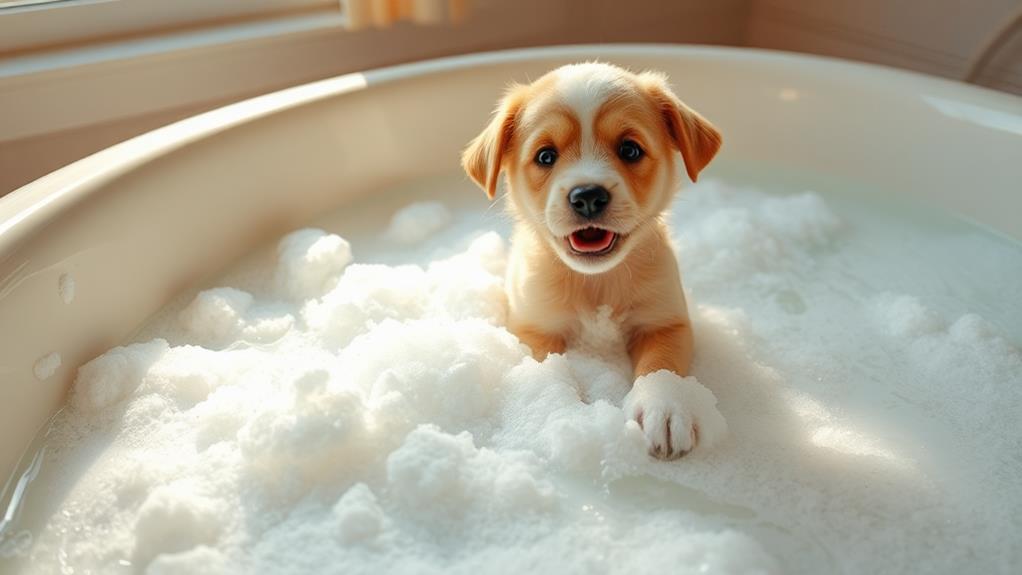
Bathing your puppy can be a fun bonding experience, but it’s essential to use the right techniques to keep them comfortable and safe.
Start by gathering all your supplies: a gentle puppy shampoo, a non-slip mat, towels, and a brush. Choose a warm, quiet area for the bath, like a bathtub or a large sink, and make sure the water temperature is lukewarm.
Before you begin, brush your puppy’s coat to remove any tangles and loose fur.
When you’re ready, wet your puppy’s body gently using a cup or a handheld showerhead, avoiding their eyes and ears. Apply a small amount of shampoo, lathering it up while speaking softly to reassure them. Rinse thoroughly, ensuring no soap residue remains, as it can irritate their skin.
Keep the bathing session short to prevent stress, and reward your puppy with treats and praise afterward.
If they seem anxious, take breaks and keep your movements calm and steady.
With these techniques, you’ll make bath time a pleasant experience that strengthens your bond, ensuring your puppy feels loved and secure during the process.
Post-Bath Care Tips
After you’ve successfully bathed your puppy, the next step is to ensure they dry off properly and feel comfortable.
It’s essential to keep their well-being in mind during this process. Here are some post-bath care tips that can help you provide the best experience for your furry friend:
- Use a soft towel: Gently pat your puppy dry with a soft, absorbent towel. Avoid vigorous rubbing, as it can irritate their skin and fur.
- Keep them warm: After a bath, your puppy might feel chilly. Make sure to wrap them in a blanket or allow them to cuddle up in a warm area of your home.
- Reward with treats: After their bath, give your puppy a treat or some playtime. This positive reinforcement helps them associate bath time with a pleasant experience.
Frequently Asked Questions
Can I Use Human Shampoo on My Puppy?
You shouldn’t use human shampoo on your puppy. It can irritate their skin and disrupt their natural oils. Instead, choose a gentle, puppy-specific shampoo designed to keep their coat clean and healthy.
What if My Puppy Hates Bath Time?
If your puppy hates bath time, try making it fun! Use toys, treats, and positive reinforcement. Gradually introduce water and keep sessions short. Patience and encouragement will help your puppy feel more comfortable.
Are There Breed-Specific Bathing Needs?
Ever wonder if your puppy’s breed affects its bathing routine? Some breeds, like Poodles, need more frequent grooming, while others, like Bulldogs, don’t. Tailoring your approach ensures your furry friend stays clean and comfortable!
How Do I Dry My Puppy After a Bath?
After a bath, gently towel-dry your puppy to remove excess water. You can also use a low-heat blow dryer, keeping it at a safe distance, ensuring your pup stays comfortable and warm throughout the drying process.
Can I Bathe My Puppy Too Often?
Yes, you can bathe your puppy too often. Overbathing can strip their skin of natural oils, leading to dryness and irritation. It’s best to bathe them only when necessary to keep their skin healthy.
Conclusion
Just like a young tree needs the right amount of water and sunlight to grow strong, your puppy requires careful bathing to thrive. Bathing too often can strip their delicate skin, while neglect can lead to discomfort. By paying attention to their needs and using gentle products, you’re nurturing a beautiful bond. So, when in doubt, remember: a little love and patience go a long way in helping your puppy flourish into a happy, healthy companion.

Carlos Rodriguez is the Senior Product Reviewer at DogShampooReviews.com. With over 15 years of experience in canine grooming and skincare, Carlos brings a wealth of knowledge and passion to our team. His journey began at a young age, growing up on a family farm where he was surrounded by dogs of all breeds and sizes. This early exposure ignited his lifelong dedication to animal care and well-being.
Professional Background
Certified Dog Groomer: Carlos is a certified professional groomer who has worked in some of the top grooming salons across the country. His expertise spans various grooming techniques suitable for different breeds and coat types.
Canine Skincare Specialist: Recognizing the importance of skin health in dogs, Carlos pursued additional certifications in dermatological care for canines, specializing in treating skin conditions and allergies.
Product Testing Expert: With a meticulous eye for detail, Carlos rigorously tests dog shampoos and grooming products, evaluating them on ingredients, efficacy, safety, and overall quality.
Passion for Dogs
Carlos’s love for dogs goes beyond his professional life. He is an active volunteer at local animal shelters, providing grooming services to help adoptable dogs look and feel their best. His own rescued dogs, Bella and Rocky, are often the first to try out new products, ensuring his reviews come from genuine experiences.
Why Trust Carlos
Unbiased Reviews: Committed to integrity, Carlos ensures all his reviews are honest and based on thorough testing.
Expert Insight: His extensive knowledge allows him to break down complex information into understandable advice for dog owners.
Community Engagement: Carlos actively engages with our readers, answering questions and providing personalized recommendations.