
Giving your dog a bath at home can be simple and fun. Start by gathering your supplies, including dog shampoo and towels. Choose a suitable location with non-slip footing and lukewarm water. Wet your dog’s coat slowly, avoiding their ears. Apply the shampoo gently, massaging it in without irritating sensitive areas. Rinse thoroughly with warm water to remove all soap. Use absorbent towels to dry your dog, and consider offering treats for good behavior. By creating a positive experience, you can make bath time enjoyable. Ready to discover tips on establishing a regular bathing schedule?
Key Takeaways
- Gather essential supplies like dog shampoo, towels, a brush, and treats to create a positive bathing experience.
- Choose a suitable location with non-slip surfaces and easy access to water for comfort and safety.
- Use lukewarm water to wet the dog thoroughly, starting from the neck down to prevent overwhelming them.
- Apply dog-specific shampoo evenly while avoiding sensitive areas, and rinse thoroughly with warm water to remove all soap.
- Dry the dog gently with towels or a low setting hairdryer, and use treats and praise to reinforce a positive experience.
Gather Your Supplies
Before you dive into giving your dog a bath, it’s essential to gather all the necessary supplies. Start by collecting a good-quality dog shampoo; opt for a formula that suits your dog’s coat type and skin sensitivity. Remember, human shampoo can irritate your dog’s skin, so stick to products made specifically for them.
Next, grab a brush to remove any tangles or mats before the bath. This makes the bathing process smoother and more enjoyable for both of you. You’ll also need towels—one for drying your dog and another to keep the area clean.
Don’t forget a non-slip mat for the bathing area. This helps your dog feel secure and prevents any accidental slips. A cup or a gentle spray nozzle is handy for rinsing away suds, ensuring you get all the shampoo out without overwhelming your pup.
Lastly, keep treats nearby. They’ll help reward your dog throughout the process, making bath time a more positive experience.
With your supplies ready, you’ll be well-equipped to pamper your furry friend in a way that shows your dedication to their well-being.
Prepare Your Dog
Preparing your dog for bath time is just as important as gathering your supplies. First, ensure your dog’s coat is free of tangles and mats. Gently brush them to remove any debris and loosen dirt. This step not only helps your dog feel more comfortable during the bath but also allows the shampoo to work more effectively on their skin and coat.
Next, it’s essential to check your dog’s temperament. If they’re anxious or fearful about baths, take a moment to calm them. Speak in soothing tones, and offer treats to create positive associations with the bathing experience. If your dog enjoys toys, consider bringing one along to keep them engaged.
Also, take a moment to trim their nails if needed. Long nails can snag during a bath, leading to discomfort.
Lastly, make sure your dog has had a chance to relieve themselves outside. This way, they won’t be distracted by the urge to go while you’re trying to focus on bathing them.
Choose the Right Location
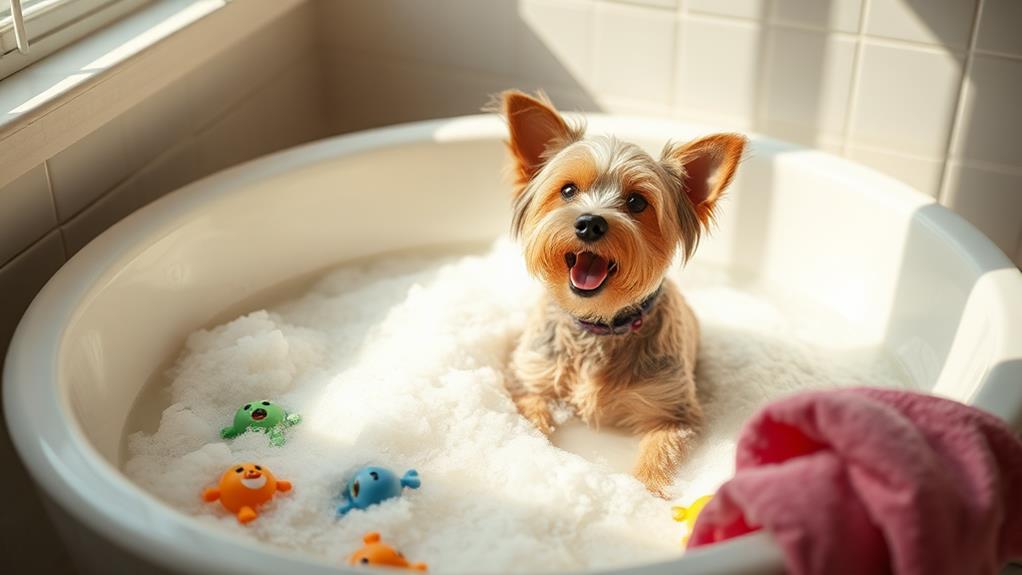
Choosing the right location for your dog’s bath can make a world of difference in their comfort and your convenience.
First, consider the size of your dog and the space you need. If you’ve got a small dog, the sink or bathtub might be perfect, but larger breeds may require a more spacious area.
Next, think about the mess. You’ll want a place where water can flow freely without causing damage. A bathroom or laundry room is often ideal, as these areas are typically designed to handle spills.
If you have outdoor access, bathing your dog outside on a warm day can be refreshing for both of you!
Also, consider your dog’s personality. If they’re anxious, a quieter, enclosed space might help them feel more secure. On the other hand, if they’re playful and love the outdoors, an outdoor bath could turn into a fun experience.
Lastly, ensure you have easy access to all your supplies, like shampoo and towels, within arm’s reach.
This preparation will keep you focused on giving your dog a positive bathing experience, making it a rewarding time for both of you!
Use the Appropriate Water Temperature
Using the right water temperature is crucial for making bath time comfortable and enjoyable for your dog. Generally, lukewarm water is your best bet. It’s gentle on their skin and won’t shock them like cold water might. Conversely, hot water can lead to discomfort or even burns, so always test the temperature before you start.
A simple way to check is to use your wrist—if it feels comfortable to you, it’s likely fine for your pup. Remember, dogs have sensitive skin, and what feels warm to you might be too hot for them.
If your dog tends to get anxious during baths, ensuring the water isn’t too cold or hot can help ease their nerves. You want to create a soothing experience, making it easier for both of you.
If you’re using a hose, be extra cautious, as outdoor temperatures can vary significantly. Adjust the temperature accordingly.
Wet Your Dog Thoroughly
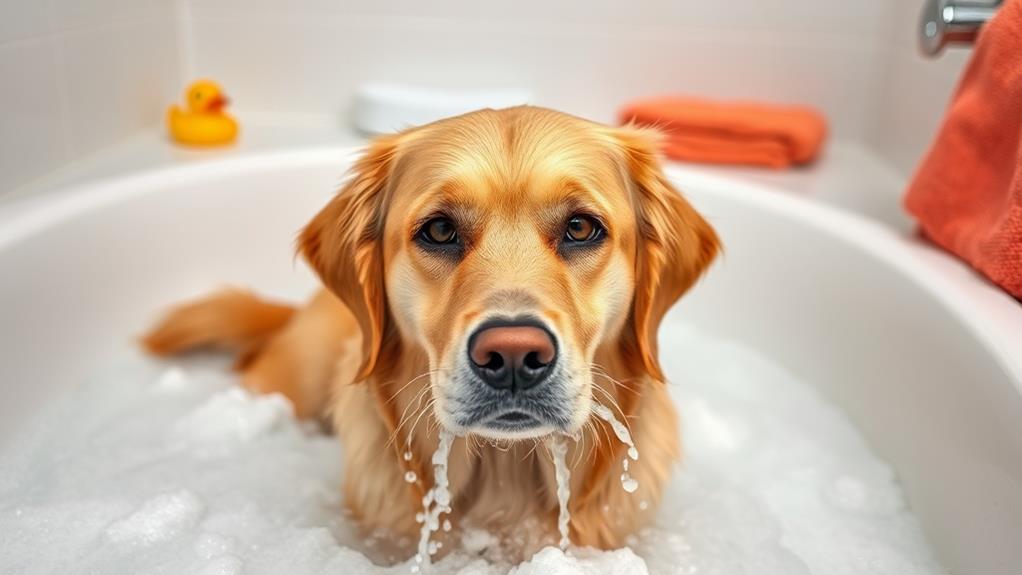
To get your dog clean, start by using lukewarm water to ensure it’s comfortable.
Begin wetting your dog from the neck down, avoiding the ears to prevent any discomfort.
This method helps you wash away dirt while keeping bath time a positive experience for your furry friend.
Use Lukewarm Water
Lukewarm water is ideal for giving your dog a bath, as it helps ensure a comfortable experience.
Using water that’s too hot or too cold can be stressful for your furry friend, so aim for that perfect middle ground.
Here’s how you can prepare:
- Test the Temperature: Before wetting your dog, run some water and check it with your wrist. It should feel warm but not hot.
- Adjust as Needed: If it feels too cold or hot, adjust the temperature until it’s just right. Your goal is to create a soothing environment.
- Keep It Steady: Once you’ve got the right temperature, maintain it throughout the bath. This consistency helps your dog relax and enjoy the process.
Start From Neck
How do you ensure your dog gets a thorough bath without overwhelming them? Start by wetting your dog from the neck down. This approach helps you control the water flow and keeps your dog calm as they adapt to the sensation.
Using a handheld sprayer or a cup, gently wet their fur, making sure to soak it evenly. Focus on the neck area first, as this helps to establish a routine. Move slowly and speak soothingly to reassure your furry friend.
Don’t rush; take your time to ensure every part of their coat is wet. Pay attention to any sensitive spots and adjust the water pressure accordingly.
Once you’ve thoroughly wet the neck and body, you can gradually work your way down to their legs and tail. This method allows your dog to feel more comfortable and reduces the chances of them becoming anxious.
Avoid Water in Ears
While you’re wetting your dog’s body, it’s important to keep water out of their ears. Water trapped in a dog’s ears can lead to infections and discomfort, so take extra care during bath time.
Here are three effective tips to help you avoid this issue:
- Use a Cup or Spray Nozzle: Instead of pouring water directly over your dog, opt for a cup or a gentle spray nozzle. This allows you to control the direction and flow of water, minimizing the chance of it splashing into their ears.
- Angle Their Head: If your dog is comfortable, gently tilt their head away from the water source. This simple adjustment can help keep their ears dry while you wet the rest of their body.
- Focus on the Body: Concentrate on wetting your dog’s back and sides first. Avoid the head area until you’ve rinsed off the soap or shampoo, decreasing the likelihood of water getting in their ears.
Apply Dog Shampoo Properly
Now that your dog’s wet, it’s time to choose the right shampoo for their coat type.
Once you’ve got that, apply it evenly and gently to ensure every inch gets clean.
This step’s crucial for keeping your pup’s skin healthy and their fur looking great.
Choose the Right Shampoo
Choosing the right shampoo for your dog is crucial to keeping their coat healthy and clean.
It’s essential to select a product that suits your dog’s specific needs, ensuring a pleasant bathing experience for both of you.
Here’s what you should consider when picking a shampoo:
1. Dog’s Skin Type: Take note of whether your dog has sensitive, dry, or oily skin.
Hypoallergenic shampoos are great for sensitive skin, while moisturizing formulas work well for dry coats.
2. Coat Type: Different coats require different care.
For instance, long-haired breeds benefit from detangling shampoos, while short-haired dogs may need a basic cleansing formula.
3. Age and Health: Puppies and older dogs often have unique requirements.
Look for shampoos designed for their age group, and if your dog has any skin conditions, consult your vet for recommendations.
Apply Evenly and Gently
After selecting the right shampoo for your dog, it’s time to focus on how to apply it. Start by wetting your dog thoroughly with warm water, making sure to avoid their face.
Once your pup is prepped, squeeze a generous amount of shampoo into your hands. Begin at the neck and work your way down the body, applying the shampoo evenly. Use your fingers to gently massage it into the fur, ensuring you reach the skin without being too rough.
Pay special attention to areas that tend to gather dirt, like the paws, belly, and under the tail. Your gentle touch not only helps distribute the shampoo but also makes the experience more enjoyable for your dog.
Avoid getting shampoo in their eyes or ears; if you accidentally do, rinse it off right away with water. As you massage, you’ll notice your dog relaxing, which is a great sign!
Maintain a calm demeanor, and talk to them softly to reassure them. Remember, bathing is a bonding experience, so make it as pleasant as possible.
Once you’ve lathered up, it’s time for the rinse!
Rinse Out All Soap
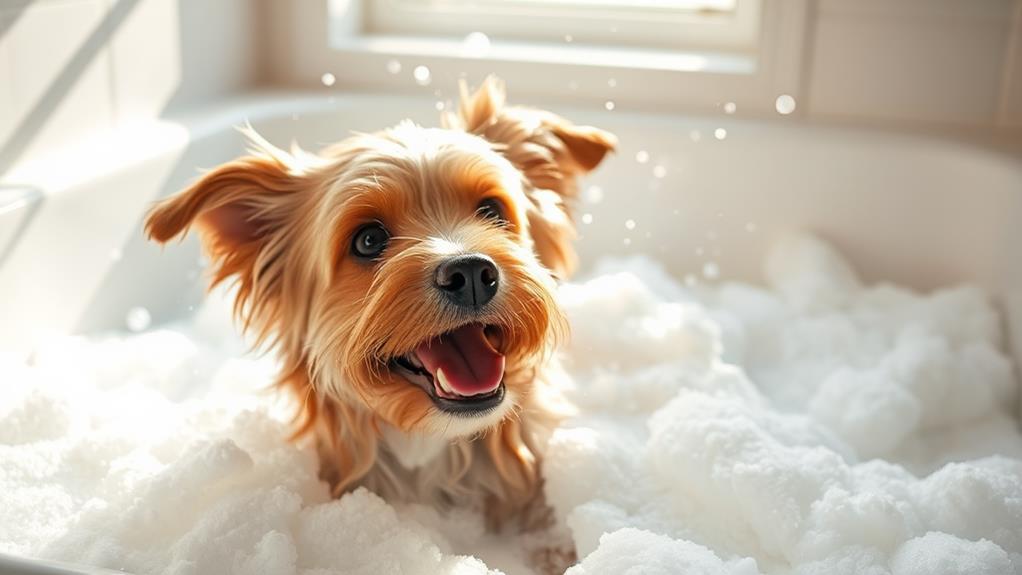
Once you’ve lathered your dog with soap, it’s essential to rinse out all the suds thoroughly. Residual soap can irritate your dog’s skin, so getting this step right is crucial. Here’s how to ensure you rinse effectively:
- Use Warm Water: Start with warm water, as this is more comfortable for your dog and helps to dissolve the soap better. Avoid hot water, which can be uncomfortable or even harmful.
- Thoroughly Rinse Each Section: Begin at your dog’s neck and work your way down. Focus on areas where soap may hide, like under the belly, behind the ears, and between the toes. A handheld showerhead can make this easier.
- Check for Residue: After rinsing, feel your dog’s coat. It should feel clean and not slippery. If there’s any slickness, continue rinsing until the soap is completely gone.
Dry Your Dog Effectively
With your dog rinsed and free of soap, the next step is to dry them effectively. First, grab a few absorbent towels. Start by gently wrapping one towel around your dog, pressing it against their fur to soak up excess water. Avoid rubbing, as this can tangle their fur and irritate their skin.
If your dog doesn’t mind noise, consider using a hairdryer on a low, cool setting. Keep it at a safe distance to prevent overheating their skin. Move it around constantly to avoid concentrating heat in one spot. Remember to keep an eye on your dog’s comfort level; if they seem anxious, it’s best to stick with towels.
For dogs with longer coats, using a slicker brush can help separate and dry the fur more effectively. Brush gently while you towel dry, ensuring you’re not pulling too hard.
If your dog enjoys the outdoors, a quick romp in a warm, sunny spot can help them air-dry naturally. Just keep an eye on them to ensure they don’t roll in anything messy afterward.
With patience and care, your dog will be dry, comfortable, and looking their best in no time!
Reward and Praise Your Dog
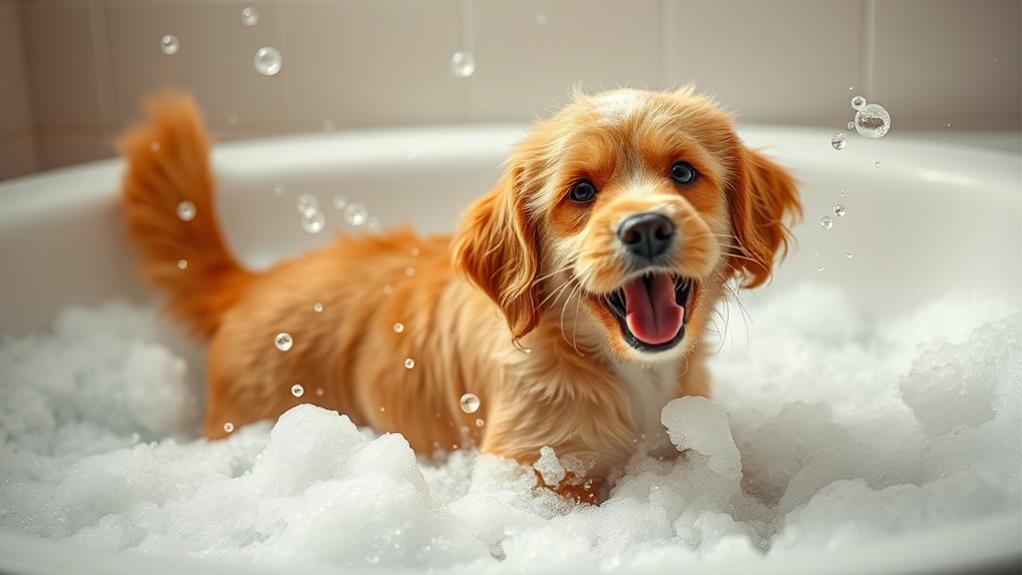
Throughout the bathing process, it’s important to reward and praise your dog to create a positive association with bath time. Dogs thrive on positive reinforcement, so your encouragement will make them feel more comfortable and relaxed during their bath.
Here are three effective ways to reward and praise your dog while bathing:
- Verbal Praise: Use a cheerful tone to praise your dog frequently. Simple phrases like “Good boy!” or “You’re doing great!” can boost their confidence and make them feel loved.
- Treats: Keep some small, tasty treats nearby. After a successful rinse or when they remain calm, offer a treat to reinforce good behavior. This encourages them to associate bath time with something enjoyable.
- Gentle Affection: Don’t underestimate the power of physical affection. Petting your dog or giving them a gentle rub can reassure them and strengthen your bond.
Maintain a Regular Bath Schedule
To keep your dog clean and healthy, you need to establish a regular bath schedule.
Depending on your dog’s breed and activity level, you should determine how often they need a bath.
Additionally, keep an eye on their skin condition to adjust the frequency if necessary.
Determine Bath Frequency
Establishing a regular bath schedule for your dog is essential for their health and cleanliness. A consistent bathing routine helps keep your furry friend fresh, reduces odors, and can even prevent skin issues.
Here’s how to determine the right frequency for your dog:
- Coat Type: Dogs with longer or thicker coats may need baths every 4-6 weeks, while short-haired breeds can often go longer, around 6-8 weeks.
- Activity Level: If your dog loves outdoor adventures or plays in muddy areas, they might require more frequent baths to stay clean and comfortable.
- Skin Sensitivity: Dogs with sensitive skin or allergies may need special attention. Consult your vet to establish a bathing routine that best suits their needs.
Monitor Skin Condition
Monitoring your dog’s skin condition is a key part of maintaining a regular bath schedule. By keeping a close eye on your furry friend’s skin, you’ll better understand when it’s time for a bath and how often they need one. Look for signs like dryness, itching, or redness, as these might indicate that your dog needs a little extra care.
Pay attention to the areas between their toes, around their ears, and under their collar, where skin can easily become irritated. If you notice any unusual changes, it’s wise to adjust your bathing routine accordingly or consult your vet for advice.
Regular baths can help remove dirt and allergens, but overbathing can strip essential oils and lead to dry skin. Create a schedule that works for both you and your dog, typically every 4 to 6 weeks, while adjusting based on your dog’s activity level and skin condition.
Keeping your dog clean not only improves their overall health but also strengthens the bond you share. Ultimately, being attentive to their skin condition ensures your dog enjoys a comfortable, happy life.
Frequently Asked Questions
How Often Should I Bathe My Dog?
You should typically bathe your dog every four to six weeks. However, consider their breed, coat type, and lifestyle. If they get particularly dirty or smelly, don’t hesitate to give them a bath sooner!
Can I Use Human Shampoo on My Dog?
You shouldn’t use human shampoo on your dog. It can irritate their skin or strip natural oils. Instead, opt for a gentle, dog-specific shampoo to keep their coat healthy and clean. Your pup will appreciate it!
What if My Dog Hates Baths?
If your dog hates baths, think of it as a dance; you’ll need patience and rhythm. Use treats, toys, and positive reinforcement to transform bath time into a fun, enjoyable experience for both of you.
How Do I Clean My Dog’s Ears During a Bath?
To clean your dog’s ears during a bath, gently use a damp cloth or cotton ball, wiping around the outer ear. Avoid going too deep, and reward your pup afterward to keep it positive.
Are There Specific Shampoos for Different Dog Breeds?
Choosing the right shampoo is like picking the perfect outfit; it enhances your dog’s unique qualities. Different breeds have varying coat types and skin needs, so always select a shampoo tailored specifically for your dog’s breed.
Conclusion
Bathing your dog at home can be a fun bonding experience for both of you. Did you know that 60% of dog owners bathe their pets at least once a month? Regular baths not only keep your pup clean but also help maintain their skin health. So, keep your supplies handy, stay patient, and remember to reward your furry friend with praise and love. With a little practice, bath time will become a breeze for both of you!

Carlos Rodriguez is the Senior Product Reviewer at DogShampooReviews.com. With over 15 years of experience in canine grooming and skincare, Carlos brings a wealth of knowledge and passion to our team. His journey began at a young age, growing up on a family farm where he was surrounded by dogs of all breeds and sizes. This early exposure ignited his lifelong dedication to animal care and well-being.
Professional Background
Certified Dog Groomer: Carlos is a certified professional groomer who has worked in some of the top grooming salons across the country. His expertise spans various grooming techniques suitable for different breeds and coat types.
Canine Skincare Specialist: Recognizing the importance of skin health in dogs, Carlos pursued additional certifications in dermatological care for canines, specializing in treating skin conditions and allergies.
Product Testing Expert: With a meticulous eye for detail, Carlos rigorously tests dog shampoos and grooming products, evaluating them on ingredients, efficacy, safety, and overall quality.
Passion for Dogs
Carlos’s love for dogs goes beyond his professional life. He is an active volunteer at local animal shelters, providing grooming services to help adoptable dogs look and feel their best. His own rescued dogs, Bella and Rocky, are often the first to try out new products, ensuring his reviews come from genuine experiences.
Why Trust Carlos
Unbiased Reviews: Committed to integrity, Carlos ensures all his reviews are honest and based on thorough testing.
Expert Insight: His extensive knowledge allows him to break down complex information into understandable advice for dog owners.
Community Engagement: Carlos actively engages with our readers, answering questions and providing personalized recommendations.