
After your dog's swim, it's important to give them a proper bath to wash off any chlorine or debris. Start by checking their condition for any signs of discomfort or skin irritation. Gather your bath supplies, including dog-specific shampoo and towels. Brush their coat to remove loose hair and tangles before rinsing off any dirt. Use lukewarm water and apply shampoo evenly, focusing on their underbelly and paws. Rinse thoroughly to eliminate any residue. Dry your dog gently with a towel, rewarding them afterward with praise or treats. You'll find even more tips for a successful bath ahead!
Key Takeaways
- Assess your dog's condition post-swimming, checking for discomfort, irritation, and any trapped water in ears or paws.
- Gather necessary supplies like dog shampoo, towels, and a non-slip mat for a smooth bathing process.
- Rinse off debris thoroughly before bathing to remove dirt, sand, and algae from your dog's coat.
- Use lukewarm water and dog-specific shampoo, applying it evenly and massaging gently into the coat.
- Dry your dog with towels, and monitor for skin irritation afterward, rewarding them with treats for positive reinforcement.
Assess Your Dog's Condition
Before you dive into bathing your dog, take a moment to assess their condition. Start by checking for any signs of discomfort or stress. Look for unusual behavior—maybe they're panting heavily or hiding. If your dog seems anxious, it's best to give them a little time to relax before the bath.
Next, examine their fur and skin. If you notice any tangles, mats, or debris, it might require extra attention during the bath. Look for any signs of irritation, such as redness or swelling, which could indicate a need for a vet's visit.
Also, check their ears and paws. After swimming, water can get trapped in their ears, leading to potential infections. If their paws are muddy or sandy, a quick rinse before the main bath can help.
Gather Bathing Supplies
Once you've assessed your dog's condition, it's time to gather your bathing supplies to ensure a smooth process.
Start with a high-quality dog shampoo designed for your pet's coat type. Avoid using human shampoo, as it can irritate their skin. If your dog has any specific skin issues, consult your veterinarian for a suitable product.
Next, grab a brush or comb to remove tangles and loose fur before the bath. This step helps you avoid any discomfort during washing.
You'll also need a towel or two for drying off afterward, as dogs tend to shake water everywhere!
Consider using a non-slip mat if you're bathing your dog in a tub or sink, as it'll help prevent slipping.
Have a cup or handheld sprayer on hand for rinsing. If your dog tends to become anxious during baths, keep a favorite toy or treat nearby to make the experience more enjoyable for them.
Lastly, ensure you have a brush for post-bath grooming.
With all these supplies ready, you're set to give your dog a refreshing bath after their swim!
Choose the Right Location
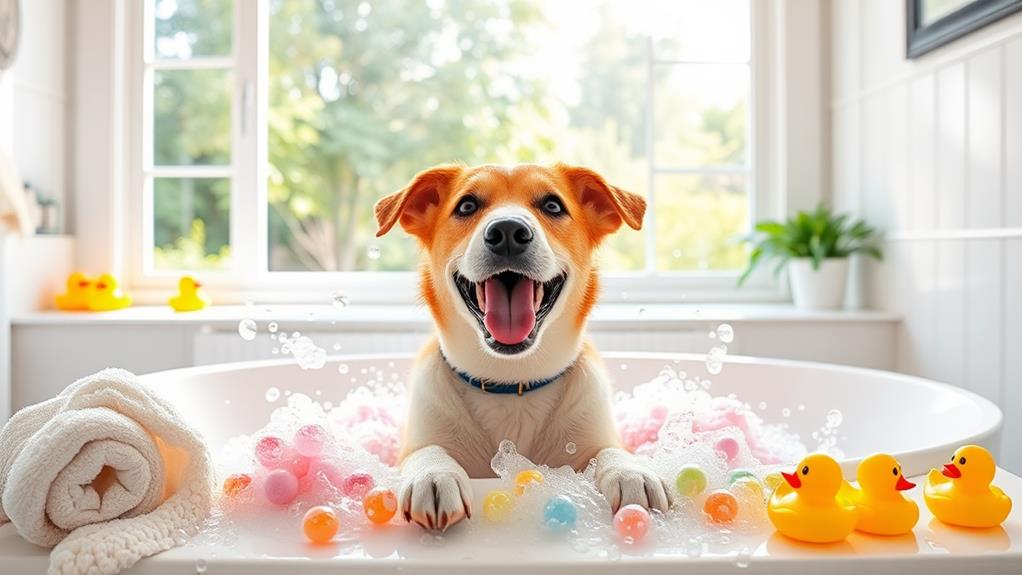
Selecting the right location for your dog's bath can make all the difference in the experience. First, consider an area that's easy to clean, like a bathroom or laundry room. You want a space with tile or linoleum flooring, which can handle splashes and muddy paws.
If your dog's small enough, the sink can be a convenient option, while larger breeds might need a bathtub or outdoor setup.
Next, make sure the location is comfortable for both you and your dog. If you're bathing them indoors, keep the room warm to prevent them from getting chilled.
If you choose to bathe outside, pick a shaded spot on a warm day. It's also wise to have a non-slip mat to help your dog feel secure and prevent any accidents.
Brush Before Bathing
Brushing your dog before the bath helps remove loose fur, dirt, and debris, making the bathing process smoother.
It's a simple step that not only prepares your pup for washing but also strengthens your bond with them. By taking a few minutes to brush, you ensure that the bath is more effective and enjoyable for both of you.
Here are some benefits of brushing your dog before bathing:
- Removes loose hair: This prevents excess shedding in the bath.
- Gets rid of dirt: You'll help eliminate mud and grime collected during swimming.
- Untangles knots: Brushing can prevent painful snags while washing.
- Stimulates the skin: It increases blood circulation, promoting healthy skin and coat.
- Creates a calming experience: It helps relax your dog before the bath, making them more cooperative.
Rinse Off Debris
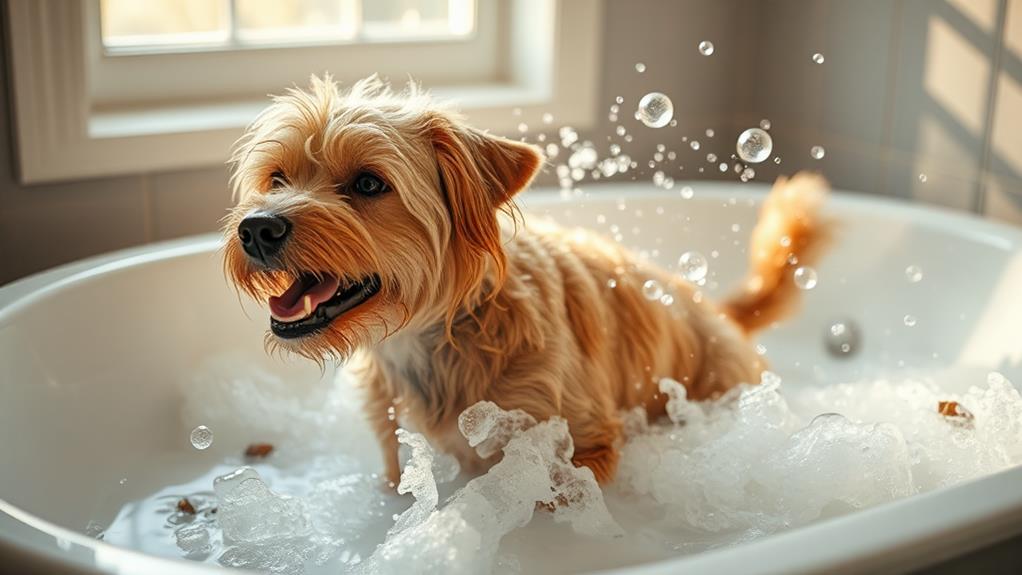
Rinsing off debris is a crucial step after your dog has been swimming. Whether your furry friend splashed around in a lake, pool, or ocean, they likely picked up dirt, sand, or algae. This debris can irritate their skin or mix with the chlorine or saltwater, potentially causing discomfort.
Start by taking your dog to a designated rinsing area, like your backyard or a pet-washing station. A gentle spray nozzle can help you control the water flow, ensuring a comfortable experience for your pup.
Begin rinsing your dog's paws, legs, and belly, where most debris tends to accumulate. Don't forget to check around their ears, tail, and underbelly, as these areas can trap sand or dirt.
While rinsing, speak soothingly to your dog to help them relax. If your dog enjoys treats, offer a few to create positive associations with the rinsing process.
Use Lukewarm Water
When bathing your dog, using lukewarm water is essential for their comfort and well-being. Cold water can be shocking, while hot water might irritate their skin. Aim for a temperature that feels comfortably warm to the touch. This simple step ensures your dog enjoys the bath, making the experience less stressful for both of you.
Here are some tips to help you achieve the perfect lukewarm water:
- Test the Temperature: Before starting, dip your wrist in the water to gauge its warmth.
- Adjust as Needed: If your dog seems uncomfortable, adjust the water temperature immediately.
- Keep It Steady: Avoid drastic temperature changes by maintaining a consistent flow of lukewarm water.
- Watch for Signs: Pay attention to your dog's body language; if they seem restless or anxious, you might need to change the temperature.
- Use a Hose or Showerhead: A gentle spray from a hose or showerhead can help maintain a steady temperature while rinsing.
Apply Dog Shampoo
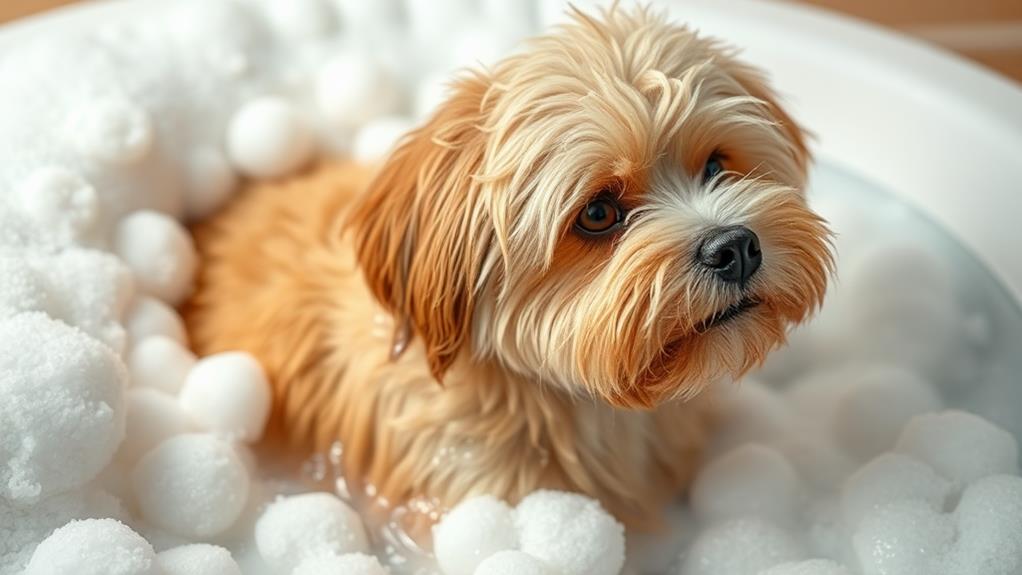
Now that you've got your dog wet, it's time to apply the right shampoo.
Choose a formula that suits your dog's coat type and skin sensitivity, making sure to use it evenly and thoroughly.
This will help remove any lingering chlorine or saltwater, leaving your pup clean and fresh.
Choose the Right Shampoo
Choosing the right shampoo for your dog is crucial after a day of swimming, as it helps remove chlorine, salt, and dirt from their coat. Not all shampoos are created equal, so you want to pick one that suits your dog's specific needs.
Here are some factors to consider when selecting the perfect shampoo:
- Gentle Formulas: Look for shampoos that are specifically designed for dogs, as they're less likely to irritate their skin.
- pH-Balanced: Choose a shampoo that's pH-balanced to keep your dog's skin healthy and avoid dryness.
- Deodorizing Properties: A good dog shampoo can help eliminate odors, leaving your pet smelling fresh.
- Moisturizing Ingredients: Consider shampoos with natural oils or aloe vera to hydrate and nourish their coat.
- Hypoallergenic Options: If your dog has sensitive skin, hypoallergenic shampoos can prevent allergic reactions.
With these criteria in mind, you'll be able to select a shampoo that not only cleans your dog effectively but also contributes to their overall skin and coat health.
Your furry friend deserves the best, so take the time to choose wisely!
Apply Evenly and Thoroughly
To give your dog a proper wash after swimming, start by applying the shampoo evenly across their wet coat. This ensures that every part of their fur gets the cleansing it needs. Squeeze a generous amount of dog shampoo into your hands, then gently rub it together before working it into your dog's coat.
Focus on areas that might retain dirt or odor, like the underbelly, paws, and around the ears. As you apply the shampoo, use your fingers to massage it in, ensuring it reaches the skin beneath the fur. This not only cleans but also stimulates your dog's skin, promoting a healthy coat.
Be mindful of sensitive areas; you want to be gentle but thorough. Rinse your dog thoroughly with warm water, making sure no shampoo residue remains. Leftover product can irritate their skin, so take the time to ensure a complete rinse.
Lastly, consider rewarding your dog with praise or a treat during and after the bath. This promotes a positive association with bathing, making it easier for both of you next time. With patience and care, you'll have a clean, happy pup ready for more adventures!
Massage and Lather
After your dog has enjoyed a refreshing swim, it's essential to give them a thorough massage and lather during their bath. This not only helps to clean their coat but also provides a soothing experience that can make bath time more enjoyable for both of you.
Start by applying the dog shampoo evenly, then use your hands to work it into a rich lather. Focus on areas where dirt and debris tend to accumulate, like the paws, belly, and behind the ears.
Here are some tips to keep in mind:
- Use gentle, circular motions: This helps to stimulate blood flow and relax your dog.
- Pay attention to knots: If you encounter any tangles, gently work them out with your fingers.
- Be mindful of sensitive areas: Dogs can have sensitive spots; be gentle around their face and underbelly.
- Keep the atmosphere calm: Softly talk to your dog to reassure them throughout the process.
- Praise and reward: Offering treats during and after the bath can create a positive association with bath time.
With your loving touch, bath time can become a cherished routine!
Rinse Thoroughly
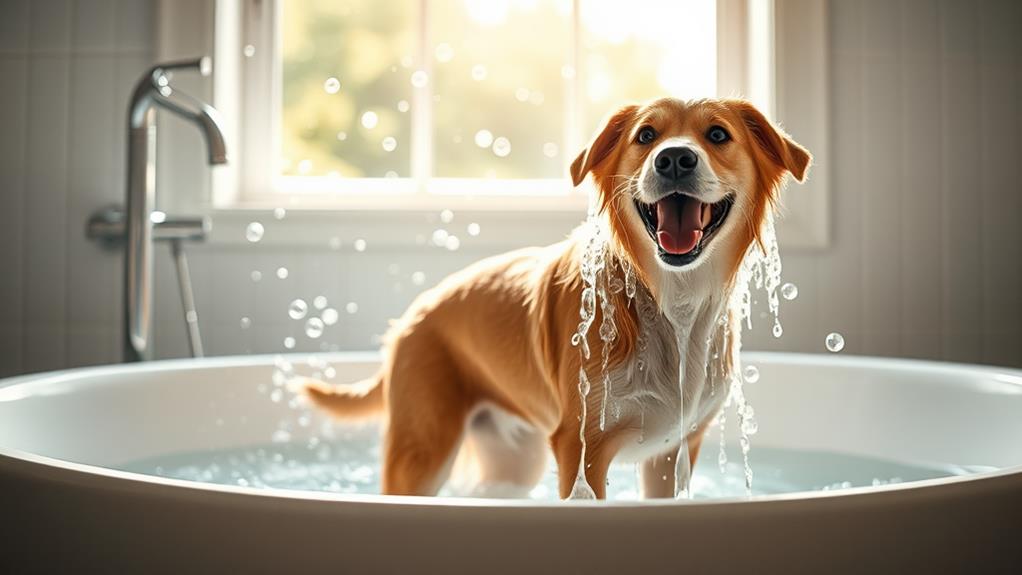
Rinsing your dog thoroughly after swimming is crucial to remove any chlorine, salt, or debris that could irritate their skin.
Make sure the water temperature is comfortable, as this will help keep your pup relaxed during the process.
You'll also want to have the right tools on hand to ensure an effective rinse, making the task easier for both you and your dog.
Importance of Rinsing
Your dog's coat can trap chlorine, salt, and other chemicals from swimming, making thorough rinsing essential. If you skip this step, you risk skin irritations, dryness, and discomfort for your furry friend.
Rinsing not only cleans away harmful residues but also helps maintain the natural oils in your dog's coat, keeping it healthy and shiny.
Here are some key reasons why rinsing is so important:
- Prevents Skin Issues: Rinsing removes irritants that can cause itching or rashes.
- Eliminates Odors: It helps eliminate any unpleasant smells from swimming in pools or salty waters.
- Maintains Coat Health: Thorough rinsing helps retain your dog's natural oils, promoting a soft and shiny coat.
- Reduces Allergens: Rinsing washes away pollen and other allergens that might cling to your dog's fur.
- Improves Comfort: A clean coat feels better for your dog, allowing them to enjoy their post-swim time.
Water Temperature Considerations
When it comes to rinsing your dog after swimming, the temperature of the water plays a crucial role in ensuring a thorough and comfortable wash. Using lukewarm water is ideal; it helps remove chlorine, salt, and other irritants without shocking your pet.
Cold water can be uncomfortable and may even make your dog reluctant to cooperate, while hot water can strip away natural oils, leading to dry skin.
Before starting the rinse, check the water temperature with your wrist to make sure it feels just right. You want your dog to feel relaxed and at ease during the process. If you notice your dog shivering or trying to escape, it's a sign the water may be too cold. Conversely, if they seem restless or panting, the water might be too warm.
As you rinse, aim to cover all areas, focusing on the paws, belly, and any areas where dirt or debris tends to collect. This attention to detail ensures a thorough clean while keeping your dog comfortable throughout the experience.
Tools for Effective Rinsing
Having the right tools can make rinsing your dog after swimming much easier and more effective. When your furry friend jumps in the water, they often come out covered in sand, salt, or chlorine.
To ensure a thorough rinse, gather some essential items before you start. Here's what you'll need:
- Hose with a Spray Nozzle: A hose allows you to control water pressure and reach all areas of your dog.
- Dog Shampoo: Choose a gentle, dog-friendly shampoo to help remove any lingering odors and residues.
- Soft Brush: A soft brush can help distribute the shampoo evenly and remove any loose hair or debris.
- Towels: Keep a few towels handy to dry your dog afterward and prevent them from shaking off water everywhere.
- Non-Slip Mat: Placing a mat in your bathing area can help your dog feel secure and prevent slips.
With these tools in hand, you'll be ready to give your dog the thorough rinse they deserve after a fun swim.
It'll make the process smoother for both of you, ensuring your pup feels fresh and clean!
Condition for Extra Care
Swimming can be a blast for dogs, but certain conditions call for extra care during bath time. If your dog has spent time in chlorinated pools or saltwater, it's vital to rinse them thoroughly. Chlorine can irritate their skin and eyes, while salt can lead to dryness and discomfort.
Pay close attention to sensitive areas, like the ears, as water can get trapped there, potentially leading to infections.
If your dog shows signs of skin irritation—redness, excessive scratching, or unusual odor—consider using a gentle, hypoallergenic dog shampoo. This extra step can soothe their skin and help prevent any adverse reactions.
Additionally, if your dog has long or thick fur, be prepared for tangles and mats that might've formed after swimming. Take your time to gently work through these while bathing, ensuring you don't cause any discomfort.
Drying Techniques
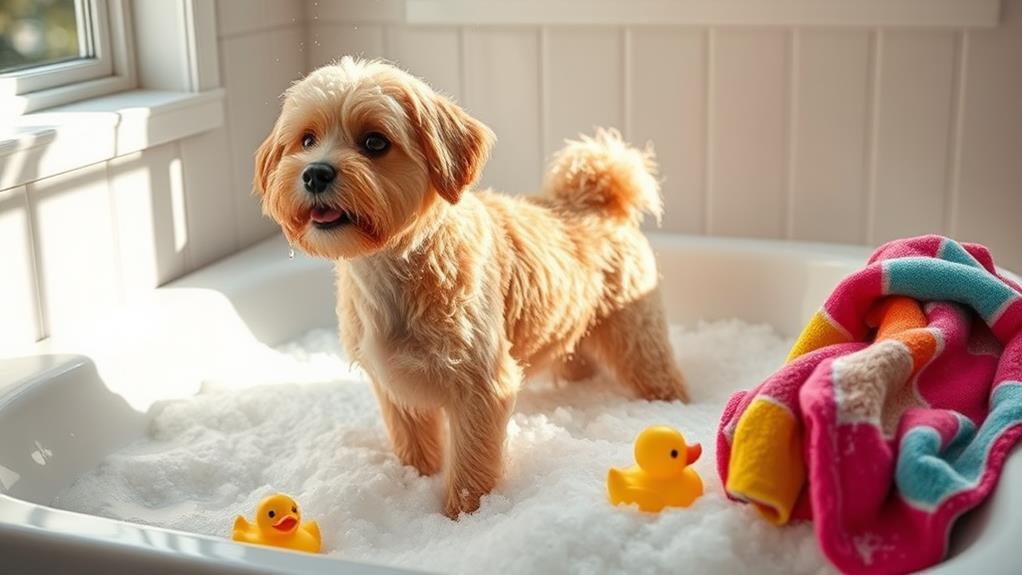
Once your dog is clean, it's time to focus on drying.
You can use towel drying methods to absorb excess water, but don't forget about air drying tips to help your pup dry off naturally.
Each technique has its benefits, so let's explore the best ways to keep your dog comfortable and dry.
Towel Drying Methods
After your dog enjoys a refreshing swim, towel drying becomes essential to keep them comfortable and prevent chills.
Using the right towel drying techniques can make all the difference in ensuring your furry friend feels cozy and loved after their dip in the water.
Here are some effective methods to consider:
- Choose the Right Towel: Opt for a large, absorbent towel made of microfiber or cotton for maximum moisture absorption.
- Pat, Don't Rub: Gently pat your dog's fur instead of rubbing it. This helps absorb water without causing tangles or irritation.
- Focus on Key Areas: Pay extra attention to areas like the ears, belly, and paws, where water tends to linger.
- Use a Second Towel: If your dog has thick fur, having a second towel on hand can help ensure you dry them thoroughly.
- Make it Fun: Turn towel drying into a game by rewarding your dog with treats or praise, creating a positive experience.
Air Drying Tips
For a natural and gentle way to dry your dog after a swim, air drying can be an effective option.
First, find a warm, well-ventilated area where your dog feels comfortable. Lay out a soft blanket or towel for them to sit on, which can help absorb any excess moisture.
Encourage your dog to shake off any remaining water, as this will help speed up the drying process. You might even join in the fun by gently rubbing them down with your hands, which can enhance the experience and create a bonding moment.
If it's a sunny day, consider taking your dog outside for a little while. The sun can help dry their fur naturally, but ensure they stay hydrated and have access to shade. Keep an eye out for any signs of overheating.
Lastly, if your dog enjoys it, use a fan to create a gentle breeze. Just be cautious not to aim it directly at their face.
With your care and attention, air drying can be a pleasant experience for both you and your furry friend.
Clean Dog Accessories
Keeping your dog's accessories clean is essential for their health and comfort, especially after a fun day of swimming. Water can introduce bacteria and dirt into collars, leashes, and toys, so it's crucial to give them a thorough cleaning.
Here's how you can make sure your dog's gear stays in top shape:
- Collars: Remove any tags and soak in warm, soapy water. Rinse well and hang to dry.
- Leashes: Wipe down with a damp cloth or wash in the machine if they're machine-washable. Air drying helps prevent mildew.
- Toys: Check the material; some can be washed in the dishwasher, while others may need a scrub with soap and water.
- Dog Beds: If your pup has a bed, wash the cover according to the manufacturer's instructions. It's a great way to keep their sleep area fresh.
- Grooming Tools: Clean brushes and combs with soap and water to remove any hair, dirt, or debris.
Monitor for Skin Irritation
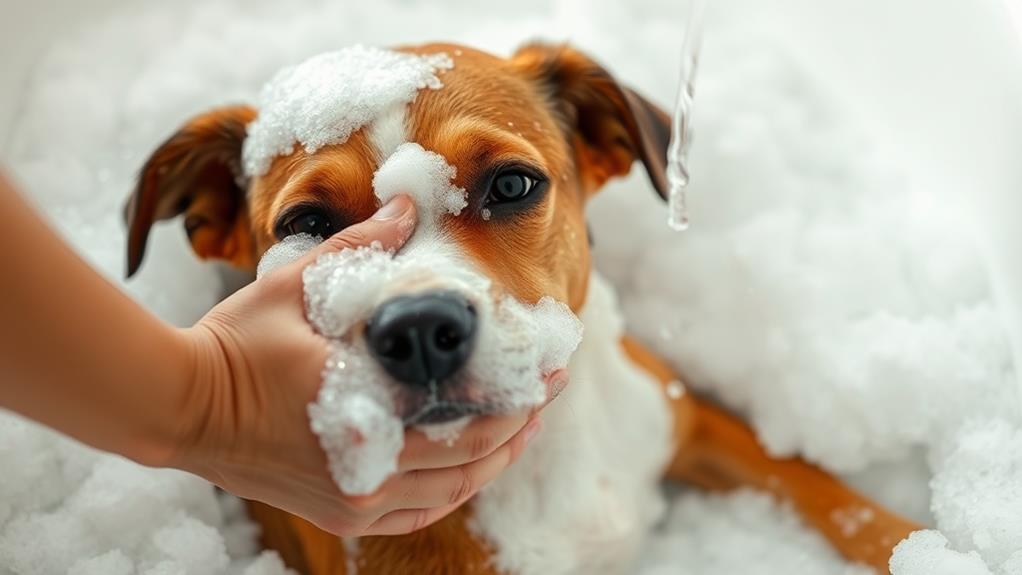
Even with clean accessories, your dog might still be prone to skin irritation after swimming.
It's essential to keep a close eye on their skin for any signs of redness, itching, or unusual bumps. After a swim, check areas like the belly, paws, and underarms where irritants often linger.
If you notice your dog scratching more than usual or licking a specific area, it could indicate discomfort.
Pay attention to any changes in their behavior; a generally happy dog might seem agitated or restless if something's bothering them.
Consider the type of water your dog swam in, too. Chlorinated pools or saltwater can contribute to skin issues.
If your dog has a history of skin sensitivities, it's even more crucial to monitor them closely post-swim.
Should you observe any irritation, don't hesitate to consult your veterinarian.
They can recommend suitable treatments or soothing solutions to alleviate your dog's discomfort.
Reward Your Dog
After a fun day of swimming, rewarding your dog is a great way to reinforce positive behavior and create a happy association with water activities.
When you show appreciation, your dog will look forward to future swimming adventures. Here are some effective ways to reward your furry friend:
- Treats: Offer a tasty treat immediately after bathing to celebrate their swim.
- Praise: Use a cheerful voice to give verbal praise. Your enthusiasm will make them feel special.
- Playtime: Engage in their favorite game, whether it's fetch or tug-of-war, to channel their energy positively.
- Cuddles: Show affection with some snuggles. Physical touch can strengthen your bond.
- Toys: Present a new or favorite toy as a reward. It'll keep them excited about the next swim.
Establish a Bathing Routine
Establishing a bathing routine is essential for keeping your dog clean and comfortable after swimming.
You'll want to decide how often to bathe your dog based on their activity level and coat type.
Also, preparing the bathing area and gathering supplies beforehand will make the process smoother for both of you.
Frequency of Baths
Bathing your dog regularly is essential for maintaining their coat and skin health, especially after swimming.
It's not just about keeping them clean; it's about preventing skin infections and irritation that can arise from chlorine, saltwater, or other contaminants.
Establishing a bathing routine helps ensure your furry friend stays healthy and happy.
Consider these guidelines for frequency:
- After Swimming: Always bathe your dog after swimming to remove any chlorine or salt.
- Every 4-6 Weeks: A general guideline is to bathe your dog at least once a month, depending on their activity level and coat type.
- Seasonal Changes: Increase baths during shedding seasons to manage loose fur and dander.
- Skin Conditions: If your dog has specific skin issues, consult your vet about more frequent baths with special shampoos.
- Activity Level: For active dogs who get dirty often, adjust the frequency to keep them clean and comfortable.
Preparation Before Bathing
Getting your dog ready for a bath can make the process smoother and more enjoyable for both of you. Start by gathering all the necessary supplies—dog shampoo, towels, and a non-slip mat. This way, you won't have to scramble for items mid-bath, which can be stressful for your furry friend.
Next, establish a bathing routine that your dog can get used to. Choose a specific day and time each week for baths, so your dog knows what to expect. If your dog dislikes baths, try to make the experience positive by incorporating treats or praise. This builds their confidence and helps them associate bath time with something enjoyable.
Before bathing, brush your dog's coat to remove any loose fur or tangles. This not only makes the bathing process easier but also promotes a healthy coat. If your dog has sensitive skin, consult your vet about the best shampoo to use.
Lastly, ensure your bathing area is safe and comfortable, with warm water ready. By taking these steps, you'll create a routine that helps your dog feel relaxed and cared for, making bath time a breeze.
Frequently Asked Questions
How Often Should I Bathe My Dog After Swimming?
You should bathe your dog after swimming when they get dirty or start to smell. Typically, once a month is good, but adjust based on their activity level and coat type to keep them clean and healthy.
Can I Use Human Shampoo on My Dog?
Using human shampoo on your dog's fur is like pouring ice water on a cozy fire—it'll dry out their skin! Stick to dog-specific formulas; they're designed to keep your pup's coat healthy and happy.
What Should I Do if My Dog Hates Baths?
If your dog hates baths, try making it fun! Use treats, toys, or a gentle brush. Gradually introduce water, and keep sessions short. Patience and positive reinforcement will help your furry friend feel more comfortable.
Is It Necessary to Condition My Dog's Fur?
You might think conditioning isn't essential, but it can make your dog's fur softer and more manageable. It helps prevent tangles and keeps their coat healthy, so you're really enhancing their comfort and appearance.
How Can I Prevent My Dog From Getting Ear Infections After Swimming?
To prevent ear infections, you should dry your dog's ears thoroughly after swimming. Use a soft towel and consider using a vet-recommended ear drying solution. Regular ear checks can also help catch issues early.
Conclusion
Bathing your dog after swimming is essential for their health and happiness. Did you know that 30% of dogs develop skin irritations from leftover chlorine or saltwater? By establishing a routine and using the right techniques, you can keep your pup clean and comfortable. Remember to reward them with treats and affection to make bath time enjoyable. With a little patience and care, you'll create a positive experience that both you and your dog will look forward to!

Carlos Rodriguez is the Senior Product Reviewer at DogShampooReviews.com. With over 15 years of experience in canine grooming and skincare, Carlos brings a wealth of knowledge and passion to our team. His journey began at a young age, growing up on a family farm where he was surrounded by dogs of all breeds and sizes. This early exposure ignited his lifelong dedication to animal care and well-being.
Professional Background
- Certified Dog Groomer: Carlos is a certified professional groomer who has worked in some of the top grooming salons across the country. His expertise spans various grooming techniques suitable for different breeds and coat types.
- Canine Skincare Specialist: Recognizing the importance of skin health in dogs, Carlos pursued additional certifications in dermatological care for canines, specializing in treating skin conditions and allergies.
- Product Testing Expert: With a meticulous eye for detail, Carlos rigorously tests dog shampoos and grooming products, evaluating them on ingredients, efficacy, safety, and overall quality.
Passion for Dogs
Carlos’s love for dogs goes beyond his professional life. He is an active volunteer at local animal shelters, providing grooming services to help adoptable dogs look and feel their best. His own rescued dogs, Bella and Rocky, are often the first to try out new products, ensuring his reviews come from genuine experiences.
Why Trust Carlos
- Unbiased Reviews: Committed to integrity, Carlos ensures all his reviews are honest and based on thorough testing.
- Expert Insight: His extensive knowledge allows him to break down complex information into understandable advice for dog owners.
- Community Engagement: Carlos actively engages with our readers, answering questions and providing personalized recommendations.