To prevent dry skin after bathing your dog, start by using a gentle, dog-specific shampoo. Avoid harsh human products that can strip natural oils. Limit bathing to every one to three months, and always choose lukewarm water for comfort. Rinse thoroughly to remove all soap residue, and apply a moisturizing conditioner, focusing on dry spots. After the bath, gently towel-dry your dog without rubbing, and consider adding a dog-safe moisturizer. Also, ensure your dog has a balanced diet rich in omega-3 fatty acids and monitor indoor humidity to keep their skin healthy. You might find even more helpful tips ahead!
Key Takeaways
- Use dog-specific shampoos and conditioners with natural ingredients to maintain moisture and avoid skin irritation.
- Bathe your dog every one to three months to prevent stripping natural oils from their skin.
- Rinse thoroughly with lukewarm water to eliminate all shampoo residue, which can irritate the skin.
- Gently dry your dog with a microfiber towel and consider using a low, cool setting on a blow dryer.
- Apply a suitable dog moisturizer post-bath to hydrate dry areas, focusing on elbows and paws.
Choose the Right Shampoo
When it comes to preventing dry skin after bathing your dog, choosing the right shampoo is essential. You want a product that cleans effectively without stripping away natural oils. Look for shampoos specifically designed for dogs, as they're formulated to maintain the skin's pH balance.
Avoid human shampoos, since they can be too harsh and lead to dryness.
Consider opting for shampoos with natural ingredients like oatmeal, aloe vera, or coconut oil. These ingredients not only cleanse but also provide moisture, helping to soothe your dog's skin.
If your dog has sensitive skin or specific conditions, consult your veterinarian for recommendations on hypoallergenic or medicated shampoos.
It's also worth checking for added fragrances and dyes, which can irritate your dog's skin. A gentle, unscented formula is often the best choice.
Limit Bathing Frequency
Bathing your dog too often can lead to dry skin, so it's important to limit the frequency of baths. Most dogs only need a bath every one to three months, depending on their breed, coat type, and lifestyle.
If your dog spends time outdoors or has a habit of rolling in dirt, you might think more frequent baths are necessary. However, over-bathing can strip natural oils, resulting in dryness and irritation.
To serve your dog better, observe their coat and skin condition. If you notice excessive scratching or flakiness, consider extending the time between baths. Regular brushing can help keep your dog clean and distribute those essential oils evenly across their skin.
This not only maintains a healthy coat but also reduces the need for baths. If your dog gets into something particularly messy, spot cleaning with a damp cloth or using a dog-safe wipe can be effective without the need for a full bath.
Ultimately, by limiting bathing frequency and focusing on their grooming needs, you can help prevent dry skin and keep your furry friend comfortable and happy. Your dog's skin health is an important part of their overall well-being.
Use Lukewarm Water
When you bathe your dog, using lukewarm water is crucial for their skin health.
Too hot or too cold water can irritate their skin, especially if they've sensitivities.
Keeping the temperature just right not only helps prevent dryness but also makes bath time more enjoyable for your furry friend.
Ideal Water Temperature
Using lukewarm water is essential for keeping your dog's skin healthy and preventing dryness after a bath. When you choose the right temperature, you're not just making bath time more enjoyable; you're also protecting your furry friend's skin.
Hot water can strip natural oils, leading to irritation and dryness. On the other hand, cold water can be uncomfortable and may not effectively clean your dog's coat.
To find the ideal temperature, test the water with your wrist or elbow. It should feel warm but not hot—similar to how you'd prepare a bath for a baby. This gentle warmth helps open up pores, allowing for a thorough clean without shocking your dog's skin.
Additionally, using lukewarm water aids in rinsing away shampoo and dirt more effectively, ensuring your dog feels fresh and clean.
Remember, your goal is to create a soothing experience that leaves your dog happy and comfortable. By paying attention to water temperature, you're not only enhancing their bathing experience but also contributing to their overall skin health.
Skin Sensitivity Considerations
How can you ensure your dog's skin remains comfortable and irritation-free during bath time? One crucial factor is the water temperature. Using lukewarm water is vital for your dog's skin sensitivity.
Water that's too hot can strip away natural oils, leading to dryness and irritation. Conversely, water that's too cold can be uncomfortable and stressful for your furry friend.
Before you start bathing, test the water temperature with your wrist. It should feel warm but not hot. This simple step can make a significant difference in how your dog experiences bath time.
Dogs often have sensitive skin, and using lukewarm water helps maintain their skin barrier, promoting overall health.
Additionally, always keep an eye on your dog's reaction during the bath. If you notice any signs of discomfort, such as whining or trying to escape, adjust the water temperature accordingly.
Your dog's comfort is paramount, and you want to create a positive bathing experience.
Bathing Frequency Impact
While it might be tempting to bathe your dog frequently for a fresh scent, overbathing can actually lead to dry skin and irritation. Dogs have natural oils that protect their skin, and bathing too often strips these essential oils away. To keep your furry friend comfortable and healthy, consider limiting baths to once every month or so, unless they get particularly dirty.
When you do bathe your dog, use lukewarm water. This temperature is gentle on their skin and helps maintain moisture balance. Avoid hot water, as it can exacerbate dryness and irritation. Use a gentle, dog-specific shampoo to avoid harsh chemicals that can further strip the skin of its natural oils.
In between baths, you can help maintain your dog's coat and skin health by brushing regularly. This not only removes loose fur and dirt but also distributes natural oils throughout their coat.
Additionally, consider using a moisturizing conditioner after a bath to lock in hydration. By paying attention to bathing frequency and techniques, you're not just keeping your dog clean; you're also serving their long-term skin health.
Rinse Thoroughly
A thorough rinse is essential to prevent dry skin after bathing your dog. When you wash your pup, shampoo and soap can get trapped in their fur and skin. If you don't rinse well, these residues can lead to irritation and dryness. So, make sure you spend enough time rinsing.
Start by using warm water, as it's more comfortable for your dog. Gently work your hands through their coat while rinsing, ensuring you're reaching the skin. Pay special attention to areas where shampoo tends to hide, like behind the ears and under the belly.
If you notice any suds still lingering, keep rinsing until the water runs clear. You might want to use a detachable showerhead or a cup to control the water flow better. This way, you can target specific areas without overwhelming your dog.
Apply Conditioner
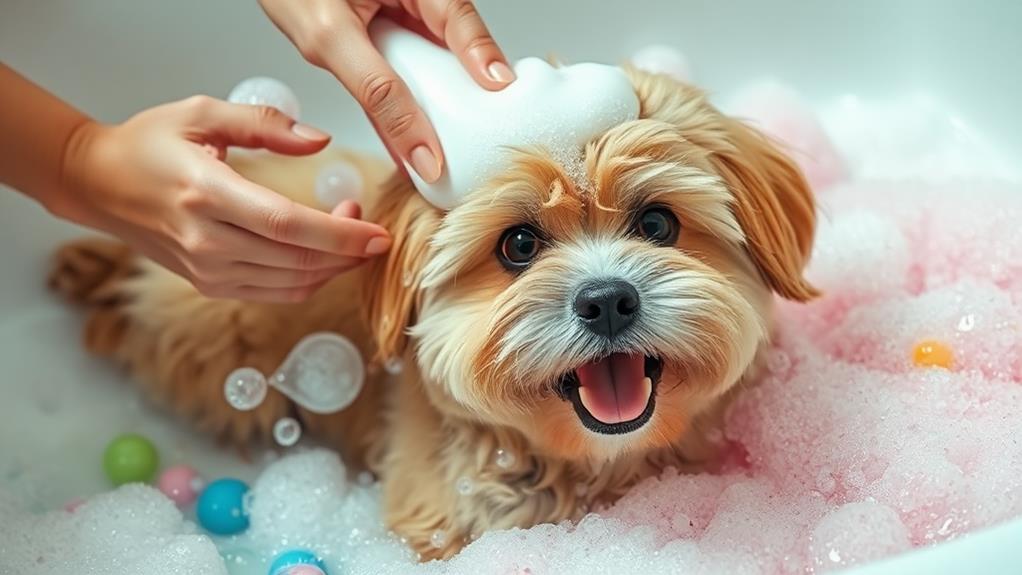
Choosing the right conditioner is crucial for your dog's skin health.
You'll want to apply it effectively and determine how often to use it for the best results.
Let's explore these key points to keep your pup's coat moisturized and healthy.
Choose the Right Conditioner
Finding the right conditioner can make a world of difference in keeping your dog's skin healthy and hydrated after a bath. When you choose a conditioner, look for one that's specifically formulated for dogs. Human products often contain ingredients that can irritate their skin, so always opt for pet-friendly options.
Consider your dog's specific needs. If your furry friend has sensitive skin, select a hypoallergenic conditioner. For dogs with dry or itchy skin, a moisturizing formula packed with natural oils like coconut or aloe vera can work wonders.
Check the ingredient list to ensure it's free from harsh chemicals, parabens, and sulfates, which can exacerbate dryness.
Also, think about your dog's coat type. Long-haired breeds may benefit from a detangling conditioner, while short-haired dogs might need something lightweight that won't weigh down their fur.
Lastly, don't forget to consult your veterinarian if you're unsure. They can provide recommendations tailored to your dog's unique skin and coat requirements.
Choosing the right conditioner not only enhances your dog's appearance but also contributes to their overall well-being. Your furry companion deserves the best care possible!
Application Techniques for Effectiveness
After selecting the right conditioner, applying it effectively is key to maximizing its benefits for your dog's skin and coat. Start by gently towel-drying your dog after the bath to remove excess water. This helps the conditioner adhere better.
Next, take a generous amount of conditioner in your hands and warm it up slightly by rubbing your palms together. This makes application smoother and more enjoyable for your furry friend.
Work in sections, starting at the neck and moving downwards, ensuring you cover the entire body. Use your fingers to massage the conditioner into the coat, focusing on areas prone to dryness, like the belly and paws.
Don't forget to pay attention to any skin folds, where moisture can get trapped. Allow the conditioner to sit for the recommended time, as this lets the ingredients penetrate deeply.
Frequency of Use
To keep your dog's skin and coat healthy, you'll want to establish a regular conditioning routine. Depending on your dog's coat type and skin sensitivity, applying conditioner after each bath is a good practice. For most dogs, bathing every 4 to 6 weeks is ideal, so you should condition them during these baths.
If your dog has particularly dry skin or a longer coat, consider using a conditioner every two weeks to maintain moisture.
In between baths, you can use a leave-in conditioner or a moisturizing spray to keep their coat hydrated. This is especially helpful during dry seasons or if you live in a low-humidity area. Just spritz the product on your dog's coat and brush it through gently to distribute the moisture evenly.
Always observe your dog's skin after conditioning to ensure there's no irritation or excessive dryness. If you notice any issues, you might need to adjust the frequency of your conditioning routine.
Dry Gently
Gentle drying is crucial for preventing dry skin in your dog after a bath. When you finish washing your furry friend, resist the urge to rub them vigorously with a towel. Instead, opt for a softer approach. Use a clean, absorbent towel and pat your dog's coat gently. This method removes excess water without stripping away natural oils, which are essential for maintaining healthy skin.
If your dog has longer hair, consider using a microfiber towel. These towels are highly absorbent and can help you dry your dog efficiently while minimizing friction. Focus on sections of the coat at a time, ensuring you're not tugging or pulling on their skin.
Additionally, if your dog enjoys it, try using a blow dryer on a low, cool setting. Keep the dryer at a safe distance and move it around to avoid concentrating heat in one area.
Moisturize After Bathing
Moisturizing your dog's skin after a bath is essential for preventing dryness and irritation. After you've gently dried your pup, it's time to apply a suitable moisturizer. Look for products specifically designed for dogs, as their skin has different needs than ours. A good dog moisturizer can help replenish lost moisture, leaving their coat soft and healthy.
To apply, choose a calm moment when your dog is relaxed. This makes the process easier for both of you. Start with a small amount of the moisturizer, and gently rub it into their skin and coat, focusing on areas prone to dryness, like elbows and paws.
You can also use a moisturizing spray or a leave-in conditioner if your dog enjoys spray applications.
Keep an eye on how your dog responds. If they seem uncomfortable or irritated, you might want to try a different product. Regular moisturizing not only helps prevent dryness but also strengthens the bond between you and your furry friend.
Monitor Indoor Humidity
Keeping an eye on indoor humidity can significantly impact your dog's skin health. Dry air can strip moisture from their skin, leading to irritation and discomfort.
To help maintain a comfortable environment for your furry friend, consider these key points:
- Use a Hygrometer: Invest in a hygrometer to monitor humidity levels. Aim for 30-50% humidity for optimal skin health.
- Humidifier: If your home is too dry, a humidifier can add moisture to the air, making it more comfortable for both you and your dog.
- Ventilation: Ensure proper ventilation in your home. Open windows during humid days can help, but be cautious of extreme weather.
- Bathing Frequency: Limit baths during particularly dry months. Over-bathing can exacerbate dryness, so aim for a balanced schedule.
Maintain a Balanced Diet
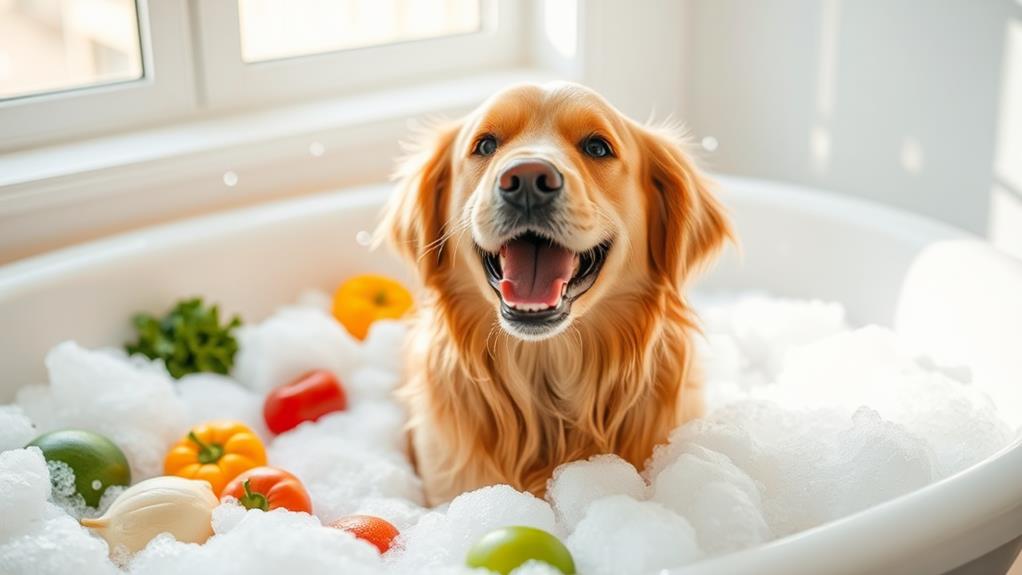
To keep your dog's skin healthy, you need to focus on a balanced diet rich in essential nutrients.
These nutrients play a vital role in hydration and overall skin health, ensuring your furry friend stays comfortable.
Don't forget the benefits of fatty acids, as they can significantly improve your dog's skin condition.
Essential Nutrients for Skin
Maintaining a balanced diet is crucial for promoting healthy skin, especially after bathing your dog. Just like us, our furry friends require essential nutrients to keep their skin hydrated and resilient. Ensuring your dog gets these nutrients can make a significant difference in their skin health.
Here are four essential nutrients to focus on:
- Omega-3 Fatty Acids: These healthy fats can reduce inflammation and improve skin moisture.
- Vitamins A and E: Both vitamins support skin repair and help maintain its elasticity.
- Zinc: This mineral plays a vital role in skin health and aids in healing.
- Protein: A good source of protein is essential for cell regeneration and overall skin integrity.
Incorporating these nutrients into your dog's meals can help prevent dry skin and promote a shiny coat.
Consider high-quality dog food or supplements that contain these elements. By prioritizing your pet's diet, you're not just keeping their skin healthy; you're also showing your love and commitment to their overall well-being.
Hydration and Skin Health
Hydration plays a key role in skin health for your dog, just as it does for humans. When your dog is well-hydrated, their skin retains moisture better, reducing the chances of dryness and irritation. It's essential to ensure your furry friend drinks enough fresh water daily. A good rule of thumb is to offer water after meals, playtime, or walks to encourage regular drinking.
In addition to water, consider the role of a balanced diet. Incorporate fresh fruits and vegetables that are high in water content, like cucumbers and watermelon. These can be great treats that not only hydrate but also provide essential vitamins for skin health.
Foods rich in antioxidants can help combat dryness by supporting the skin's natural barrier. You might also explore dog food that specifically mentions hydration benefits. Some brands formulate their diets to include moisture-rich ingredients, which can be beneficial, especially if your dog isn't drinking enough water on their own.
Fatty Acids Benefits
Fatty acids are essential for keeping your dog's skin healthy and resilient. By incorporating them into your dog's diet, you're not just enhancing their skin condition; you're also boosting their overall well-being.
Here are some key benefits of fatty acids:
- Moisture Retention: They help your dog's skin retain moisture, reducing dryness and irritation.
- Anti-Inflammatory Properties: Fatty acids can alleviate skin inflammation, promoting a more comfortable experience for your furry friend.
- Healthy Coat: A diet rich in fatty acids leads to a shinier and softer coat, making those petting sessions even more enjoyable.
- Allergy Management: They can help mitigate allergic reactions, improving your dog's quality of life.
To ensure your dog receives adequate fatty acids, consider adding sources like fish oil, flaxseed oil, or high-quality commercial dog food that includes these nutrients.
Always consult your veterinarian before making any dietary changes. By focusing on a balanced diet rich in fatty acids, you're taking a significant step toward preventing dry skin and ensuring your dog feels their best.
Consult a Veterinarian
When it comes to your dog's skin health, consulting a veterinarian can be a crucial step. Your vet can provide tailored advice based on your dog's specific needs and any existing skin conditions.
They'll assess your dog's skin and coat, helping you determine the right bathing frequency and products that won't strip natural oils.
If you notice persistent dryness, redness, or irritation, don't hesitate to reach out. These symptoms might indicate underlying issues that require professional attention.
A veterinarian can recommend medicated shampoos or topical treatments that alleviate dryness and promote healing.
Additionally, they can advise on dietary changes or supplements that enhance skin health, ensuring your dog gets the essential nutrients they need.
Regular check-ups can help catch skin issues early, preventing discomfort for your furry friend.
Frequently Asked Questions
Can I Use Human Shampoo on My Dog?
You shouldn't use human shampoo on your dog. It can irritate their skin and strip natural oils. Instead, choose a gentle dog shampoo specifically formulated for their needs to keep their skin healthy and clean.
What Signs Indicate My Dog Has Dry Skin?
You'll notice your dog scratching often, licking excessively, or developing flaky patches. Dry skin can also lead to redness or irritation. Keep an eye out for these signs to ensure your furry friend stays comfortable.
How Often Should I Bathe My Dog?
Did you know that bathing your dog too often can strip essential oils, leading to dry skin? Generally, you should bathe your dog every 4-6 weeks, but adjust based on their coat and activity level.
Are There Specific Breeds Prone to Dry Skin?
Yes, certain breeds, like Bulldogs and Retrievers, often struggle with dry skin. Their unique coat types and skin sensitivities can require extra care. You'll want to monitor their skin and adjust grooming routines accordingly.
Can Weather Changes Affect My Dog's Skin Health?
Yes, weather changes can definitely affect your dog's skin health. Cold, dry air or excessive humidity can lead to dryness or irritation, so keep an eye on your dog's skin and adjust their care accordingly.
Conclusion
To keep your pup's skin soft and supple, think of each bath as a refreshing rain shower. By choosing the right shampoo and moisturizing afterward, you're not just cleaning your dog; you're nurturing their skin like a gentle breeze on a warm day. Remember, a little care goes a long way. With the right routine and attention, your furry friend will feel as comfortable as a sunbeam on a lazy afternoon, free from the discomfort of dryness.

Carlos Rodriguez is the Senior Product Reviewer at DogShampooReviews.com. With over 15 years of experience in canine grooming and skincare, Carlos brings a wealth of knowledge and passion to our team. His journey began at a young age, growing up on a family farm where he was surrounded by dogs of all breeds and sizes. This early exposure ignited his lifelong dedication to animal care and well-being.
Professional Background
- Certified Dog Groomer: Carlos is a certified professional groomer who has worked in some of the top grooming salons across the country. His expertise spans various grooming techniques suitable for different breeds and coat types.
- Canine Skincare Specialist: Recognizing the importance of skin health in dogs, Carlos pursued additional certifications in dermatological care for canines, specializing in treating skin conditions and allergies.
- Product Testing Expert: With a meticulous eye for detail, Carlos rigorously tests dog shampoos and grooming products, evaluating them on ingredients, efficacy, safety, and overall quality.
Passion for Dogs
Carlos’s love for dogs goes beyond his professional life. He is an active volunteer at local animal shelters, providing grooming services to help adoptable dogs look and feel their best. His own rescued dogs, Bella and Rocky, are often the first to try out new products, ensuring his reviews come from genuine experiences.
Why Trust Carlos
- Unbiased Reviews: Committed to integrity, Carlos ensures all his reviews are honest and based on thorough testing.
- Expert Insight: His extensive knowledge allows him to break down complex information into understandable advice for dog owners.
- Community Engagement: Carlos actively engages with our readers, answering questions and providing personalized recommendations.