To prevent your dog from shaking during a bath, focus on creating a calm atmosphere and addressing any anxiety. Start by preparing a familiar, quiet space with non-slip surfaces and warm water. Use positive reinforcement, like treats and praise, to encourage relaxation and build positive associations with bath time. Gradually introduce bathing by desensitizing your dog to water, starting with wetting their paws. Keep bath sessions short and monitor their reactions to adjust as needed. These small changes can make bath time enjoyable, and you might discover even more helpful tips to ease the process.
Key Takeaways
- Create a calm environment by selecting a quiet, familiar space and minimizing distractions during bath time.
- Gradually desensitize your dog to bathing by introducing the process slowly, rewarding them with treats at each stage.
- Use positive reinforcement, such as treats and praise, to encourage calm behavior and create a positive association with bath time.
- Keep bath sessions short, around 5 to 10 minutes, to reduce stress and gradually acclimate your dog to the routine.
- Ensure the bathing area has a non-slip surface and use lukewarm water to enhance comfort and prevent anxiety.
Understand Your Dog’s Anxiety
To effectively prevent your dog from shaking during a bath, you need to first understand their anxiety. Dogs often feel uneasy about water, especially if they associate it with negative experiences. Pay attention to their body language. Are they cowering, panting, or trying to escape? Recognizing these signs is crucial in addressing their fears.
Consider their past experiences. If your dog had a bad bath or was exposed to loud noises during grooming, these memories can heighten anxiety. It’s important to create a calm environment and approach the situation with empathy. Speak softly and use positive reinforcement, like treats and praise, to make the experience enjoyable.
You might want to observe your dog’s behavior in other stressful situations too. This can help you understand their triggers and how they cope with anxiety in general. By building trust and easing their fears, you’re paving the way for a more relaxed bathing routine.
Prepare the Bathing Area
To make bath time less stressful for your dog, start by choosing a comfortable space that feels secure for them.
Gather all your bathing supplies efficiently so you won’t have to leave your dog alone during the process.
Lastly, control the water temperature to ensure it’s just right, helping your pup feel relaxed and at ease.
Choose a Comfortable Space
Creating a comfortable space for your dog during bath time can significantly reduce their anxiety and shaking. Start by selecting a quiet, familiar area where your dog feels secure. This could be a bathroom, laundry room, or even outdoors on a warm day. Ensure the location is free from distractions, like loud noises or other pets, to help your dog relax.
Next, make the bathing area non-slip to prevent any accidents. You can use rubber mats or towels to provide traction. This simple adjustment can help your dog feel more stable and confident.
Adjust the water temperature to a lukewarm level, as water that’s too hot or cold can be uncomfortable and startling.
Consider using a gentle, soothing voice to reassure your dog throughout the process. Sit down beside them or kneel to maintain eye contact, which can help them feel more at ease.
You might also want to have their favorite toys nearby, creating a positive association with bath time. By taking these steps to choose a comfortable space, you’re setting the stage for a less stressful bathing experience for your furry friend.
Gather Bathing Supplies Efficiently
Having the right supplies on hand can make bath time much smoother for both you and your dog. Start by gathering all the essentials before you even bring your furry friend into the bathing area.
You’ll need a gentle dog shampoo that’s suited for their coat type to ensure it won’t irritate their skin. A conditioner can also help keep their fur soft and manageable.
Don’t forget to grab a non-slip mat to prevent any slipping accidents. This can help your dog feel more secure while they’re in the tub.
A brush is useful for detangling any mats or knots before the bath, making the process easier and more pleasant for them.
Consider having some towels nearby for drying off after the bath. You might also want a cup or a handheld sprayer to rinse them thoroughly.
Lastly, keep treats handy to reward your pup during and after the bath, reinforcing positive behavior.
Control Water Temperature Properly
Finding the right water temperature is crucial for your dog’s comfort during bath time. Aim for lukewarm water—neither too hot nor too cold. You can test it with your wrist; it should feel warm but not uncomfortable. If it’s too hot for you, it’s definitely too hot for your furry friend.
Before you start bathing your dog, fill the tub or basin with water, ensuring you’ve got just enough to wet their coat without overwhelming them. Avoid direct streams of water, which can be startling. Instead, use a cup or a gentle sprayer to control the flow.
Keep an eye on your dog’s reactions. If they seem tense or shivery, it might be a sign that the water’s too cold. Adjust accordingly to maintain a comforting environment.
Also, consider the time of year. In colder months, you might need to warm the bathroom to help your dog feel cozier.
Use Positive Reinforcement
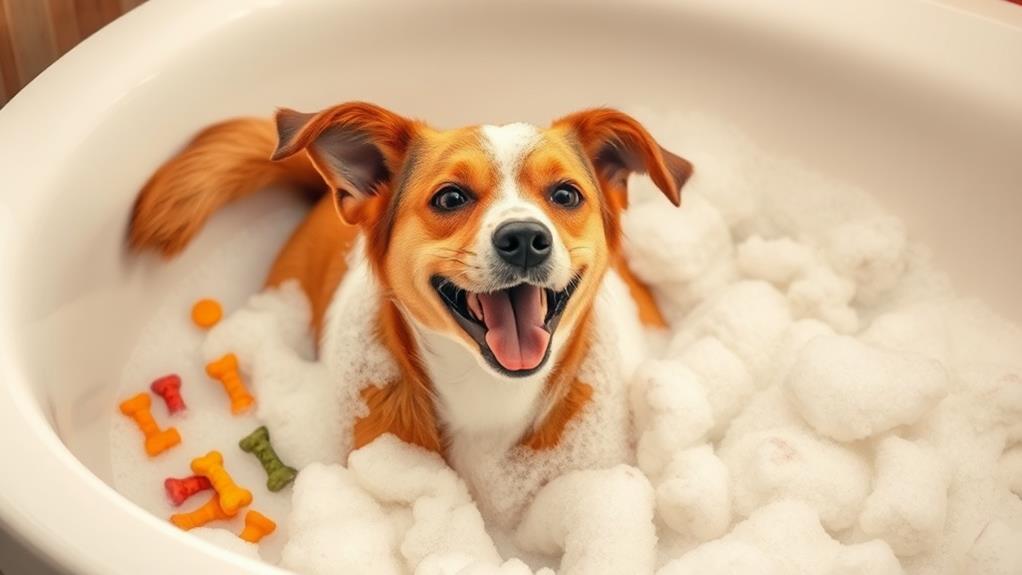
Using positive reinforcement can make bath time a lot less stressful for your dog.
By offering treats as motivation and praising them during the bath, you’ll create a more positive experience.
Additionally, consider a gradual desensitization technique to help your pup get used to the process over time.
Treats as Motivation
Treats can be a powerful tool to help your dog feel more comfortable during bath time. When you introduce bathing with tasty rewards, you create a positive association that can ease anxiety. Start by offering your dog a treat before the bath so they know something enjoyable is coming.
During the bathing process, keep a handful of their favorite treats handy. Reward them for calm behavior, whether they’re standing still or letting water flow over them. This reinforces the idea that bath time means good things, encouraging them to relax.
If your dog shows signs of anxiety, pause and offer a treat to help them refocus. You can also use treats to create a distraction. For instance, let them lick a treat or chew on a toy while you gently wash them. This not only diverts their attention but also makes the experience feel more like a fun activity rather than a chore.
Always ensure the treats are healthy and appropriate for your dog. With consistency and patience, you’ll find that combining treats with bath time transforms it into a positive experience for both you and your furry friend.
Praise During Bathing
Praise can significantly boost your dog’s confidence and calmness during bath time. Using positive reinforcement, you can create a more enjoyable experience for both of you. When your dog feels supported and appreciated, they’re less likely to shake or act anxious.
Here are three key ways to incorporate praise during bathing:
- Verbal Encouragement: Use a cheerful tone to reassure your dog. Phrases like “Good job!” or “You’re doing great!” help them associate bath time with positivity.
- Physical Affection: Gentle petting or scratching in their favorite spots while you wash them can provide comfort. Your touch helps them feel secure and loved.
- Timing Your Praise: Be sure to offer praise at the right moments, such as when they stand still or let you wash certain areas. This reinforces their good behavior and encourages them to stay calm.
Gradual Desensitization Technique
Gradual desensitization can be a game-changer for dogs that fear baths. This technique involves slowly introducing your dog to the bathing process, making it a positive experience instead of a stressful one.
Start by bringing your dog into the bathroom without the water running. Give them treats and praise when they enter, creating a calm environment.
Next, gradually introduce the sound of running water while you reward them with more treats, ensuring they associate the noise with positive experiences.
Once your dog is comfortable with the sound, you can progress to wetting their paws. Use a gentle spray or a damp cloth, rewarding them each step of the way.
As your dog becomes more comfortable, slowly increase the amount of water and the areas you’re washing. Always use positive reinforcement—praise, treats, and gentle petting—to encourage your dog.
If they show signs of stress, take a step back and go at their pace.
This gradual approach helps your dog build confidence, turning bath time from a source of anxiety into a bonding experience that they look forward to.
Gradual Desensitization Techniques
To help your dog feel more comfortable during bath time, you can employ gradual desensitization techniques. This method involves slowly introducing your pup to the bathing experience, allowing them to adjust at their own pace. Here’s how to get started:
- Familiarize with the Area: Begin by letting your dog explore the bathing space without water. Use treats and praise to create positive associations.
- Introduce Water Gradually: Once they’re comfortable, turn on the water without letting it touch them. Let them hear the sound and see the splashes while you reward their calmness with treats.
- Practice Short Sessions: Engage in mini bathing sessions using just a wet washcloth or sponge. Focus on cleaning small areas, so your dog doesn’t feel overwhelmed.
Gradually increase the duration and coverage as they become more relaxed.
Choose the Right Bathing Tools
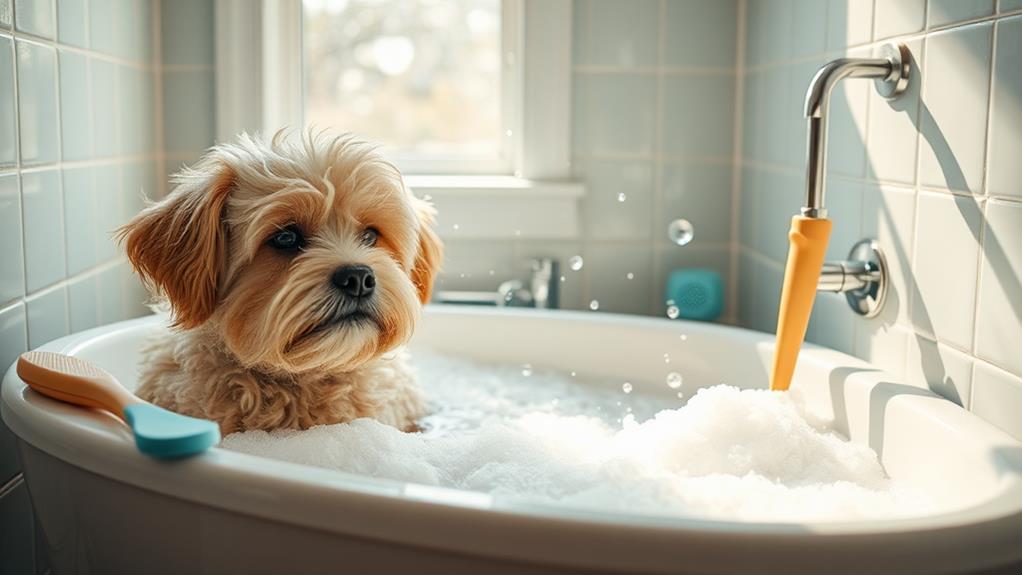
Choosing the right bathing tools can make all the difference in reducing your dog’s anxiety during bath time. Start by selecting a gentle dog shampoo that’s specifically formulated for their coat type and skin sensitivity. This not only ensures a clean pup but also keeps their skin healthy and free from irritation.
Next, invest in a non-slip mat for the tub or shower floor. This provides stability and comfort, helping your dog feel secure and less likely to slip. A detachable showerhead or a gentle spray nozzle can also be incredibly beneficial. This allows you to control the water flow, ensuring it’s neither too forceful nor overwhelming for your furry friend.
When it comes to brushes, choose one that suits your dog’s coat — a slicker brush for longer fur or a rubber curry brush for shorter coats. Brushing them before the bath can also help remove loose hair and reduce the mess.
Maintain a Calm Atmosphere
Creating a calm atmosphere during bath time can significantly reduce your dog’s anxiety. When your pup feels relaxed, they’re less likely to shake or fuss.
Here are a few tips to help you establish that peaceful environment:
- Play Soft Music: Gentle tunes can create a soothing backdrop. Choose calming melodies to help both you and your dog feel more at ease.
- Limit Noise and Distractions: Keep the area quiet by turning off loud appliances and minimizing interruptions. A serene space helps your dog focus on the bath without added stress.
- Use Positive Reinforcement: Offer treats and praise throughout the bathing process. This encourages your dog to associate bath time with positive experiences, making them more comfortable.
Keep Bath Sessions Short
Keeping bath sessions short is crucial for reducing your dog’s anxiety and discomfort. When you keep the experience brief, you minimize the time your pup spends feeling stressed or overwhelmed. Aim for a bath duration of about 5 to 10 minutes, depending on your dog’s size and comfort level.
To make the most of this time, gather all your supplies before starting. This way, you won’t have to leave your dog unattended, which could heighten their anxiety. Use a gentle shampoo designed for dogs, and rinse thoroughly to avoid skin irritation.
You can also break up the bathing process into smaller sessions if your dog struggles with the whole routine. For instance, wash only one area at a time and gradually work your way around.
This method not only keeps baths short but also helps your dog associate bathing with positive experiences rather than a stressful ordeal.
Frequently Asked Questions
What Should I Do if My Dog Bites During a Bath?
If your dog bites during a bath, stay calm and gently stop the process. Assess the situation, give your dog space, and consider using positive reinforcement techniques to create a more comfortable bathing experience next time.
How Often Should I Bathe My Dog?
You should bathe your dog every four to six weeks, depending on their breed and activity level. Regular baths keep their coat clean and healthy, helping you maintain a happy and comfortable companion.
Can Certain Dog Breeds Be More Anxious About Baths?
Absolutely, certain breeds, like terriers or hounds, can be more anxious during baths. Their temperament and past experiences play a big role, so understanding your dog’s unique needs helps you create a more comfortable bathing experience.
What Signs Indicate My Dog Is Stressed During Bathing?
When your dog’s panting increases, ears droop, or tail tucks, it’s stressed. You might notice shaking or attempts to escape too. Recognizing these signs helps you better support your furry friend during bath time.
Are There Calming Products I Can Use for My Dog?
Absolutely, you can explore calming products like pheromone sprays, anxiety wraps, or natural supplements. Each option helps soothe your dog, making bath time more enjoyable. You’ll find your furry friend feeling more relaxed and comfortable during grooming.
Conclusion
By understanding your dog’s anxiety and preparing the right environment, you can transform bath time from a dreaded chore into a more enjoyable experience. With a few simple techniques, like using positive reinforcement and keeping sessions short, you’ll be well on your way to a calmer pup. Imagine the day when your dog happily jumps into the tub, tail wagging, instead of shaking in fear. It’s closer than you think—just a few steps away!

Carlos Rodriguez is the Senior Product Reviewer at DogShampooReviews.com. With over 15 years of experience in canine grooming and skincare, Carlos brings a wealth of knowledge and passion to our team. His journey began at a young age, growing up on a family farm where he was surrounded by dogs of all breeds and sizes. This early exposure ignited his lifelong dedication to animal care and well-being.
Professional Background
- Certified Dog Groomer: Carlos is a certified professional groomer who has worked in some of the top grooming salons across the country. His expertise spans various grooming techniques suitable for different breeds and coat types.
- Canine Skincare Specialist: Recognizing the importance of skin health in dogs, Carlos pursued additional certifications in dermatological care for canines, specializing in treating skin conditions and allergies.
- Product Testing Expert: With a meticulous eye for detail, Carlos rigorously tests dog shampoos and grooming products, evaluating them on ingredients, efficacy, safety, and overall quality.
Passion for Dogs
Carlos’s love for dogs goes beyond his professional life. He is an active volunteer at local animal shelters, providing grooming services to help adoptable dogs look and feel their best. His own rescued dogs, Bella and Rocky, are often the first to try out new products, ensuring his reviews come from genuine experiences.
Why Trust Carlos
- Unbiased Reviews: Committed to integrity, Carlos ensures all his reviews are honest and based on thorough testing.
- Expert Insight: His extensive knowledge allows him to break down complex information into understandable advice for dog owners.
- Community Engagement: Carlos actively engages with our readers, answering questions and providing personalized recommendations.