
You should bathe your puppy every four to six weeks, but this can vary based on their breed, coat type, and activity level. Active puppies that love exploring outdoors may need more frequent baths to stay fresh and clean, while less active ones might only require monthly baths. Be careful not to bathe them too often, as it can strip their skin of essential oils and cause dryness. Always use a gentle, puppy-specific shampoo to protect their sensitive skin. There’s more to keeping your pup clean and healthy, so stick around to discover additional tips!
Key Takeaways
- Puppies typically need baths every four to six weeks, adjusting based on breed, coat type, and activity level.
- Long-haired breeds require more frequent baths to prevent matting, while short-haired breeds may only need baths every couple of months.
- Active puppies exploring outdoors may need baths more often due to dirt and odors, whereas laid-back puppies can go longer between baths.
- Monitor your puppy’s skin condition; signs of irritation may indicate a need for more frequent bathing or a vet consultation.
- Use gentle, puppy-specific shampoos to maintain skin health and avoid stripping essential oils during baths.
Understanding Puppy Skin Needs
When you bring a puppy into your home, you’ll quickly realize that understanding their skin needs is crucial for their overall health.
Puppies have sensitive skin that requires special attention. Their skin acts as a barrier against infections and irritants, so keeping it healthy is essential. You’ll want to pay close attention to signs of dryness, redness, or excessive itching, as these may indicate underlying issues that need addressing.
Feeding your puppy a balanced diet rich in omega fatty acids can significantly improve their skin health.
Additionally, regular brushing helps distribute natural oils, keeping their coat shiny and their skin moisturized. You should also be mindful of the products you use during grooming. Opt for gentle, puppy-specific shampoos that won’t strip their skin of essential oils.
Factors Affecting Bath Frequency
When deciding how often to bathe your puppy, consider factors like breed and coat type, activity level, and any skin conditions.
Each of these aspects can influence how quickly your puppy gets dirty or develops skin issues.
Tailoring bath frequency to your puppy’s unique needs ensures they stay clean and healthy.
Breed and Coat Type
Choosing the right bathing schedule for your puppy often hinges on its breed and coat type. Different breeds have varying needs when it comes to grooming and hygiene.
For instance, dogs with long, flowing coats, like the Afghan Hound, may require more frequent baths to prevent matting and maintain cleanliness. On the other hand, short-haired breeds, such as Beagles, typically need less frequent baths since their coats don’t trap dirt and oils as easily.
Consider the texture of your puppy’s coat as well. Curly or wiry coats, like those of Poodles, can benefit from regular baths to keep their fur healthy and clean, while also requiring regular brushing to prevent tangles.
If your puppy has a double coat, like a Siberian Husky, you might find that bathing them less often helps maintain their natural oils and keeps their coat in good condition.
Ultimately, understanding your puppy’s specific breed and coat type will guide you in establishing the ideal bathing routine.
Always observe how your puppy’s skin and coat respond to baths, adjusting the frequency as needed to ensure your furry friend stays happy and healthy.
Activity Level
Your puppy’s activity level plays a significant role in determining how often they need a bath. If your pup’s a little ball of energy, constantly exploring the backyard or rolling in the grass, they’re likely to get dirty more often. In such cases, you might find yourself needing to bathe them every few weeks or even weekly.
Regular playtime outdoors can lead to muddy paws and a less-than-pleasant smell, so keeping them clean is essential for their comfort and your home.
On the other hand, if your puppy prefers a more laid-back lifestyle, lounging around the house, they may not require baths as frequently. A monthly bath might be sufficient, especially if they’re indoors most of the time and not getting into messes.
Keep in mind that the more active your puppy is, the more attention you should pay to their cleanliness. This proactive approach not only helps maintain their hygiene but also strengthens the bond you share.
Skin Condition
Regularly assessing your puppy’s skin condition is crucial for determining how often they need a bath. Healthy skin should feel smooth and look vibrant, while signs of irritation—like redness, flakiness, or excessive oil—might indicate that your pup needs more frequent bathing. If you notice any unusual changes, it’s essential to adjust your bathing schedule accordingly.
Puppies with skin conditions, such as allergies or infections, often require special care. You may need to consult your veterinarian for specific recommendations, including medicated shampoos or bathing routines tailored to their needs. Remember, over-bathing can strip away natural oils, leading to dryness and discomfort.
On the flip side, if your puppy enjoys outdoor adventures, their skin might collect dirt, allergens, or parasites, necessitating more frequent baths. Keep an eye on their coat and skin after playtime—this can help you decide if they need a wash.
Ultimately, a balanced approach is key. By understanding your puppy’s unique skin condition, you can provide the right level of care, ensuring they remain comfortable and happy while promoting healthy skin.
Age of Your Puppy
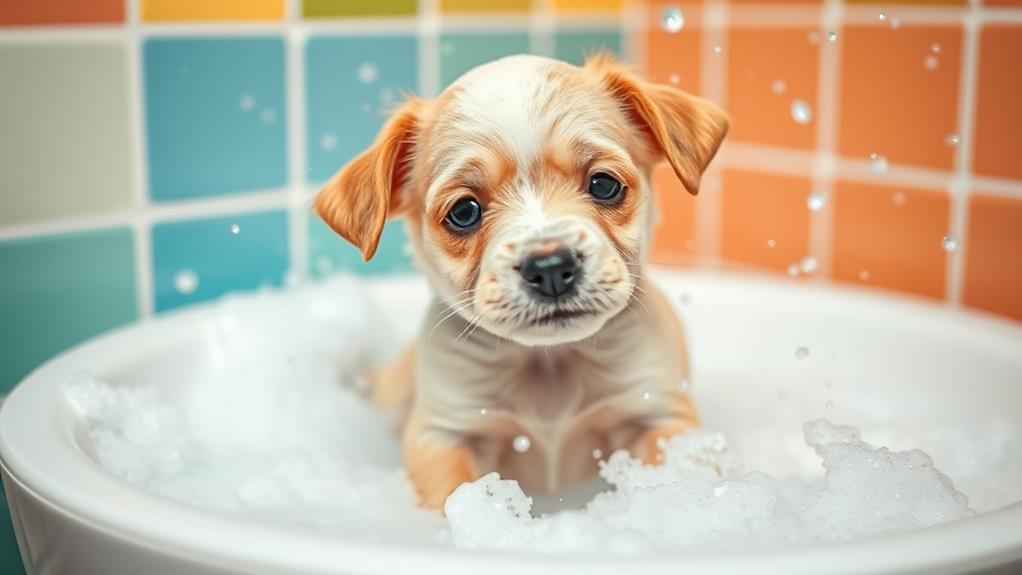
When it comes to bathing your puppy, their age plays a crucial role in determining how often you should do it.
Newborn puppies have different needs than young and adult puppies, so it’s important to understand the right approach for each stage.
Let’s break down the bathing guidelines based on your puppy’s age.
Newborn Puppies’ Needs
Newborn puppies have unique needs that differ significantly from those of older dogs. At this tender age, they rely entirely on their mother for warmth, nutrition, and hygiene.
If you’re caring for a newborn puppy, it’s crucial to maintain a warm environment, as they can’t regulate their body temperature effectively. Ensure the area is cozy, using blankets or heating pads, but avoid overheating.
Feeding is another essential aspect. If the mother isn’t available, you’ll need to provide a high-quality puppy milk replacer. Avoid giving cow’s milk, as it can upset their stomachs.
When feeding, use a bottle designed for puppies, and make sure the milk is warmed to body temperature.
Regarding bathing, resist the urge to bathe newborn puppies. Their skin is delicate, and they don’t require bathing until they’re a bit older.
Instead, focus on keeping their living area clean and dry, which helps prevent infections. If you notice any dirt or debris, gently wipe it off with a damp cloth without submerging them in water.
Your care and attention during these early days lay the foundation for a healthy, happy puppy.
Young Puppy Guidelines
As puppies grow and start to explore their surroundings, their bathing needs change significantly. During the early stages of puppyhood, typically between 8 weeks to 6 months of age, it’s essential to establish a gentle bathing routine. You mightn’t need to bathe your young puppy frequently; once every month or so is usually sufficient unless they get particularly dirty or smelly.
When bathing your young pup, use a mild, puppy-safe shampoo to avoid skin irritation. Make sure the water is lukewarm, as puppies can easily get cold. Always handle your puppy with care, fostering a positive experience during bath time. Using treats and praise can help your puppy associate bathing with something enjoyable.
Keep in mind that young puppies don’t have a fully developed immune system, so limiting baths helps maintain their skin’s natural oils. If your puppy has been playing outside or rolling in something messy, a quick rinse can suffice instead of a full bath.
Adult Puppy Routine
How often should you bathe your adult puppy? Generally, you’ll want to bathe your adult puppy every one to three months, depending on their activity level and coat type.
If your pup loves exploring outdoors or has a longer coat, you might need to bathe them more frequently. On the other hand, if they’re mostly indoors and have a shorter coat, stretching those baths a bit can be perfectly fine.
Regular grooming goes hand in hand with bathing. Brushing your puppy’s coat helps remove dirt and loose hair, reducing the need for frequent baths.
Keep an eye on any odor or visible dirt; those are good indicators that it’s time for a wash.
When you do bathe your adult puppy, use a gentle, puppy-safe shampoo. This helps maintain their skin and coat health. Always rinse thoroughly to avoid irritation.
Don’t forget to reward them with treats and praise after bath time; it’ll make the experience more enjoyable for both of you.
Ultimately, listen to your puppy’s needs and adjust their bathing routine accordingly. Keeping them clean and comfortable is key to their happiness and well-being.
Breed-Specific Considerations
When choosing a bathing schedule for your puppy, it’s essential to consider their breed. Different breeds have varying coat types and sensitivities, which means their bathing needs can differ significantly.
For instance, long-haired breeds like the Afghan Hound or Shih Tzu may require more frequent baths to prevent matting and keep their coats healthy. You’ll want to ensure their fur remains clean and free of tangles.
On the other hand, short-haired breeds such as Beagles or Boxers typically need less frequent bathing. Their coats naturally shed dirt and oils, so you might only need to bathe them every couple of months unless they get particularly dirty.
Additionally, some breeds, like Bulldogs, are prone to skin conditions, so you might need to bathe them more often but with gentle, hypoallergenic products.
Always keep an eye on your puppy’s skin and coat condition to adjust their bathing schedule as needed.
Understanding these breed-specific needs not only helps keep your puppy clean but also promotes their overall health and well-being. By tailoring their grooming routine to their breed, you’ll enhance their comfort and happiness.
Lifestyle and Activity Level
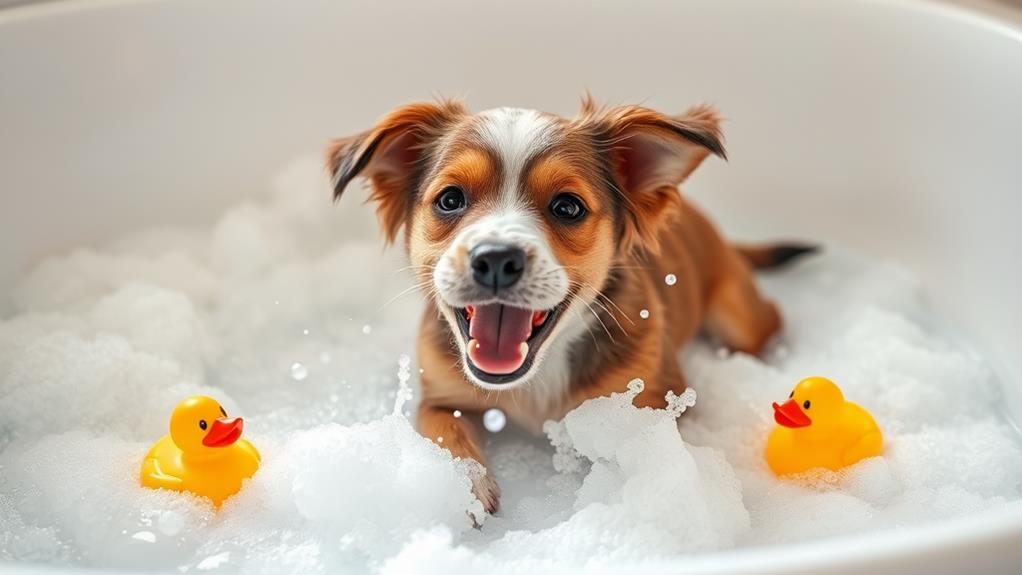
Your puppy’s lifestyle and activity level play a crucial role in determining how often you should bathe them. If your puppy is an active little explorer, playing in the mud or splashing through puddles, you might find yourself reaching for the shampoo more often. Regular exercise and outdoor adventures can lead to dirt and odors that warrant a bath.
On the other hand, if your puppy enjoys a more relaxed lifestyle, spending time lounging indoors, you may not need to bathe them as frequently. For these pups, a bath every few weeks can suffice, especially if they don’t have any noticeable odors or dirt.
Keep in mind that certain activities, like trips to the dog park or playdates with other dogs, can affect how often you should bathe your furry friend. Always pay attention to their coat and skin condition, as well as any specific needs based on their breed or health.
Ultimately, you want to strike a balance that keeps your puppy clean and comfortable without over-bathing, which can lead to dry skin. Enjoy your time together, and let their lifestyle guide your bathing schedule!
Seasonal Impact on Bathing
When it comes to bathing your puppy, the season plays a big role in how often you should do it.
Weather conditions, changes in their coat, and outdoor activity levels can all impact your pup’s cleanliness.
Understanding these factors will help you keep your furry friend looking and feeling their best year-round.
Weather Conditions Considerations
Weather plays a crucial role in determining how often you should bathe your puppy. During warmer months, your pup may enjoy more outdoor activities, leading to dirtier fur and a higher need for baths. If your puppy loves playing in the mud or rolling in grass, you might find yourself bathing them more frequently to keep their coat clean and healthy.
However, be careful not to overdo it, as excessive bathing can strip natural oils from their skin.
In colder weather, your puppy may spend less time outside, reducing the frequency of baths. You’ll want to pay attention to their coat and skin condition; if it looks oily or has a noticeable odor, it might be time for a wash, even in winter.
Always ensure that your puppy stays warm and dry after a bath during chilly months, as they can be more susceptible to getting cold.
Additionally, humidity can affect how quickly your puppy’s fur dries. If it’s particularly humid, you might need to bathe your pup less often to avoid skin irritation.
Ultimately, adapt your bathing routine to the weather conditions while keeping your puppy’s well-being in mind.
Seasonal Coat Changes
As seasons change, so do the coats of puppies, impacting how often they need baths. In spring and fall, many puppies shed their undercoats, which means you’ll notice more fur around your home.
During these shedding periods, it’s beneficial to bathe your puppy more frequently to help remove loose hair and dander. A bath can also keep their skin healthy and reduce allergens in your space.
In contrast, during summer, your puppy may have a lighter coat to help them stay cool. You might find that they don’t need baths as often, especially if they’re mostly indoors.
However, keep an eye out for dirt and debris that can accumulate during outdoor play.
Winter coats tend to be thicker and can trap moisture and dirt, so you may want to consider bathing your puppy every few weeks to prevent skin issues.
Always use a puppy-specific shampoo to keep their skin balanced and hydrated.
Outdoor Activity Levels
Outdoor activities play a crucial role in determining how often you should bathe your puppy. If your puppy loves to romp through the mud or play in the grass, you may find yourself bathing them more frequently, especially during the warmer months.
Puppies tend to be more active outside in spring and summer, leading to dirtier coats and potential skin irritations from allergens.
On the flip side, during the colder months, your puppy’s outdoor playtime may decrease. This means they’ll likely stay cleaner for longer. However, if they still enjoy playing outside, you might notice them tracking in snow, ice, or debris, which can also warrant a bath.
Consider your puppy’s activity levels and the environment they play in. If they’re frequently outdoors and getting dirty, a bath every 3 to 4 weeks is a good rule of thumb. For more sedentary puppies or those who enjoy indoor play, you can extend that time to every 6 to 8 weeks.
Ultimately, keeping your puppy clean and healthy is essential, so adapt their bathing routine to their lifestyle and the seasons.
Signs Your Puppy Needs a Bath
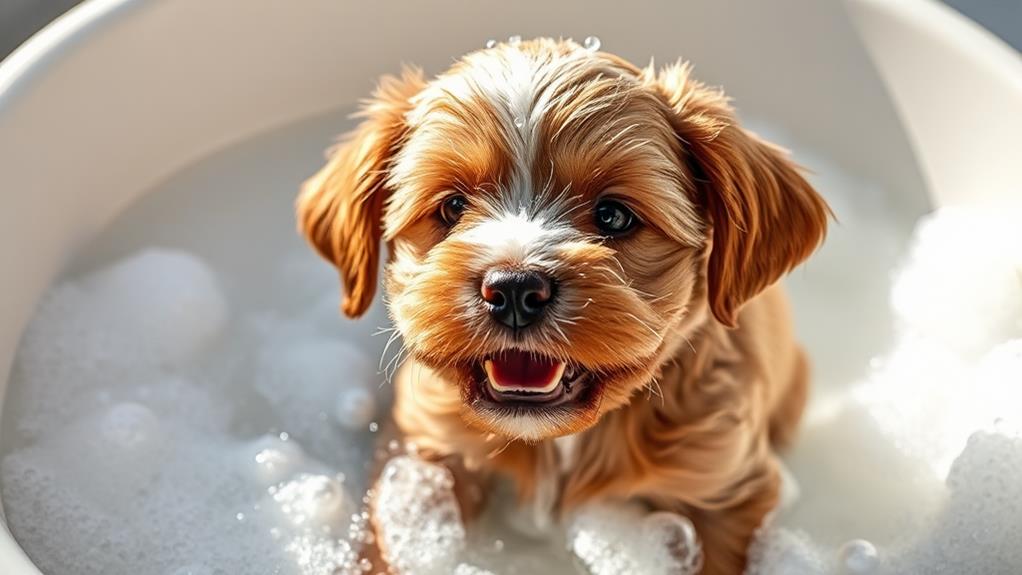
Knowing when your puppy needs a bath can save you both time and hassle. Keep an eye out for a few key signs.
First, if your puppy starts to smell, it’s a clear indicator that it’s time for a wash. Puppies can roll in dirt or get into messes, so don’t hesitate if you notice a funky odor.
Secondly, check their coat. If it looks greasy or dirty, a bath is necessary. You might also notice dirt or debris clinging to their fur, which means it’s time to lather up.
Another sign is excessive scratching or itching. If your puppy is uncomfortable, it could be due to allergens or irritants on their skin. Bathing can help relieve some of that discomfort.
Recommended Bathing Schedule
Establishing a recommended bathing schedule for your puppy can help keep them clean and healthy. Generally, you should bathe your puppy every four to six weeks, depending on their breed, coat type, and activity level.
Puppies with longer or thicker coats may need more frequent baths, while short-haired breeds might require less.
It’s essential to observe your puppy’s behavior and needs as they grow. If they play outside often or get into messes, you might need to adjust the schedule.
Always stay attentive to any signs of skin irritation, as frequent bathing can strip natural oils.
In addition to regular baths, make sure to maintain a consistent grooming routine. Brushing your puppy not only helps to remove dirt and loose fur, but it also keeps their coat healthy and shiny.
Ultimately, the goal is to create a bathing schedule that suits your puppy’s lifestyle and keeps them comfortable.
By doing so, you’ll foster a positive experience around bath time, making it easier for both you and your furry friend.
Bathing Techniques for Puppies
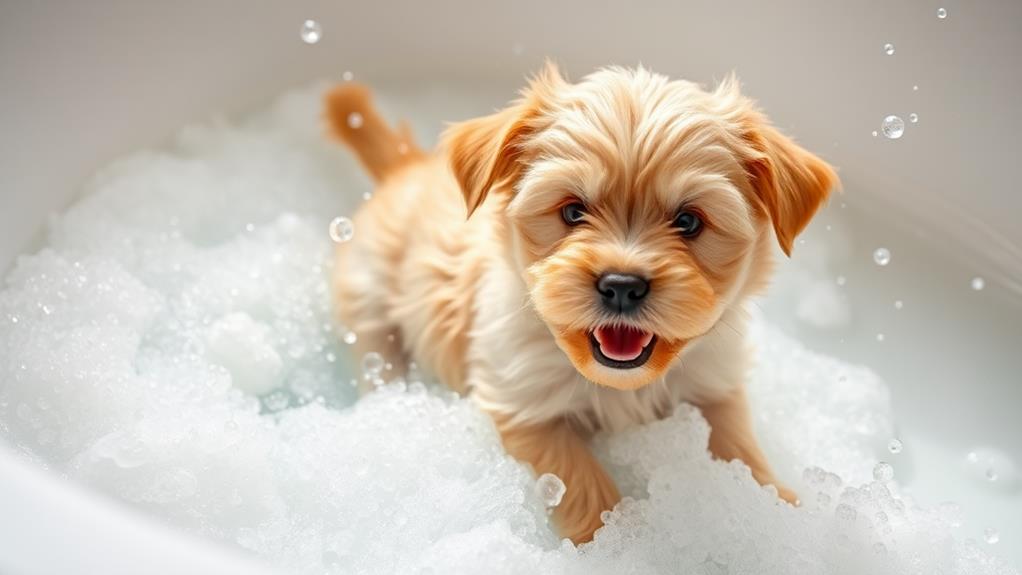
Bathing your puppy can be a fun and bonding experience when done correctly. Start by gathering all the necessary supplies—puppy-friendly towels, a non-slip mat, and a gentle cup or handheld showerhead for rinsing. Fill the tub or sink with a few inches of lukewarm water, ensuring it’s comfortable for your puppy.
Gently place your puppy in the water and use the cup or showerhead to wet their coat, avoiding their face. Speak softly to reassure your puppy and maintain a calm atmosphere. Use your hands to lather the water through their fur, focusing on areas where dirt tends to accumulate, like the paws and belly.
Make sure to keep the bathing session brief to prevent stress. Rinse thoroughly, ensuring no soap residue remains, as it can irritate their skin.
After bathing, use a towel to wrap your puppy snugly, helping them feel secure while you dry them off.
Lastly, reward your puppy with praise or a treat to create positive associations with bath time. With these techniques, you can make bathing a delightful experience for both you and your furry friend.
Choosing the Right Shampoo
Selecting the right shampoo for your puppy is crucial for maintaining their skin and coat health. You want to choose a product that’s specifically formulated for puppies, as their skin is more sensitive than that of adult dogs.
Look for shampoos that are gentle, hypoallergenic, and free from harsh chemicals or fragrances that could irritate their skin.
Check the ingredients carefully. Natural ingredients like oatmeal, aloe vera, and coconut oil can help soothe and moisturize your puppy’s skin. These components not only clean but also provide nourishment, making bath time more enjoyable for your furry friend.
If your puppy has specific skin conditions, consult your veterinarian before selecting a shampoo. They may recommend medicated options tailored to address issues like itching or allergies.
Always perform a patch test before using a new shampoo to ensure your puppy doesn’t have an adverse reaction.
Lastly, remember that the scent should be pleasant but not overpowering, as your puppy’s sense of smell is much stronger than yours.
Maintaining Freshness Between Baths
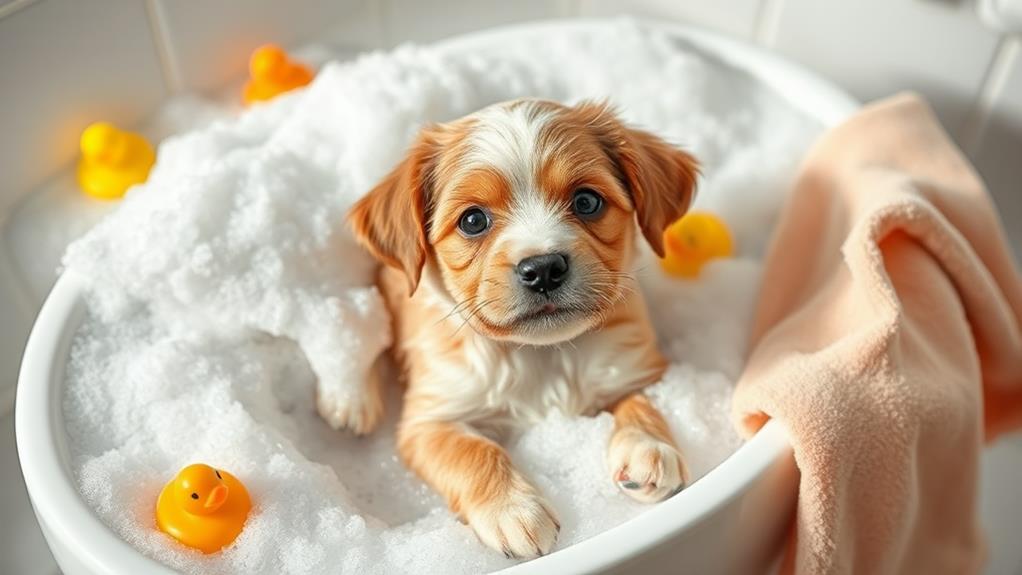
Keeping your puppy fresh between baths can be simple with a few easy tips. Regular brushing is one of the best ways to maintain your puppy’s cleanliness. It removes dirt, debris, and loose fur, while also distributing natural oils that keep their coat shiny.
Set aside time to brush your puppy daily or every few days, depending on their coat type.
Another effective method is using pet wipes or dry shampoo. These products can help eliminate odors and keep your puppy’s fur looking clean without the need for a full bath. Just be sure to choose wipes or dry shampoos specifically designed for pets, as human products can irritate their skin.
Additionally, pay attention to your puppy’s ears and paws. Regularly check their ears for dirt or wax buildup, and clean them gently with a damp cloth if needed.
For their paws, wipe them down after walks to remove any dirt or allergens they might’ve picked up.
Hydration and Skin Care Tips
Ensuring your puppy stays hydrated is vital for maintaining healthy skin and a shiny coat. Always provide fresh, clean water for your furry friend, and encourage them to drink regularly, especially after playtime or meals.
You can also add moisture to their diet by incorporating wet food or adding water to dry kibble, which can enhance hydration levels.
In addition to hydration, consider using a gentle, puppy-friendly shampoo during baths. Look for products with natural ingredients that support skin health.
After bathing, towel-dry your puppy thoroughly to prevent skin irritation caused by moisture trapped in fur.
Regular brushing not only helps distribute natural oils throughout their coat but also removes dirt and debris that can lead to skin issues.
Pay attention to signs of dryness or irritation, and consult your vet if you notice any persistent problems.
Lastly, maintain a consistent grooming routine that includes checking for any unusual bumps or redness on their skin.
Professional Grooming Considerations
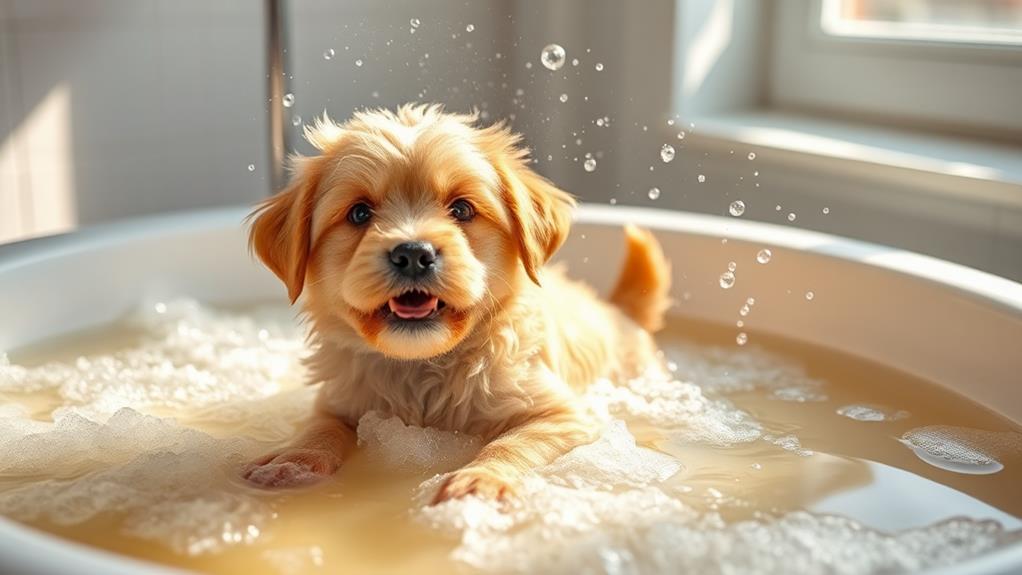
When it comes to your puppy’s grooming needs, professional grooming can be an invaluable resource. While you can handle basic grooming at home, a professional groomer brings expertise that ensures your puppy looks and feels its best.
Here are some considerations for seeking professional grooming:
- Specialized Skills: Groomers have training in handling different breeds and coat types, which helps them provide the right care for your puppy’s specific needs.
- Tools and Techniques: They use high-quality grooming tools and techniques that can significantly reduce the risk of injury or discomfort during grooming sessions.
- Health Monitoring: A groomer can spot potential health issues, such as skin infections or ear problems, and alert you to concerns you might miss.
- Regular Schedule: Setting up a regular grooming schedule helps maintain your puppy’s coat and overall hygiene, making it easier for you to handle at-home grooming sessions in between visits.
Investing in professional grooming is a wonderful way to support your puppy’s health and happiness while ensuring they look fabulous.
Frequently Asked Questions
Can I Use Human Shampoo on My Puppy?
You shouldn’t use human shampoo on your puppy. It can irritate their skin and disrupt their natural oils. Instead, choose a gentle, puppy-specific shampoo to keep your furry friend clean and comfortable.
What Time of Day Is Best for Bathing a Puppy?
Bathing your puppy in the morning or early afternoon works best. This way, they’ve time to dry off completely before evening. Plus, it keeps them active and playful during the day, promoting a positive experience.
How Can I Calm My Puppy During Bath Time?
To calm your puppy during bath time, talk softly and use treats. Keep the water warm and introduce toys. Create a positive atmosphere, so your puppy associates bath time with fun and comfort.
Is It Okay to Bathe a Puppy in Cold Weather?
Bathing a puppy in cold weather isn’t ideal; puppies can lose body heat quickly. A surprising 30% of dog owners report their pets dislike baths. You should keep the environment warm and cozy for their comfort.
Should I Bathe My Puppy Before or After Vaccinations?
You should bathe your puppy after vaccinations. It helps keep their environment clean without stressing them before an important appointment. Just ensure they’re dry and warm afterward to maintain their comfort and health.
Conclusion
In conclusion, bathing your puppy too often can strip their skin of natural oils, leading to dryness and irritation. Generally, you should bathe them every month, but it depends on factors like age, breed, and activity level. Interestingly, studies show that over-bathing can result in 60% of puppies experiencing skin issues. By understanding your puppy’s specific needs and maintaining their hygiene with care, you’ll help them stay healthy and happy.

Carlos Rodriguez is the Senior Product Reviewer at DogShampooReviews.com. With over 15 years of experience in canine grooming and skincare, Carlos brings a wealth of knowledge and passion to our team. His journey began at a young age, growing up on a family farm where he was surrounded by dogs of all breeds and sizes. This early exposure ignited his lifelong dedication to animal care and well-being.
Professional Background
Certified Dog Groomer: Carlos is a certified professional groomer who has worked in some of the top grooming salons across the country. His expertise spans various grooming techniques suitable for different breeds and coat types.
Canine Skincare Specialist: Recognizing the importance of skin health in dogs, Carlos pursued additional certifications in dermatological care for canines, specializing in treating skin conditions and allergies.
Product Testing Expert: With a meticulous eye for detail, Carlos rigorously tests dog shampoos and grooming products, evaluating them on ingredients, efficacy, safety, and overall quality.
Passion for Dogs
Carlos’s love for dogs goes beyond his professional life. He is an active volunteer at local animal shelters, providing grooming services to help adoptable dogs look and feel their best. His own rescued dogs, Bella and Rocky, are often the first to try out new products, ensuring his reviews come from genuine experiences.
Why Trust Carlos
Unbiased Reviews: Committed to integrity, Carlos ensures all his reviews are honest and based on thorough testing.
Expert Insight: His extensive knowledge allows him to break down complex information into understandable advice for dog owners.
Community Engagement: Carlos actively engages with our readers, answering questions and providing personalized recommendations.